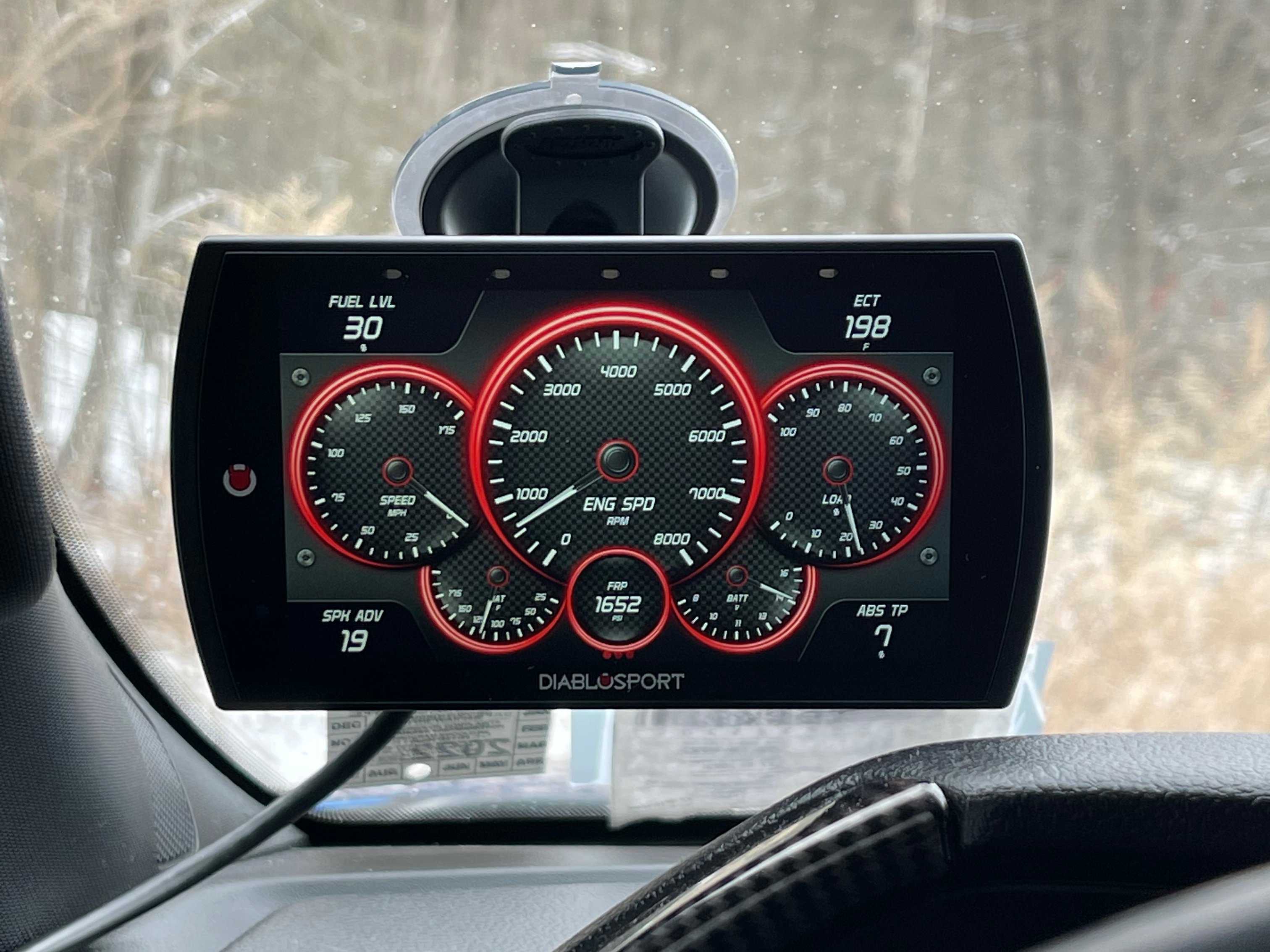
If you want more horsepower, better towing performance, or improved fuel economy from your truck, a performance tuner is one of the most effective upgrades you can make. But with dozens of products on the market from brands like DiabloSport, Superchips, SCT Performance, Bully Dog, and Edge, choosing the right one is not always straightforward. In this guide, we break down the different types of tuning devices, compare the top brands side by side, and help you match the right tuner to your truck, your engine, and your goals.
What Is a Truck Tuner?
![]() A truck tuner is a device that reprograms your vehicle's engine control unit (ECU) to adjust parameters like air-to-fuel ratio, ignition timing, transmission shift points, and speed limiters. By overwriting or supplementing the factory calibration, a tuner can unlock additional horsepower, torque, and fuel efficiency that the manufacturer left on the table. Most modern tuners plug into the OBD-II diagnostic port under your dash, making installation a straightforward process that takes just minutes.
A truck tuner is a device that reprograms your vehicle's engine control unit (ECU) to adjust parameters like air-to-fuel ratio, ignition timing, transmission shift points, and speed limiters. By overwriting or supplementing the factory calibration, a tuner can unlock additional horsepower, torque, and fuel efficiency that the manufacturer left on the table. Most modern tuners plug into the OBD-II diagnostic port under your dash, making installation a straightforward process that takes just minutes.
If you have been researching the best truck tuners and programmers, you have probably noticed the terms "tuner," "programmer," and "performance chip" used interchangeably. While they all modify your truck's computer, there are meaningful differences in how they work. A programmer typically refers to a handheld device that flashes a new calibration onto your ECU and can then be removed. A tuner is a broader term that covers any device altering your engine's operating parameters, including inline modules that stay connected full-time. Understanding these distinctions helps you pick the right tool for your goals, whether that is more towing grunt, better throttle response, or improved fuel economy on your daily commute.
Types of Truck Tuners and Programmers
![]() Not every tuning device works the same way. Before you shop, it helps to understand the three main categories and one important distinction that often trips up first-time buyers.
Not every tuning device works the same way. Before you shop, it helps to understand the three main categories and one important distinction that often trips up first-time buyers.
Control Modules (Inline Tuners)
A control module plugs directly into your truck's under-hood wiring and stays connected at all times. It intercepts sensor data before it reaches the factory ECU, adjusts values like boost pressure and fuel delivery on the fly, and sends optimized commands to the computer. Because the module is always active, your truck benefits from real-time tuning adjustments that respond to changing conditions like altitude, temperature, and load.
Control modules are especially popular in diesel applications, where they can be paired with in-cab performance monitors that display turbo boost, exhaust gas temperature, and RPM data in real time. Installation is typically plug-and-play with a heat-shielded wiring harness, requiring no cutting, splicing, or drilling. Most installs take about 15 minutes.
Flash Programmers (Handheld Tuners)
A flash programmer connects to your OBD-II port, walks you through a series of on-screen prompts, and uploads a new calibration file directly to your ECU. Unlike a control module, the programmer does its job once and can be unplugged after the flash is complete. Your truck then runs on the new tune without needing the device connected.
What is the difference between a tuner and a programmer? In practical terms, a flash programmer rewrites your ECU's factory calibration with a new set of operating instructions, while an inline tuner (control module) intercepts and modifies data in real time without changing the ECU's stored file. Flash programmers give you greater flexibility to recalibrate for changes like new tire sizes, gear ratios, or aftermarket modifications, and the process usually takes under 10 minutes.
Many of today's handheld flash tuners also double as diagnostic tools, letting you read and clear trouble codes (DTCs), monitor live data streams, and store multiple tune files for switching between performance, towing, and economy modes.
Engine Management Systems
An engine management system (EMS) is the most advanced option available. It physically replaces your factory ECU with a standalone unit that gives you complete control over every aspect of engine operation, from fuel injector timing to idle speed to rev limits. The EMS mounts in the engine bay, and the factory wiring plugs directly into it.
Once installed, you can connect a laptop to fine-tune individual parameters, view real-time performance data, and build fully custom calibration maps. This level of control is best suited for heavily modified trucks with forced induction, aftermarket camshafts, or other major upgrades that push beyond what a handheld tuner can accommodate. For most daily drivers and moderate builds, a flash programmer or control module will cover your needs.
Performance Monitors vs. Flash Tuners
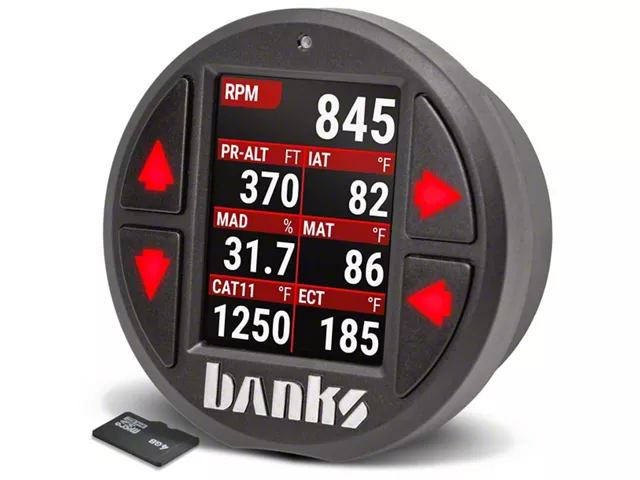
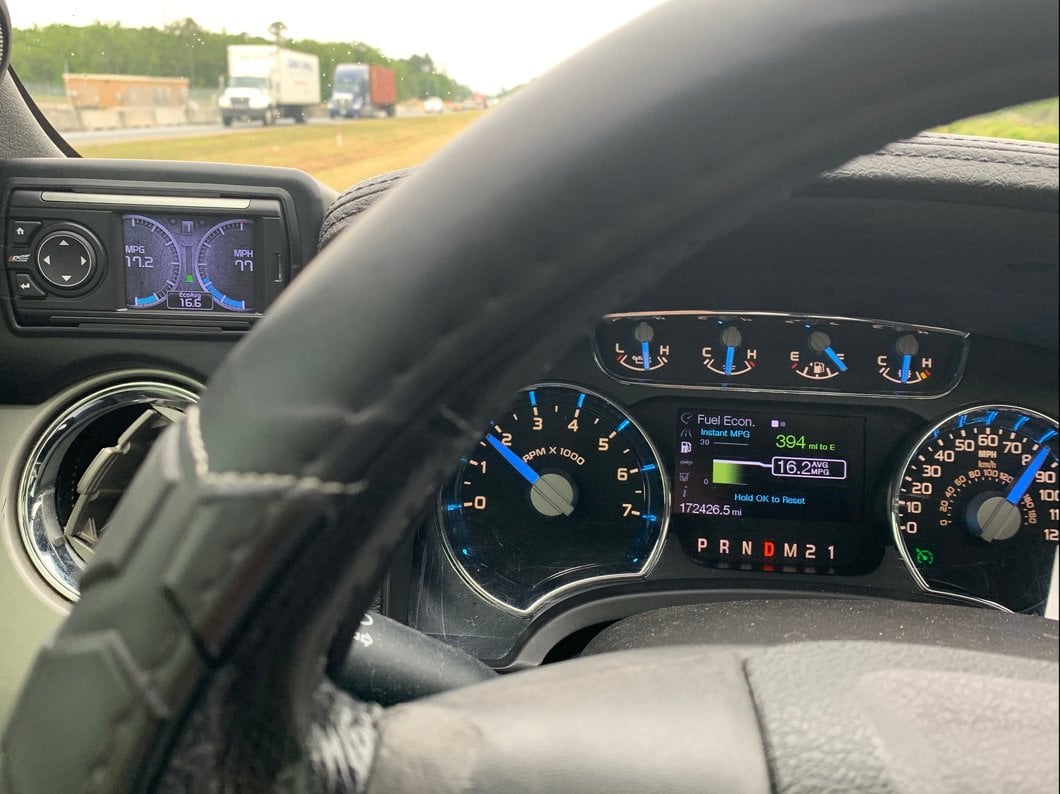
One distinction worth calling out: not every device with a screen actually tunes your truck. Performance monitors like the Edge CTS3 or Banks iDash display real-time engine data, gauge readouts, and diagnostic information, but they do not rewrite your ECU calibration on their own. They are monitoring tools, not tuning tools.
Flash tuners, on the other hand, change your ECU's stored calibration to alter how the engine runs. Some products combine both functions, offering a touchscreen monitor that also delivers pre-loaded tunes. If your primary goal is gaining horsepower and torque, make sure the device you choose includes actual tuning capability rather than monitoring alone.
Best Truck Tuner Brands Compared
![]() What is the best tuner brand for trucks? The answer depends on your truck, your engine, and what you want to get out of the tune. Five brands dominate the truck tuner market, and each brings something different to the table. Here is how they stack up.
What is the best tuner brand for trucks? The answer depends on your truck, your engine, and what you want to get out of the tune. Five brands dominate the truck tuner market, and each brings something different to the table. Here is how they stack up.
DiabloSport
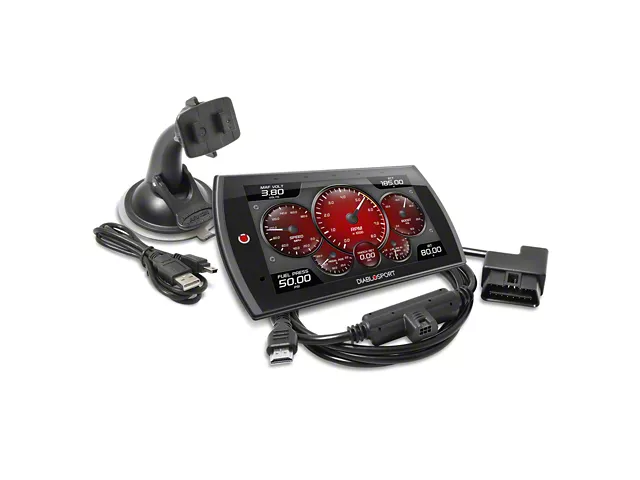
DiabloSport has been developing handheld tuners for Ford and GM trucks for over a decade, building all products in-house with proprietary tuning software. Their lineup scales from entry-level to full-featured touchscreen units:
- Best entry point: The PredatorX (starting around $273) connects through the OBD-II port and delivers pre-loaded performance tunes with a straightforward interface. It is a solid choice if you want noticeable gains without a complex setup.
- Best mid-range: The inTune i3 (around $476 to $586) adds a color touchscreen, live gauges, data logging, and DTC reading on top of its performance tunes. It supports a wide range of Ford and GM applications.
- Best full-featured: The DiabloSport Trinity 2 Tuner (around $728) is a 5-inch touchscreen device that combines tuning, monitoring, and diagnostics in one unit. It can display multiple gauge screens simultaneously while running a custom or canned tune.
Superchips
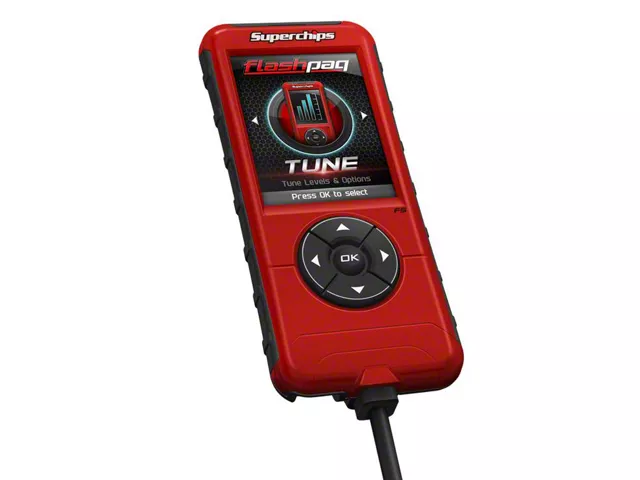
Superchips has been building performance programmers for decades, with a product line known for well-tested calibrations tuned for both power and fuel economy. Their product range covers everything from basic recalibration tools to in-dash controller units:
- Best for recalibration: The Flashcal (around $285) handles tire size correction, TPMS recalibration, and other basic adjustments without performance tuning. It is a practical tool if you have swapped wheels or tires and need your speedometer and shift points dialed in.
- Best for performance tuning: The Superchips FlashPaq F5 Tuner (around $461) delivers pre-loaded tunes optimized for power and economy. It works with 87-octane fuel, supports speed limiter and rev limiter adjustments, and includes a DTC reader.
- Best in-cab experience: The Superchips Dashpaq+ (around $768) is a dash-mounted controller that serves as a tuner, monitor, and gauge display all in one. It stays mounted in the cabin for real-time data and easy tune switching.
SCT Performance
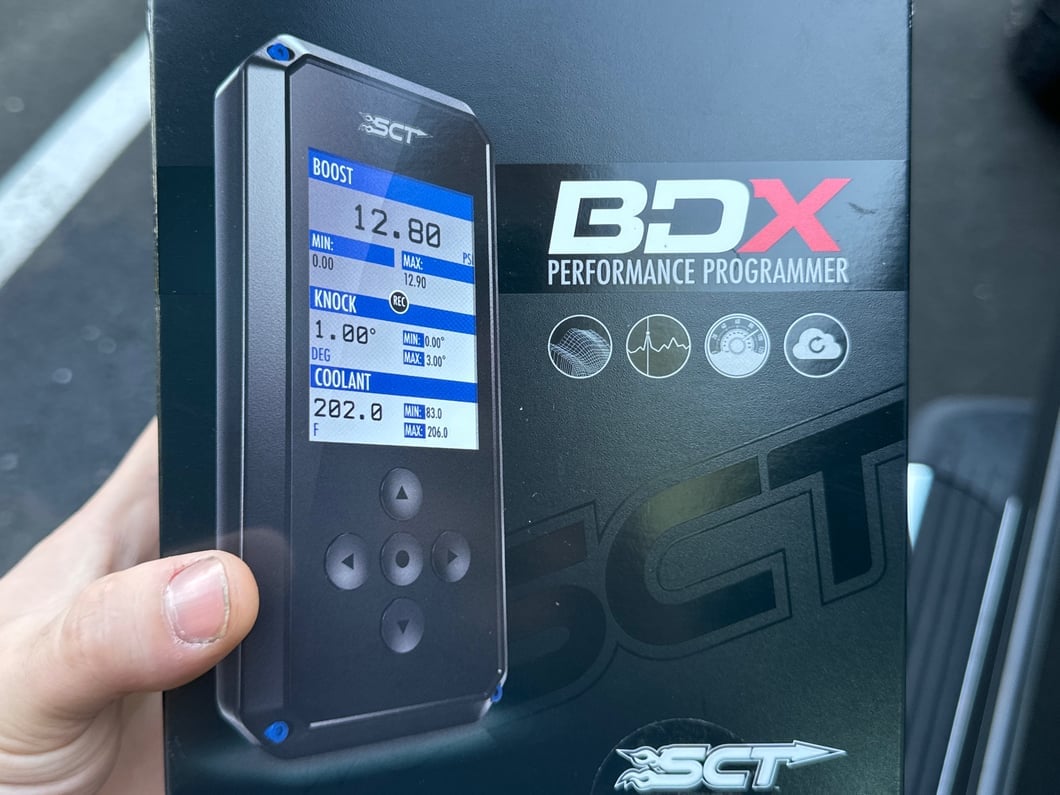
SCT Performance is known for rock-solid Ford tuning support and has expanded coverage to GM and RAM platforms. Their devices are popular among owners who plan to load custom tunes from third-party tuning shops:
- Best all-around: The BDX Tuner (around $399) supports pre-loaded tunes and is custom-tune ready via Wi-Fi connectivity. It reads and clears DTCs and works across a broad range of Ford and GM applications.
- Best for custom tuning: The X4 Power Flash (around $399) has long been a favorite among F-150 owners who work with custom tuners. Its ability to store and switch between multiple custom tune files makes it a versatile platform for modified trucks.
- Best for monitoring + tuning: The Livewire TS+ combines a touchscreen monitor with tuning capability, displaying real-time data like EGT, boost, and transmission temperature while delivering performance calibrations.
Bully Dog
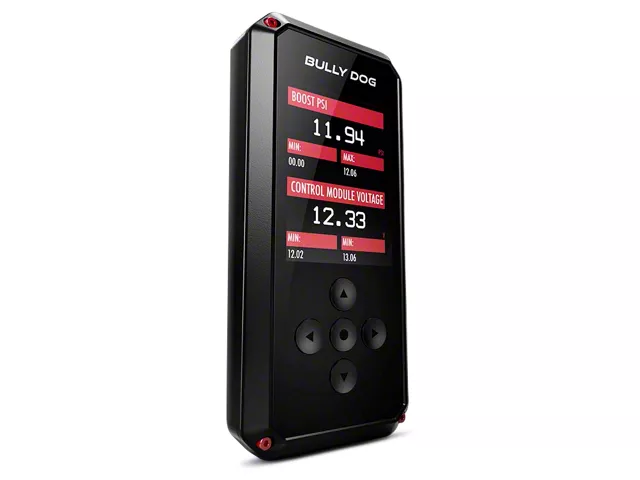
Bully Dog (now under the same parent company as SCT Performance) focuses on accessible, feature-rich tuners that appeal to owners who want solid performance gains with minimal hassle:
- Best value: The Bully Dog BDX Tuner for Silverado (around $399) mirrors the SCT BDX platform with Wi-Fi updates, pre-loaded tunes, cloud-based custom tuning support, and a built-in DTC reader. It is an excellent option for Silverado and Sierra owners.
- Best feature set: The GT Tuner (around $399 to $469) features a large color screen with real-time gauges, multiple pre-loaded tune levels, and driving coach features that help you optimize fuel economy by adjusting your driving habits.
Edge Products
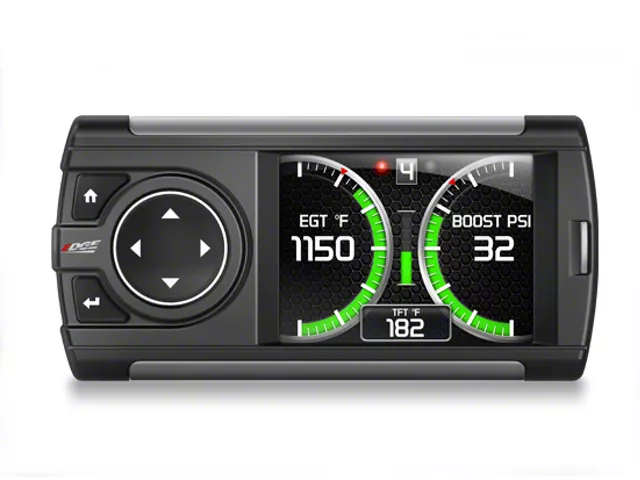
Edge Products has carved out a strong niche with touchscreen monitor-tuner combos and inline modules that deliver some of the most user-friendly interfaces on the market:
- Best touchscreen monitor-tuner: The Edge Evolution CS2 Tuner (starting around $299) combines a full-color touchscreen with pre-loaded performance tunes. It displays real-time data and can read and clear DTCs.
- Best for fuel economy: The Evolution CTS3 (around $768) is Edge's flagship touchscreen unit, combining monitoring, tuning, and data logging. It is often cited by owners for noticeable fuel economy improvements alongside power gains.
- Best inline option: The Pulsar inline module plugs into the truck's wiring harness and adjusts calibration without modifying the factory ECU file. It is a clean, reversible approach to tuning that appeals to owners who want to keep their factory warranty concerns to a minimum.
For a deeper comparison between two of the most popular monitoring and tuning brands, check out our Banks vs. Edge programmer guide.
Comparison Table: Top Truck Tuners at a Glance
|
Brand
|
Model
|
Price
|
Key Features
|
Vehicle Compatibility
|
Install Time
|
|
DiabloSport
|
PredatorX
|
~$273–$303
|
Pre-loaded tunes, DTC reader, compact handheld
|
Ford, GM
|
~10 min
|
|
DiabloSport
|
inTune i3
|
~$476–$586
|
Color touchscreen, data logging, live gauges
|
Ford, GM, RAM
|
~10 min
|
|
Superchips
|
FlashPaq F5
|
~$461
|
87-octane compatible, speed/rev limiter, DTC reader
|
Ford, GM, RAM
|
~10 min
|
|
SCT Performance
|
BDX Tuner
|
~$399
|
Wi-Fi updates, custom-tune ready, DTC reader
|
Ford, GM
|
~10 min
|
|
Bully Dog
|
BDX Tuner
|
~$399
|
Cloud tuning, Wi-Fi, pre-loaded tunes, DTC reader
|
GM (Silverado/Sierra)
|
~10 min
|
|
Edge Products
|
Evolution CS2
|
~$299
|
Color touchscreen, real-time gauges, tuning + monitoring
|
Ford, GM
|
~10 min
|
|
Edge Products
|
Evolution CTS3
|
~$768
|
5-inch touchscreen, data logging, fuel economy focus
|
Ford, GM, RAM
|
~15 min
|
|
Superchips
|
Dashpaq+
|
~$768
|
In-dash mount, tuning + monitoring, multi-tune switching
|
GM (Silverado/Sierra)
|
~15 min
|
How to Choose the Right Tuner for Your Truck
![]() The best tuner for you depends on three things: your truck's make and engine, what you want to achieve (power, towing, fuel economy), and whether you plan to load custom tunes down the road. Here are vehicle-specific recommendations to point you in the right direction.
The best tuner for you depends on three things: your truck's make and engine, what you want to achieve (power, towing, fuel economy), and whether you plan to load custom tunes down the road. Here are vehicle-specific recommendations to point you in the right direction.
Best Tuners for Ford F-150
The F-150 has some of the broadest tuner support in the truck market. Here is what to consider based on your engine:
- 5.0L Coyote V8: The SCT X4 Power Flash and DiabloSport inTune i3 are both proven performers on the Coyote platform. If you are running a cold air intake and cat-back exhaust, a custom tune loaded through the SCT X4 can help you get the most out of those bolt-ons. The Edge Evolution CS2 is another strong option if you want a touchscreen display with real-time monitoring.
- 3.5L EcoBoost: Turbocharged engines respond particularly well to tuning because there is significant headroom in boost and timing adjustments. The SCT BDX and DiabloSport inTune i3 both offer EcoBoost-specific calibrations. Owners frequently report noticeable improvements in both throttle response and mid-range torque with a quality tune.
- 2.7L EcoBoost: The SCT Livewire TS+ and DiabloSport PredatorX both cover the 2.7L EcoBoost. If fuel economy is your top priority, look for a tune calibrated for economy mode rather than peak power.
Best Tuners for Chevy Silverado and GMC Sierra
GM's truck platforms have excellent tuner support across the board:
- 5.3L V8: The Bully Dog BDX, Superchips FlashPaq F5, and Edge Evo HT2 are all well-matched to the 5.3L. The Superchips Dashpaq+ is worth considering if you want a permanently mounted display with real-time data and easy tune switching. For owners planning future modifications, the Bully Dog BDX's cloud-based custom tuning support keeps your options open.
- 6.2L V8: The DiabloSport inTune i3 and SCT BDX both offer 6.2L-specific calibrations. The 6.2L responds well to timing and transmission tuning, and owners who tow regularly benefit from tow-specific calibrations that firm up shift points and adjust the torque converter lockup strategy.
Best Tuners for RAM 1500
5.7L HEMI V8: The DiabloSport Trinity 2 and DiabloSport PredatorX are among the most popular choices for the HEMI platform. DiabloSport has invested heavily in HEMI calibrations, and their tunes are well-regarded for delivering gains across the RPM range. The Superchips FlashPaq F5 also covers the 5.7L HEMI with pre-loaded performance and towing tunes.
Canned Tunes vs. Custom Tunes
![]() When shopping for a tuner, you will encounter two types of calibrations: canned tunes and custom tunes. Understanding the difference helps you decide how much to invest upfront and what kind of results to expect.
When shopping for a tuner, you will encounter two types of calibrations: canned tunes and custom tunes. Understanding the difference helps you decide how much to invest upfront and what kind of results to expect.
Canned tunes are pre-loaded calibrations developed by the tuner manufacturer for a specific engine and vehicle combination. They are tested on stock or lightly modified trucks and designed to deliver safe, repeatable gains in power and fuel economy. Every handheld tuner ships with at least one canned tune, and most include multiple levels (economy, towing, performance) that you can switch between. Canned tunes are the easiest way to get started because they require no additional purchases or tuning shop visits.
Custom tunes are calibrations written by a professional tuner specifically for your truck and its exact combination of modifications. If you have a cold air intake, aftermarket exhaust, headers, or other bolt-ons, a custom tune accounts for those changes and optimizes the calibration accordingly. Custom tunes typically cost an additional fee (usually $50 to $150 per tune file) on top of the tuner hardware, and they are loaded onto compatible devices like the SCT X4, SCT BDX, or Bully Dog BDX via email or cloud transfer.
Are custom tunes better than canned tunes? For a stock or lightly modified truck, a quality canned tune delivers meaningful gains and keeps things simple. If you have multiple bolt-on modifications or plan to add them over time, a custom tune will extract more from your setup because it is tailored to your exact hardware combination. Many owners start with canned tunes and move to custom tunes as their builds evolve.
What to Know Before You Tune
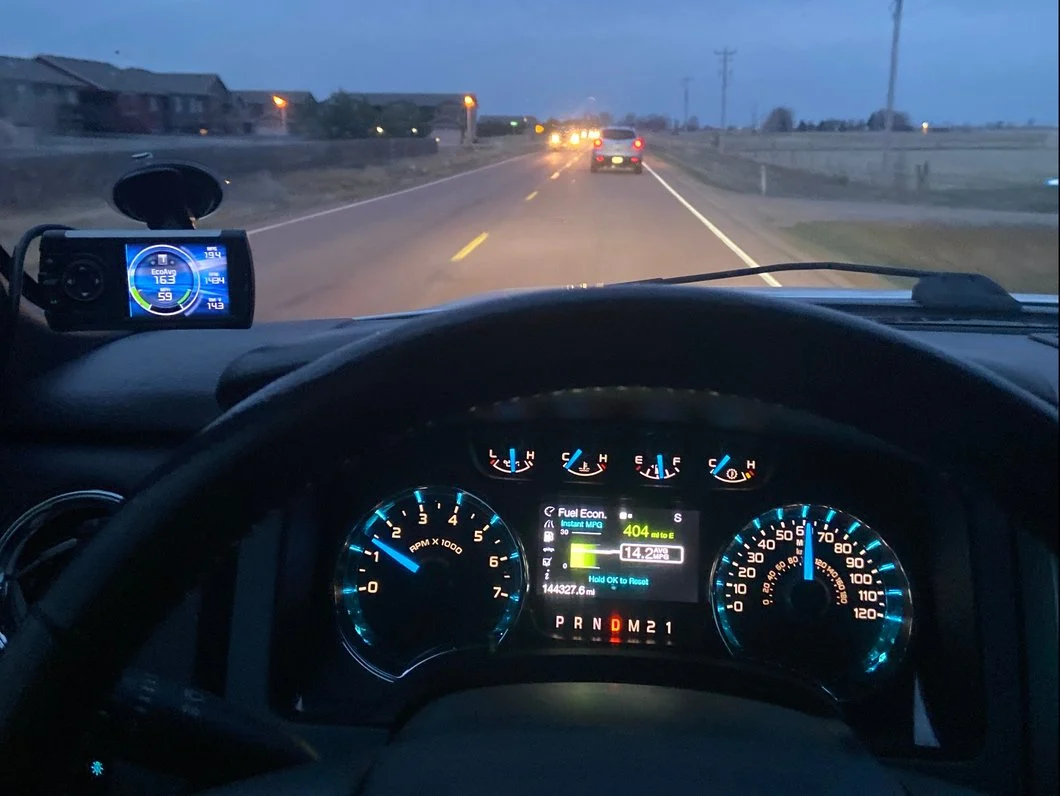
![]() Before you plug in a tuner for the first time, there are a few practical considerations worth addressing.
Before you plug in a tuner for the first time, there are a few practical considerations worth addressing.
Warranty Considerations
Flashing a new tune onto your ECU can be detected by your dealership during service visits. Under the Magnuson-Moss Warranty Act, a manufacturer cannot void your entire warranty simply because you installed an aftermarket part. However, if a failure can be directly attributed to the tune, the dealer may deny coverage for that specific repair. Most tuners include a "return to stock" function that restores the factory calibration, which is worth doing before any dealer visits. Keep in mind that some newer vehicles store flash counters that record how many times the ECU has been reprogrammed.
Emissions and CARB Compliance
If you live in California or another state that follows California emissions standards, you need to verify that your tuner carries a California Air Resources Board (CARB) Executive Order (EO) number. Tuners without CARB certification are not legal for use on emissions-controlled vehicles in those states. Many handheld tuners are sold as "off-road use only" and do not carry CARB exemptions, so check the product listing carefully before purchasing.
Fuel Octane Requirements
Some performance tunes require higher-octane fuel (91 or 93 octane) to run safely. Running a high-performance tune on 87-octane regular can cause engine knock, which leads to reduced performance and potential engine damage. Check the tune's recommended fuel grade before flashing, and plan for the ongoing cost of premium fuel if your chosen tune requires it. Several tuners, including the Superchips FlashPaq F5, include calibrations specifically designed for 87-octane fuel.
Supporting Modifications
A tuner works best when paired with complementary bolt-ons. A cold air intake gives the engine more airflow to take advantage of the revised calibration, and a cat-back or axle-back exhaust reduces backpressure on the outlet side. If you are considering intake upgrades, our performance MAF guide explains how the mass airflow sensor fits into the equation and why it matters when tuning.
Returning to Stock
Every reputable tuner includes a "return to stock" feature that reflashes your factory calibration back onto the ECU. This is important for dealer service visits, emissions inspections, and if you ever want to sell or trade in your truck. Before you tune, save your stock file, and make sure you understand the process for reverting. Most devices walk you through it with the same on-screen prompts used for the initial tune.
Ready to Unlock Your Truck's Potential?
![]() Whether you are chasing more horsepower on the highway, better fuel economy on your commute, or stronger towing calibrations for the weekend, the right tuner can transform how your truck performs. We carry tuners from all the top brands covered in this guide, with options for F-150, Silverado, Sierra, and RAM 1500 applications. Browse our full selection of truck tuners to find the right fit for your setup. And if you want a closer look at how monitoring and tuning brands compare, our Banks vs. Edge programmer guide breaks it down side by side.
Whether you are chasing more horsepower on the highway, better fuel economy on your commute, or stronger towing calibrations for the weekend, the right tuner can transform how your truck performs. We carry tuners from all the top brands covered in this guide, with options for F-150, Silverado, Sierra, and RAM 1500 applications. Browse our full selection of truck tuners to find the right fit for your setup. And if you want a closer look at how monitoring and tuning brands compare, our Banks vs. Edge programmer guide breaks it down side by side.
Frequently Asked Questions About Truck Tuners and Programmers
Whether you're shopping for your first performance tuner or comparing upgrade options, these are the most common questions truck owners ask about tuners and programmers.
What Is the Difference Between a Tuner and a Programmer?
A tuner typically refers to any device that modifies your truck's ECU settings, while a programmer specifically describes a handheld device that rewrites (flashes) the factory calibration through the OBD-II port. Control modules, by contrast, stay plugged into the engine harness and intercept sensor data in real time without altering the factory file.
Do Performance Chips Really Increase Horsepower?
Yes. Flash tuners and performance programmers adjust air/fuel ratios, ignition timing, and transmission shift points to unlock power the factory calibration leaves on the table. The exact gains depend on the vehicle, tune aggressiveness, and fuel octane, but most owners see noticeable improvements in horsepower, torque, and throttle response.
Are Truck Tuners Worth the Money?
For most truck owners, a quality tuner pays for itself through improved throttle response, better towing performance, and potential improvements in fuel economy. Tuners priced between $275 and $500 deliver the best balance of features and value for daily-driven trucks.
Will a Tuner Void My Truck's Warranty?
A tuner alone does not automatically void your entire warranty. Under the Magnuson-Moss Warranty Act, a dealer must prove the tuner directly caused a specific failure before denying a warranty claim. Most tuners let you restore the factory calibration before service visits.
What Is the Best Tuner Brand for Trucks?
DiabloSport, SCT Performance, Superchips, Bully Dog, and Edge are the leading truck tuner brands. DiabloSport and SCT offer the widest vehicle coverage for Ford and GM trucks, while Superchips and Bully Dog provide strong options for RAM and diesel applications.
How Much Horsepower Does a Tuner Add to a Truck?
Horsepower gains vary by vehicle, engine, fuel octane, and whether you use a canned or custom tune. Canned tunes on a stock gas truck typically deliver moderate gains in peak horsepower and broader improvements across the torque curve. Custom tunes tailored to your specific modifications can push results further, especially when paired with intake and exhaust upgrades.
What Is a Control Module vs. a Flash Tuner?
A control module plugs into your engine's wiring harness and continuously intercepts sensor signals to adjust performance in real time. A flash tuner connects to the OBD-II port, rewrites the ECU's calibration file once, and is then removed. Flash tuners offer broader parameter control; modules provide always-on monitoring.
Can I Use a Tuner With Other Performance Mods?
Absolutely. Tuners complement cold air intakes, exhaust systems, and other bolt-on modifications by recalibrating the ECU to take full advantage of increased airflow and reduced backpressure. Many tuners also let you adjust for larger tires, aftermarket gear ratios, and upgraded fuel injectors.
Are Truck Tuners Legal in California?
Most performance tuners are not CARB-certified and are not legal for street use in California on pollution-controlled vehicles. Some brands, like Superchips, offer California Edition tuners that carry a CARB executive order number, making them street-legal in all 50 states.
How Long Does It Take to Install a Truck Tuner?
Flash programmers install in 10–15 minutes by plugging into the OBD-II port under the dash and following on-screen prompts. Control modules that wire into the engine harness take 15–30 minutes. No special tools, soldering, or drilling is required for either type.