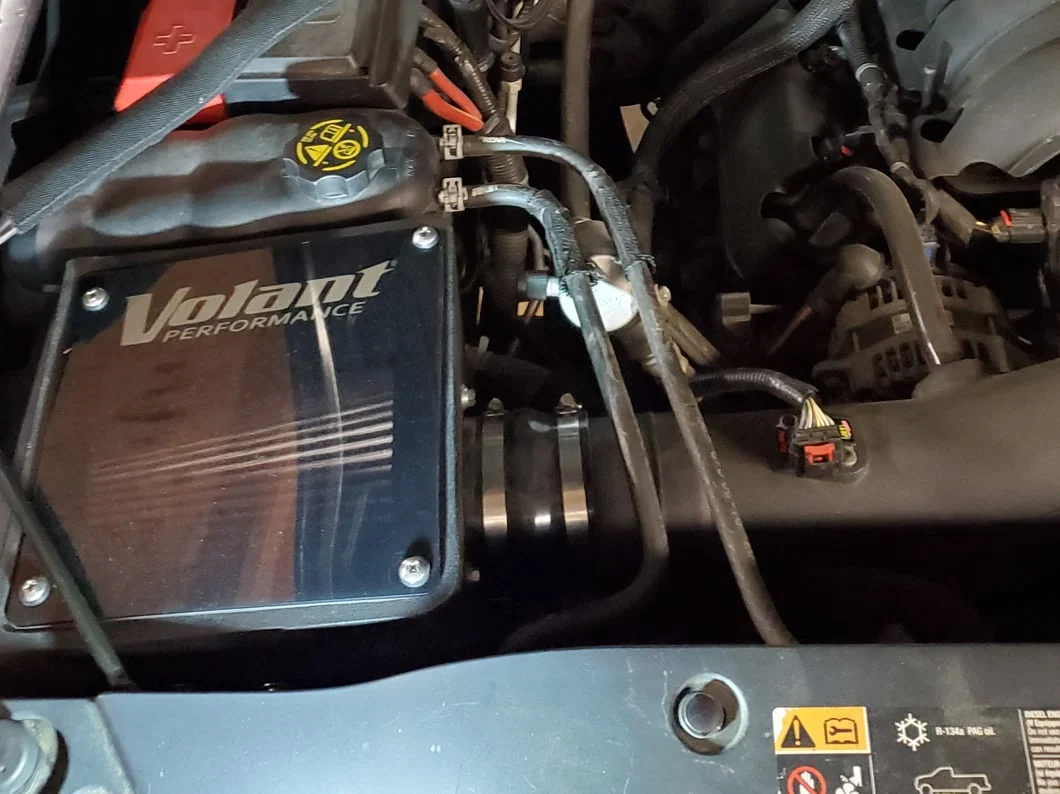
Your truck's mass air flow sensor is one of the most critical — and most overlooked — components in your engine's intake system. It measures exactly how much air enters the engine so the ECU can dial in the right fuel mixture. When you start adding performance mods like cold air intakes, larger throttle bodies, or exhaust upgrades, the stock MAF sensor can become a bottleneck. That's where a performance MAF sensor comes in. In this guide, we'll break down what a MAF sensor does, how to spot a bad one, when a MAF sensor upgrade makes sense, and how to install one yourself.
What Is a Mass Airflow Sensor?
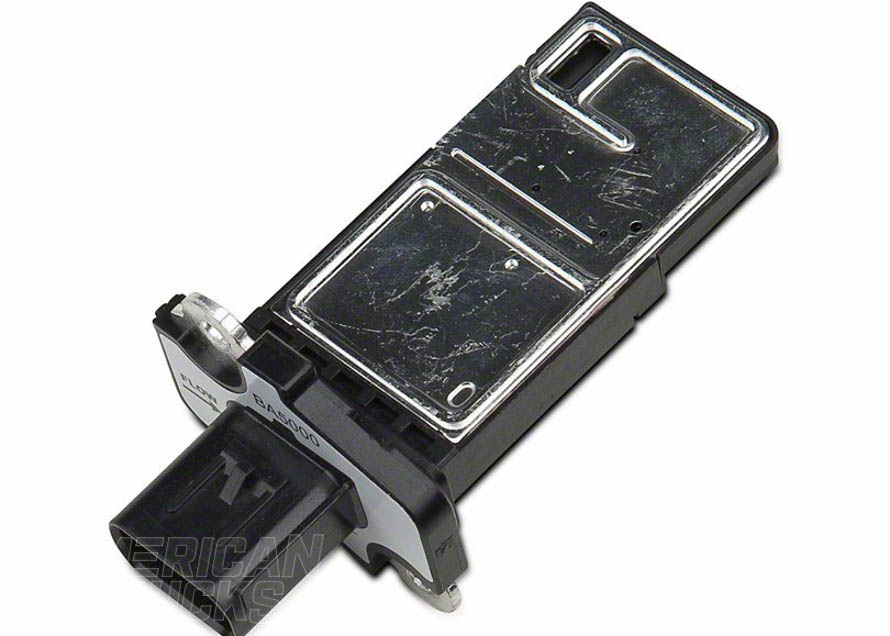
![]() A mass airflow sensor (MAF) is an electronic device mounted between your air filter and throttle body that measures the volume and density of air flowing into your engine. Your ECU relies on this data — along with input from O2 sensors and other monitors — to calculate the precise amount of fuel to inject on every combustion cycle.
A mass airflow sensor (MAF) is an electronic device mounted between your air filter and throttle body that measures the volume and density of air flowing into your engine. Your ECU relies on this data — along with input from O2 sensors and other monitors — to calculate the precise amount of fuel to inject on every combustion cycle.
Most modern trucks use a hot-wire MAF design. Here's how it works: an electrically heated wire or film element sits in the airflow path. As air passes over it, the wire cools down. The sensor's internal circuit increases current to maintain a constant temperature on the wire. The amount of current required is directly proportional to the mass of air flowing through — more air means more cooling, which means more current. The sensor converts that current draw into a voltage signal and sends it to the ECU.
The ECU uses this voltage reading along with data from the intake air temperature sensor to calculate air density. From there, it determines the correct fuel injector pulse width, ignition timing, and transmission shift points. In short, everything your engine does to produce power and maintain efficiency starts with what the MAF sensor tells the computer. For a deeper look at how these sensors work across Ford applications specifically, check out our guide on F-150 MAF sensors explained.
Why Accuracy Matters
Even a small error in airflow measurement throws off the entire air-to-fuel ratio. If the MAF reads low, the ECU delivers too little fuel (lean condition), which can cause hesitation, misfires, and elevated exhaust temperatures. If it reads high, the ECU over-fuels (rich condition), wasting gas and potentially fouling spark plugs. On a stock engine with factory airflow, the stock MAF handles this just fine. But once you start pushing more air through the intake, the stock sensor's measurement range can max out — and accuracy drops off right when you need it most.
Signs of a Bad MAF Sensor
A failing MAF sensor sends incorrect airflow data to your ECU, which throws off fueling, timing, and drivability. Here are the most common bad MAF sensor symptoms to watch for:
- Rough idle: Your truck idles unevenly or hunts between RPMs because the ECU can't hold a stable fuel mixture.
- Hesitation or stumble on acceleration: When you step on the throttle, the engine bogs or surges instead of pulling cleanly. This happens because the ECU is receiving inaccurate airflow data and can't match fuel delivery to actual demand.
- Poor fuel economy: A MAF that over-reports airflow causes the ECU to dump extra fuel. You'll notice your MPG dropping without any other changes to how you drive.
- Check engine light (CEL): The most common MAF-related diagnostic trouble codes are P0100 (MAF circuit malfunction), P0101 (range/performance), P0102 (low input), P0103 (high input), and P0104 (intermittent). If your scanner pulls any of these, the MAF is the first place to look.
- Black exhaust smoke: This signals a rich fuel condition — the engine is burning more fuel than it needs, often because the MAF is reporting more air than is actually present.
- Stalling shortly after startup: A contaminated or failing MAF can cause the engine to stall within seconds of starting, especially when cold. The ECU can't establish a stable idle fuel trim without a reliable airflow signal.
- Hard starting: The ECU needs accurate airflow data to calculate the right amount of fuel for the initial combustion event. A bad MAF can make cold starts sluggish or require multiple cranking attempts.
If you're seeing one or two of these symptoms, start by cleaning the MAF sensor (we'll cover that below). If cleaning doesn't fix it, or if you're seeing multiple symptoms together, it's time for a MAF sensor replacement.
Why Upgrade to a Performance MAF Sensor?
A performance MAF sensor upgrade makes sense when your truck's airflow exceeds what the stock sensor can accurately measure. If you've installed a cold air intake, upgraded your exhaust, or added a larger throttle body, you're pushing more air than the factory system was designed to handle. A performance MAF with a larger bore and recalibrated sensing element gives your ECU the accurate readings it needs to deliver proper fueling across the entire RPM range.
Here's what a performance MAF sensor brings to the table when paired with supporting mods:
- Increased airflow capacity: Performance MAF sensors feature a larger-bore housing — some up to 45% more airflow than stock — so they don't become a restriction in your intake tract.
- Horsepower and torque gains: With accurate airflow data, the ECU can optimize fueling for the actual air volume entering the engine. Depending on your existing mods and truck platform, owners commonly report noticeable gains — products like the Jet Performance Powr-Flo claim up to 13 HP, with real-world results varying by application.
- Better fuel economy: Counterintuitive, but accurate. When the ECU isn't guessing, it doesn't default to rich fueling as a safety margin. Real-world testing by truck owners has shown modest MPG improvements after installing a properly calibrated performance MAF alongside other airflow mods.
- Improved throttle response: Faster, more accurate airflow readings mean the ECU responds to throttle input more quickly. You'll notice crisper tip-in and smoother power delivery.
- Compatibility with other mods: A performance MAF works hand-in-hand with truck mass air flow meters, performance chips, cold air intakes, and exhaust upgrades. It keeps the sensor side of the equation matched to the mechanical upgrades you've made.
Stock vs. Performance MAF Sensor Comparison
|
Feature
|
Stock MAF Sensor
|
Performance MAF Sensor
|
|
Bore Size
|
Factory diameter (typically 70-80mm)
|
Larger bore (up to 85-95mm+)
|
|
Airflow Capacity
|
Matched to stock intake
|
Up to 45% more airflow
|
|
Calibration
|
Factory calibration only
|
Recalibrated for higher airflow volumes
|
|
Horsepower Impact
|
Baseline
|
Up to 13 HP gain (Jet Performance Powr-Flo; varies by application)
|
|
Fuel Economy
|
Factory rated
|
Modest MPG improvement (varies by truck and mods)
|
|
Throttle Response
|
Standard
|
Improved with faster signal accuracy
|
|
Tuning Required
|
N/A
|
Most bolt-on units work without a tune
|
|
Best Paired With
|
Stock intake system
|
Cold air intakes, exhaust, tuners
|
How to Clean a MAF Sensor
Cleaning your MAF sensor is one of the easiest maintenance tasks you can do at home, and it can restore performance that's been lost to dirt and oil contamination. You should clean your MAF every 15,000 to 30,000 miles — more frequently if you drive on dusty roads or run an oiled air filter.
Tools and Supplies You'll Need
MAF sensor cleaner (CRC or similar — do not use carburetor cleaner, brake cleaner, or any other solvent) Screwdriver or Torx bit set (varies by vehicle) Clean, lint-free towels Nitrile gloves (optional but recommended)
Step-by-Step Cleaning Process
- Disconnect the battery. Remove the negative terminal to prevent any electrical issues while the sensor is out.
- Locate the MAF sensor. It sits between your air filter box and the throttle body, mounted in the intake tube. You'll see a wiring harness connector plugged into it.
- Disconnect the wiring harness. Press the release tab and gently pull the connector free.
- Remove the MAF sensor. Depending on your truck, you'll either unscrew two Torx bolts holding the sensor housing in the intake tube or unclip the entire housing section. Some sensors pull straight out of the intake tube.
- Spray the sensing element. Hold the MAF sensor with the electrical connector facing up. Apply 10-15 short bursts of MAF sensor cleaner directly onto the hot wire or film element inside. Let the cleaner drip off naturally.
- Do not touch the hot wire. The sensing element is extremely delicate. Never use a brush, cloth, compressed air, or your fingers on it. Even skin oils can alter its calibration and cause inaccurate readings.
- Let it air dry completely. Set the sensor on a clean towel and allow 10-15 minutes for the cleaner to evaporate fully. Don't blow it dry — just let it sit.
- Reinstall and reconnect. Reverse the removal steps: mount the sensor back in the intake tube, plug in the wiring harness, and reconnect the battery terminal.
- Start the engine and verify. Let your truck idle for a couple of minutes. The ECU may need a short period to relearn fuel trims.
If a check engine light was on for MAF codes, it should clear after a drive cycle or two. If cleaning doesn't resolve your symptoms, the sensor's internal element may be worn beyond recovery, and it's time for a MAF sensor replacement or upgrade.
How to Install a Performance MAF Sensor
Installing a performance MAF sensor is a straightforward bolt-on job that takes 15-30 minutes with basic hand tools. No cutting, splicing, or fabrication required — these units are designed to drop right into your factory intake tube or come with their own housing.
Step-by-Step Installation
- Disconnect the battery. Pull the negative terminal before working on any electrical components.
- Remove the factory MAF sensor. Disconnect the wiring harness from the stock MAF and unbolt or unclip it from the intake tube. Set the hardware aside — you may need it for the new unit.
- Transfer the sensor element (if applicable). Some performance MAF kits use a new housing with the factory sensing element. If that's the case with your kit, carefully remove the sensor from the stock housing and install it in the new one per the instructions.
- Install the performance MAF. Mount the new MAF sensor or housing into the intake tube. Ensure the airflow direction arrow on the housing points toward the throttle body. Tighten the mounting bolts to spec — don't over-torque them.
- Reconnect the wiring harness. Plug the factory harness connector into the new MAF. It should click into place. If the performance MAF uses a different connector, the kit will include an adapter harness.
- Check for air leaks. Make sure all clamps and connections are snug. Any unmetered air entering the intake downstream of the MAF will cause lean conditions and drivability issues.
- Reconnect the battery and start the truck. Let it idle for a few minutes while the ECU adapts to the new sensor's signal. Some trucks may idle rough for the first minute or two — that's normal as the fuel trims relearn.
Do You Need a Tune?
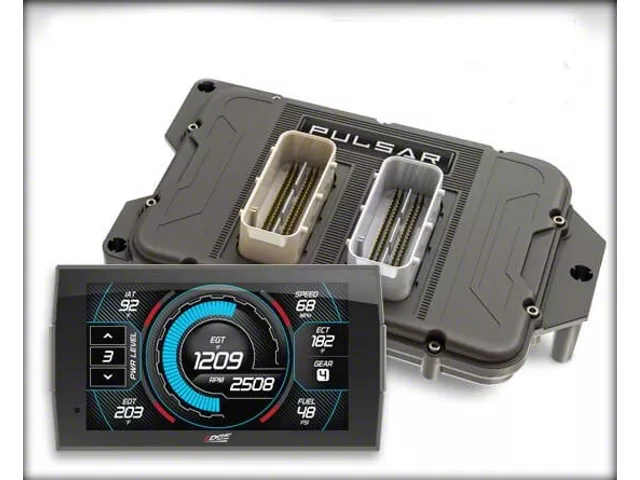
The short answer: most bolt-on performance MAF sensors are pre-calibrated to work with your factory ECU and don't require a tune. They're designed to plug in and provide accurate airflow readings at higher volumes without needing a recalibration of the fuel maps. That said, if you've made significant engine modifications — think forced induction, cam swaps, or ported heads — a custom tune paired with your new MAF is the way to go. A tuner can adjust the fuel and timing tables to take full advantage of the sensor's capability. If you're considering a tune, check out our selection of truck tuners to find one that works with your platform.
Top Performance MAF Sensor Recommendations
When shopping for a performance MAF sensor upgrade, you want a unit that's calibrated for your specific truck application, uses quality construction, and delivers measurable airflow improvements. Here's a top pick:
Jet Performance Powr-Flo Mass Air Sensor
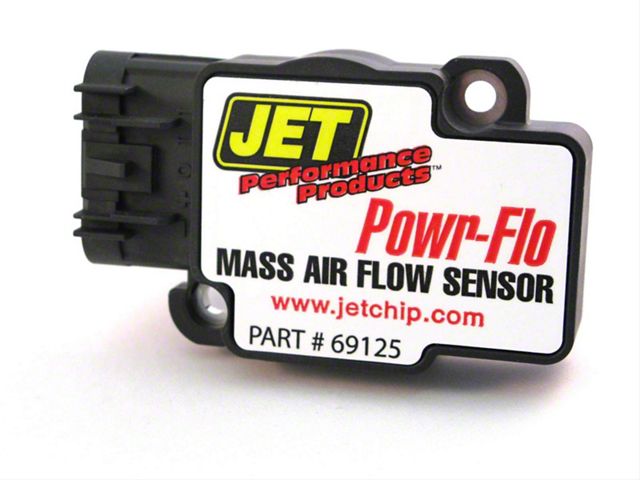
Price: $259.99
Rating: 4.5 out of 5 stars (165 reviews)
Airflow improvement: Up to 45% more airflow than stock
Horsepower gain: Up to 13 HP
Key features: Larger-bore housing with a precisely recalibrated sensing element. Designed as a direct bolt-on replacement with no tuning required for most applications. Works great as a complement to cold air intakes and exhaust upgrades.
When selecting a performance MAF, the most important thing is getting the right fitment for your truck's year, make, model, and engine. A MAF calibrated for a 5.0L Coyote F-150 won't work correctly on a 6.2L Silverado. Always confirm the part number matches your application before ordering.
Performance MAF Sensor vs. Cold Air Intake: Which Should You Get First?
A performance MAF sensor and a cold air intake address different parts of the same system, and they complement each other rather than compete. Understanding what each one does will help you decide where to spend your money first.
A cold air intake replaces your factory airbox and intake tube with a less restrictive setup that pulls cooler, denser air into the engine. Cooler air contains more oxygen molecules per unit of volume, which means more power per combustion event. A CAI is a mechanical improvement — it physically changes the air's path and temperature.
A performance MAF sensor, on the other hand, is an electronic improvement. It doesn't change the air — it changes how accurately the air is measured. It ensures your ECU has the right data to fuel properly at higher airflow volumes.
Recommended Install Order
For most truck owners, here's the order we'd recommend:
- Cold air intake first. A CAI delivers immediate, noticeable gains on its own — typically 5-15 HP depending on the kit and your truck. You'll feel the difference on your next drive. Check out our guide on cold air intake horsepower gains for specific numbers by application.
- Performance MAF sensor second (if needed). Once you've increased airflow with a CAI, monitor how your truck drives. If the throttle response feels flat at higher RPMs, or if you're seeing lean conditions, your stock MAF may be maxing out. That's when a performance MAF upgrade unlocks the full potential of your intake. For help narrowing down the right intake for your build, see our breakdown on choosing the right intake.
- Tuner (optional but recommended). If you've stacked multiple airflow mods, a custom tune ties everything together by optimizing fuel maps and timing for your exact setup.
When Does a MAF-First Approach Make Sense?
If your stock MAF sensor is already failing — throwing codes, causing rough idle, or showing signs of contamination that cleaning can't fix — replace it with a performance unit first. There's no point installing a cold air intake when your sensor can't accurately measure the air you're already getting.
Bottom line: a CAI gives you more air; a performance MAF makes sure your ECU knows exactly how much more air it's getting. Together, they're one of the most cost-effective power combos you can do in a weekend.
Related Content
Ready to upgrade your truck's airflow? Explore our full selection of performance MAF sensors and cold air intakes to find the right fit for your year, make, and model. We carry parts for Ford F-150s and Super Duty trucks, Chevy Silverados, Ram 1500s, and more — all backed by free shipping on orders over $149.
Frequently Asked Questions About Performance MAF Sensors
Below are the most common questions truck owners ask about mass airflow sensors and performance MAF upgrades.
What Does a Performance MAF Sensor Do?
A performance MAF sensor replaces your factory mass airflow sensor with a larger-bore unit that accurately measures higher volumes of airflow. This allows your engine's computer to deliver the correct air-to-fuel ratio even after you've installed mods like cold air intakes or headers, resulting in improved horsepower and throttle response.
Will a New MAF Sensor Improve Performance?
If your stock MAF sensor is failing or can't keep up with aftermarket intake modifications, a new performance MAF can improve throttle response, restore lost horsepower, and smooth out rough idle. Specific gains vary by product and application — for example, the Jet Performance Powr-Flo claims up to 13 HP on compatible truck platforms.
What Are the Symptoms of a Bad MAF Sensor?
Common signs of a failing MAF sensor include rough idle, hesitation during acceleration, poor fuel economy, stalling shortly after starting, and a check engine light with codes P0100 through P0104. Your truck may also run rich or lean, producing black exhaust smoke or misfires under load.
How Do You Clean a MAF Sensor?
To clean a MAF sensor, disconnect the battery, remove the sensor from the intake tube, and spray the sensing element with dedicated MAF sensor cleaner. Avoid touching the delicate hot wire with your fingers or brushes. Let it air dry completely for 10 to 15 minutes before reinstalling. Clean your MAF every 15,000 to 30,000 miles for best results.
Are Aftermarket Mass Air Flow Sensors Worth It?
Aftermarket performance MAF sensors are worth it when paired with other airflow modifications like cold air intakes, larger throttle bodies, or headers. On a stock engine, the gains are minimal. However, if your intake airflow exceeds your stock sensor's measurement range, a performance MAF ensures accurate fueling and prevents power loss.
What Is the Downside of Increasing MAF Tube Size?
Increasing MAF tube size without recalibrating the sensor can cause inaccurate airflow readings, leading the ECU to deliver the wrong fuel amount. This may trigger a check engine light and reduce performance. A properly calibrated performance MAF sensor with a matched larger bore avoids this issue by providing accurate readings at higher flow volumes.
Do You Need a Tune After Installing a Performance MAF?
Most bolt-on performance MAF sensors are pre-calibrated to work with your vehicle's factory ECU without requiring a tune. However, if you've made significant modifications like forced induction or a cam swap, a custom tune paired with the new MAF will deliver the best results and prevent fueling issues.
How Much Horsepower Does a Performance MAF Sensor Add?
Gains vary by product and application. For example, the Jet Performance Powr-Flo claims up to 13 HP on compatible trucks. Trucks that have already installed cold air intakes and exhaust upgrades tend to see the largest improvements because the performance MAF allows the ECU to properly account for the increased airflow those mods deliver.