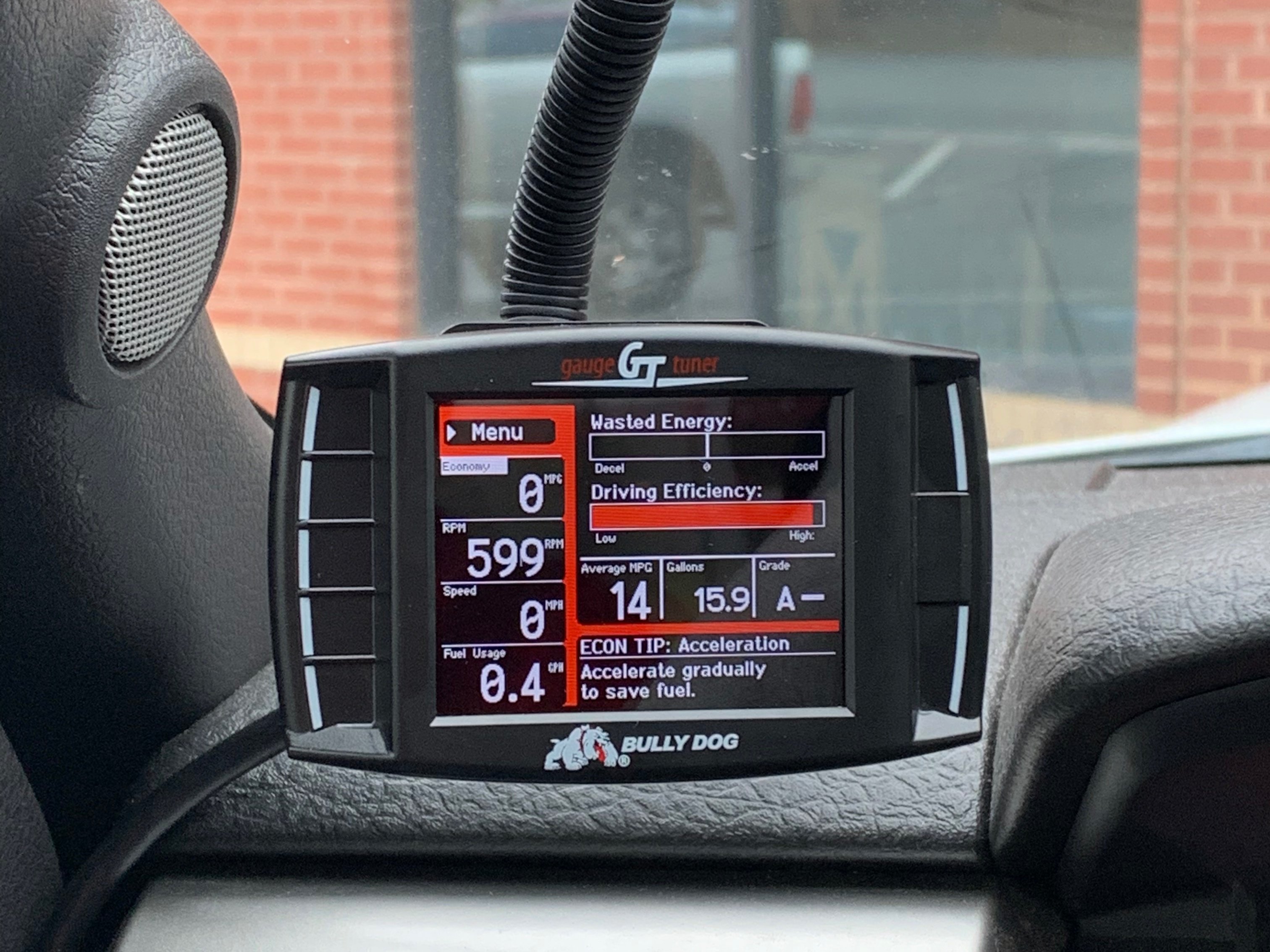
Banks and Edge are two of the biggest names in truck tuning. Here's how their full product lines compare on power, towing safety, installation, price, and warranty risk — so you can pick the right one for your build.
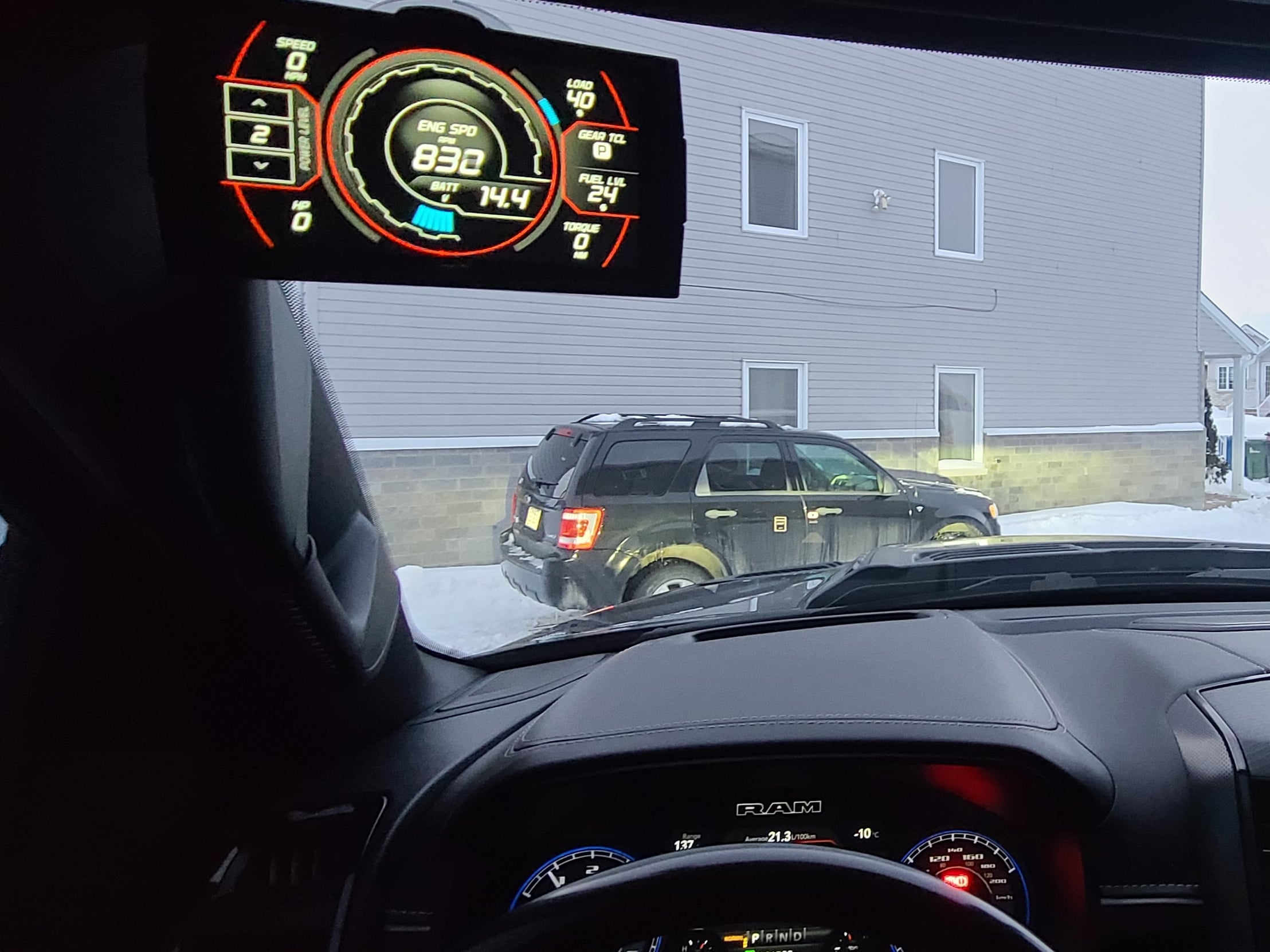
If you're shopping for a tuner or programmer, the Banks vs. Edge debate is one you'll run into fast. Both brands have loyal followings, proven track records, and product lines that deliver real horsepower and torque gains. But they take fundamentally different approaches to truck tuning — and the right choice depends on what you drive, how you use it, and what matters most to you. We carry the full Banks and Edge lineups here at AmericanTrucks, and in this guide we'll break down every product, compare them head-to-head on the specs that matter, and give you clear recommendations based on real-world use cases so you can buy with confidence.
Understanding the Two Approaches to Truck Tuning
Before you pick a brand, you need to understand the two fundamentally different ways aftermarket tuners unlock more power from your truck. Banks and Edge each use different technology under the hood, and that difference affects everything from installation time to warranty risk to how much horsepower you actually see at the wheels. If you're new to the world of performance chips vs. tuners, this section breaks it down.
Flash Tuners vs. Inline Tuners — What Is the Difference?
A flash tuner plugs into your truck's OBD-II port and rewrites the factory ECU calibration with new fuel, timing, and boost maps. An inline tuner intercepts sensor signals between the engine and ECU without ever touching the factory programming. Flash tuners like the Edge Evolution CTS3 give you deeper control over the calibration but leave a detectable footprint on the ECU. Inline tuners like the Banks Derringer sit between the ECU and engine sensors, adjusting signals in real time while the stock calibration stays completely untouched.
Why does this matter? If you're concerned about your factory warranty, inline tuners are harder for a dealership to detect. When you unplug a Derringer, your truck's ECU looks completely stock. A flash tuner, on the other hand, changes the calibration ID stored in the ECU, and most dealers can see that change even after you flash back to stock — a process sometimes called a "flash count." For a deeper dive into how these technologies stack up, check out our guide to the three types of performance chips.
Monitors vs. Tuners — Do You Need Both?
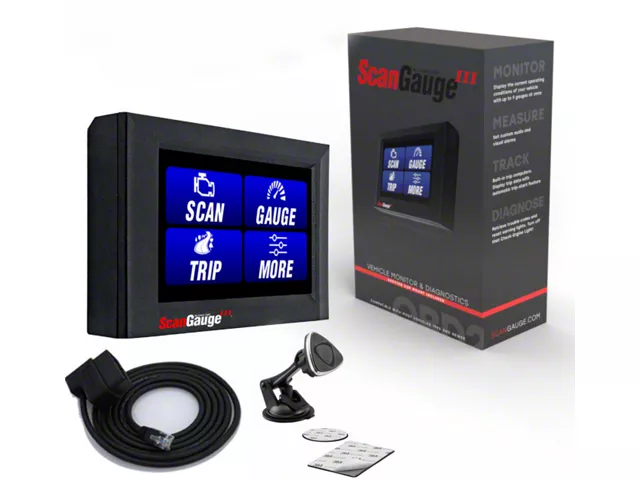
A monitor shows you real-time engine data like EGTs, boost pressure, and transmission temperature but doesn't change how your engine runs. A tuner actually modifies engine output to deliver more horsepower and torque. Some devices do both — the Edge Evolution CTS3 combines tuning and monitoring in a single unit. Banks takes the opposite approach, offering the Derringer tuner and iDash monitor as separate devices that work together or independently.
If you're towing heavy loads and want to keep an eye on engine vitals without adding power, a standalone monitor like the Banks iDash SuperGauge or Edge Insight CTS3 is a smart buy. If you want both power and data, you'll need to decide whether you prefer Edge's all-in-one approach or Banks' modular setup where you mix and match. You can also explore our truck tuning resources for more background on how these systems work together.
Banks Power Product Line Overview
Banks Power has been building diesel performance parts since 1958, and they're one of the few tuner companies still independently owned — founder Gale Banks still runs the operation out of Azusa, California. Their current lineup is laser-focused on diesel trucks: Duramax (L5P and LML), Cummins, and Power Stroke applications. If you drive a gas truck, Banks doesn't have a tuning solution for you, but for diesel owners, their products are among the most respected in the industry.
Banks Derringer Inline Tuner
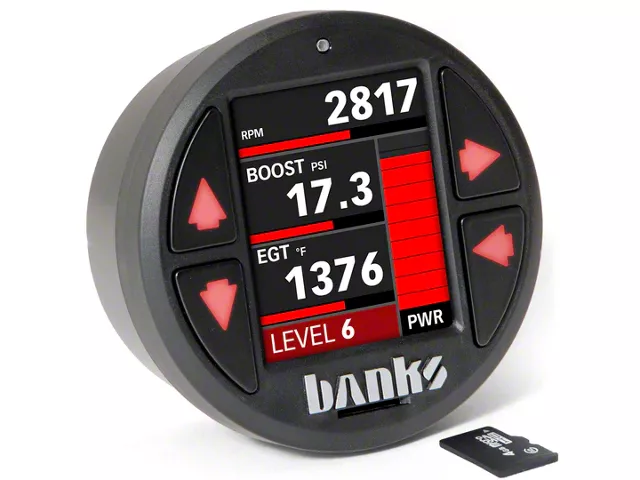
The Banks Derringer is the centerpiece of Banks' current tuning lineup. It's an inline tuner that intercepts and optimizes signals between your engine sensors and ECU, delivering up to six adjustable power levels. On the L5P Duramax, Banks rates the Derringer at up to 61 HP and 112 lb-ft of additional torque — numbers that are impressive on their own but even more notable because of how the Derringer delivers that power.
What sets the Derringer apart is Banks' ActiveSafety system. This built-in engine protection automatically dials back power when it detects dangerous conditions like excessive EGTs, low fuel pressure, or high coolant temps. If you're towing a heavy trailer up a mountain grade and your engine starts getting hot, the Derringer backs off before damage occurs. That's a feature you won't find on most competitor inline tuners.
The Derringer runs around $489 as a standalone unit or roughly $739 when bundled with the iDash SuperGauge. Because it never reflashes your ECU, there's no detectable calibration change — your ECU looks completely stock even with the Derringer installed. DPF regen intervals with the Derringer typically fall in the 700-900 mile range, which is close to stock behavior.
Banks PedalMonster Throttle Controller
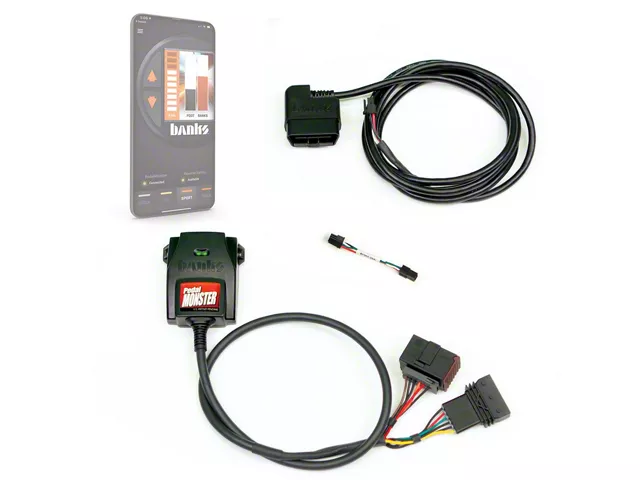
The Banks PedalMonster is not a tuner — it doesn't add horsepower or torque. What it does is eliminate the lag between your foot hitting the gas pedal and the engine responding. Factory drive-by-wire throttle systems have built-in delay, and the PedalMonster overrides that delay to make your truck feel more responsive off the line and during passing maneuvers. If you've ever looked into throttle controllers like the Pedal Commander, the PedalMonster fills the same role but integrates with Banks' iDash ecosystem for on-the-fly adjustability.
At around $299, the PedalMonster is the most affordable entry point into the Banks lineup. It pairs with the iDash for real-time sensitivity adjustments and works on both gas and diesel trucks — one of the few Banks products that crosses over to gasoline applications.
Banks iDash SuperGauge and DataMonster
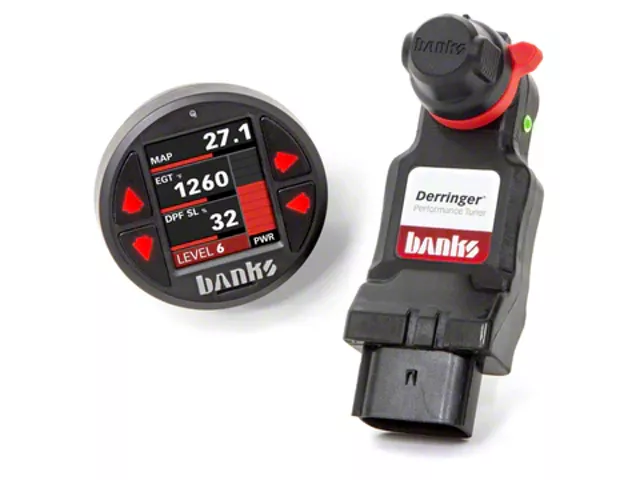
The Banks iDash SuperGauge is a 1.8-inch OLED gauge that monitors up to 20 engine parameters in real time. It mounts in a standard gauge pod or on the A-pillar and gives you vital data like EGTs, boost pressure, transmission temp, and fuel rail pressure. You can use it standalone for monitoring or pair it with the Derringer for tuner control and data logging.
The DataMonster variant expands the parameter list significantly and costs around $489. The standard SuperGauge starts at approximately $339. Whether you're towing, racing, or just want to keep an eye on your diesel's health, the iDash gives you data the factory gauge cluster doesn't.
Supported Vehicles
Banks focuses exclusively on diesel engines. Their current Derringer and iDash applications cover:
- GM Duramax: L5P (2017+) and LML (2011-2016) engines
- RAM Cummins: 6.7L applications
- Ford Power Stroke: 6.7L applications
If you own a gas-powered F-150, Silverado, Sierra, or RAM 1500, Banks does not offer tuning products for your engine. The PedalMonster is the one exception — it works across gas and diesel platforms. For a broader look at what's available across brands, see our roundup of top power programmers and performance chips.
Edge Products Line Overview
Edge Products has been building tuners and monitors from their Ogden, Utah headquarters since 1999 and is now part of the Holley Performance Products family. The biggest difference between Edge and Banks? Edge tunes both gas and diesel engines, giving them a much wider compatibility range across the truck market. Whether you drive an EcoBoost F-150 or a Duramax-powered Silverado HD, Edge likely has a product for your truck.
Edge Evolution CTS3 Tuner and Monitor
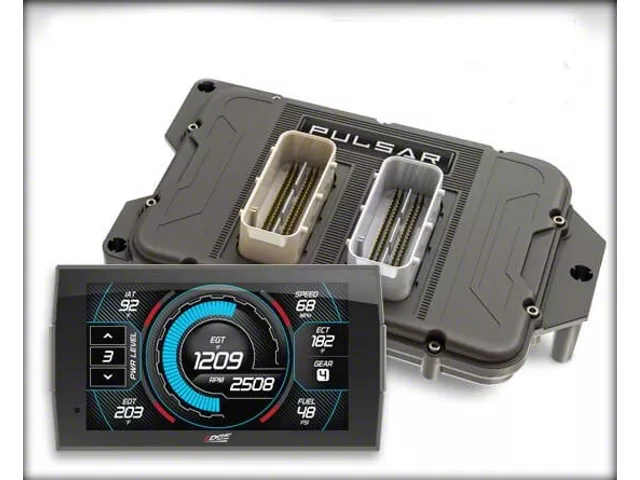
The Edge Evolution CTS3 is Edge's flagship all-in-one device. It combines a flash tuner, performance monitor, and diagnostic tool in a single unit with a 5-inch full-color touchscreen. The CTS3 comes preloaded with three calibration tunes — Performance, Tow, and Economy — so you can switch between aggressive power for the drag strip and conservative settings for long-haul towing.
Beyond tuning, the CTS3 reads and clears diagnostic trouble codes, logs performance data, and calibrates your speedometer after a tire or gear swap. It covers gas and diesel applications across Ford, GM, and RAM trucks, making it one of the most versatile tuners on the market. Pricing sits at around $768. If you're shopping for an Edge Evolution CS2 for the F-150, the CTS3 is its newer, more capable replacement.
Edge Pulsar / Pulsar XT Inline Module
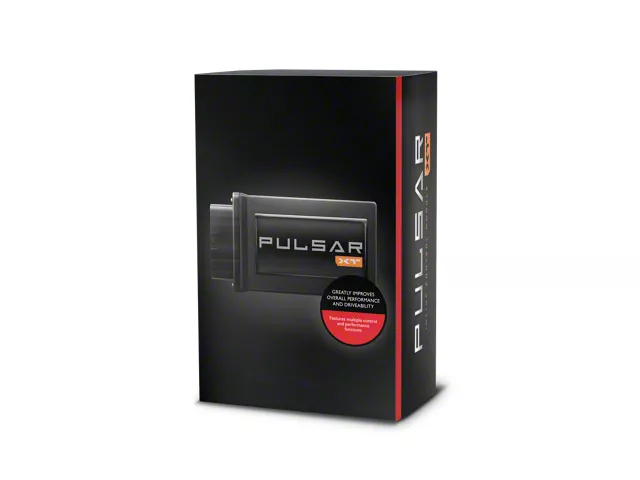
The Edge Pulsar takes a different approach from the CTS3. Instead of flashing your ECU, the Pulsar connects inline to the engine control module and adjusts performance parameters without rewriting the factory calibration — similar in concept to the Banks Derringer. On diesel applications, Edge rates the Pulsar at up to 90 HP and 156 lb-ft of additional torque, which are some of the highest inline tuner gains on the market.
One of the Pulsar's standout features is shift-on-the-fly power level changes using your truck's factory steering wheel controls. It also includes a built-in throttle enhancer, so you don't need a separate throttle controller. Pricing ranges from roughly $688 to $800 depending on the application. One consideration: user reports indicate that DPF regen frequency with the Pulsar can increase to roughly every 150 miles, which is significantly more frequent than stock or Banks Derringer intervals.
Edge Insight CTS3 Monitor
The Edge Insight CTS3 is the monitor-only version of the CTS3 platform. It gives you the same 5-inch touchscreen, data logging, and diagnostic code reading as the Evolution CTS3 but without any tuning capability. It works as a standalone monitoring solution or pairs with the Pulsar for power-level control and data display.
At around $450, the Insight CTS3 is a solid choice if you want professional-grade engine monitoring without modifying your truck's power output. It's also a good stepping stone — you can start with the Insight and add a Pulsar later when you're ready for more power.
Supported Vehicles
Edge's compatibility list covers both gas and diesel trucks, which is their biggest competitive advantage over Banks:
- Ford: F-150 (including EcoBoost), Super Duty (Power Stroke diesel and gas V8/V10)
- GM: Silverado/Sierra 1500 (gas), Silverado/Sierra HD (Duramax diesel)
- RAM: 1500 (gas), 2500/3500 (Cummins diesel)
If you're looking for Edge tuner options for EcoBoost F-150s, Edge is one of very few brands that offers calibration support for turbocharged gas engines in the truck market.
Banks vs. Edge Head-to-Head Comparison
Now that you know what each brand offers, let's put them side by side. This comparison covers the areas that matter most when you're deciding between Banks and Edge: power output, towing performance, installation, warranty implications, and price.
| Category |
Banks |
Edge |
| Engine Types |
Diesel only |
Gas + Diesel |
| Peak HP Gain (Diesel) |
Up to 61 HP (Derringer, L5P) |
Up to 90 HP (Pulsar, L5P) |
| Tuning Method |
Inline (no ECU reflash) |
Flash (CTS3) or Inline (Pulsar) |
| Monitor Display |
iDash 1.8" OLED |
CTS3 5" touchscreen |
| Towing Safety |
ActiveSafety (auto power reduction) |
Transmission slip backdown |
| Install Time |
30-60 min (wiring required) |
10-15 min (Pulsar) / 15 min (CTS3) |
| Warranty Risk |
Minimal (no ECU trace) |
Moderate (flash detectable) |
| Price Range |
$299-$739 |
$450-$800 |
| DPF Regen Impact |
Every 700-900 miles |
Every ~150 miles (Pulsar, per user reports) |
| Best For |
Diesel towing, engine safety |
Gas trucks, max power, all-in-one |
Power Output — Who Delivers More Horsepower?
On paper, Edge wins the peak horsepower battle. The Edge Pulsar is rated at up to 90 HP and 156 lb-ft on the L5P Duramax, compared to Banks' Derringer at up to 61 HP and 112 lb-ft on the same engine. That's a meaningful gap if raw power numbers are your top priority.
But peak numbers don't tell the full story. Banks engineers the Derringer for sustained, safe power delivery — especially under load. The ActiveSafety system monitors EGTs, coolant temp, fuel pressure, and other parameters in real time. If any reading hits a dangerous threshold, the Derringer automatically reduces power to protect your engine. Edge's Pulsar doesn't have an equivalent active protection system, which means those higher peak numbers may not be sustainable under hard towing conditions without careful driver monitoring.
The practical difference: if you're pulling a 12,000-pound fifth wheel up a 7% grade in August, the Banks Derringer will give you steady, protected power the entire climb. The Edge Pulsar might start with more power, but you'll need to watch your gauges closely and back off manually if things get hot.
Towing Performance and Engine Safety
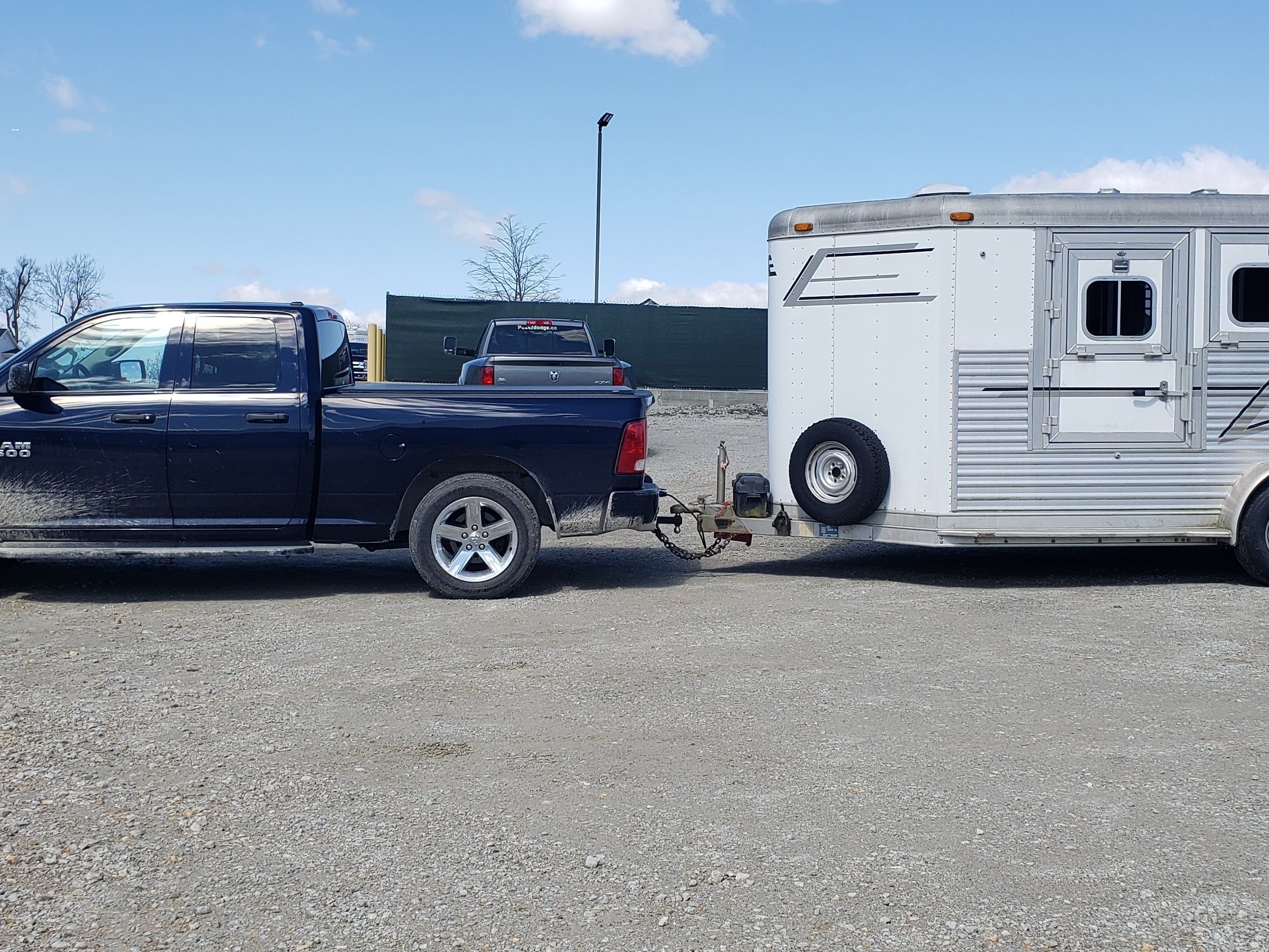
Towing is where the Banks vs. Edge comparison gets the most heated — literally. When you're towing heavy loads, exhaust gas temperatures climb quickly, and sustained high EGTs are one of the fastest ways to damage a diesel engine.
Banks' ActiveSafety system is purpose-built for this scenario. It continuously monitors engine conditions and automatically reduces tuner output when it detects risk factors like rising EGTs or dropping fuel pressure. You don't have to watch a gauge and manually back off — the system does it for you. This is a genuine safety feature that's especially valuable for drivers who tow regularly in mountainous terrain or extreme heat.
Edge uses a transmission slip backdown feature on the Pulsar that reduces power when it detects the transmission is struggling. It's a useful safeguard, but it's reactive to transmission slip rather than proactive about engine temperatures. You'll still want to monitor your EGTs with an Insight CTS3 or aftermarket gauge when towing heavy with a Pulsar.
There's also the regen question. DPF regeneration is unavoidable on modern diesel trucks, but tuner choice can affect how often it happens. Banks Derringer users typically report regen intervals in the 700-900 mile range, which is close to stock. Edge Pulsar users have reported regen intervals as short as every 150 miles, likely because the higher power output pushes more soot through the exhaust system. If you're making short trips or towing frequently, that regen frequency can become a real nuisance.
Installation and Ease of Use
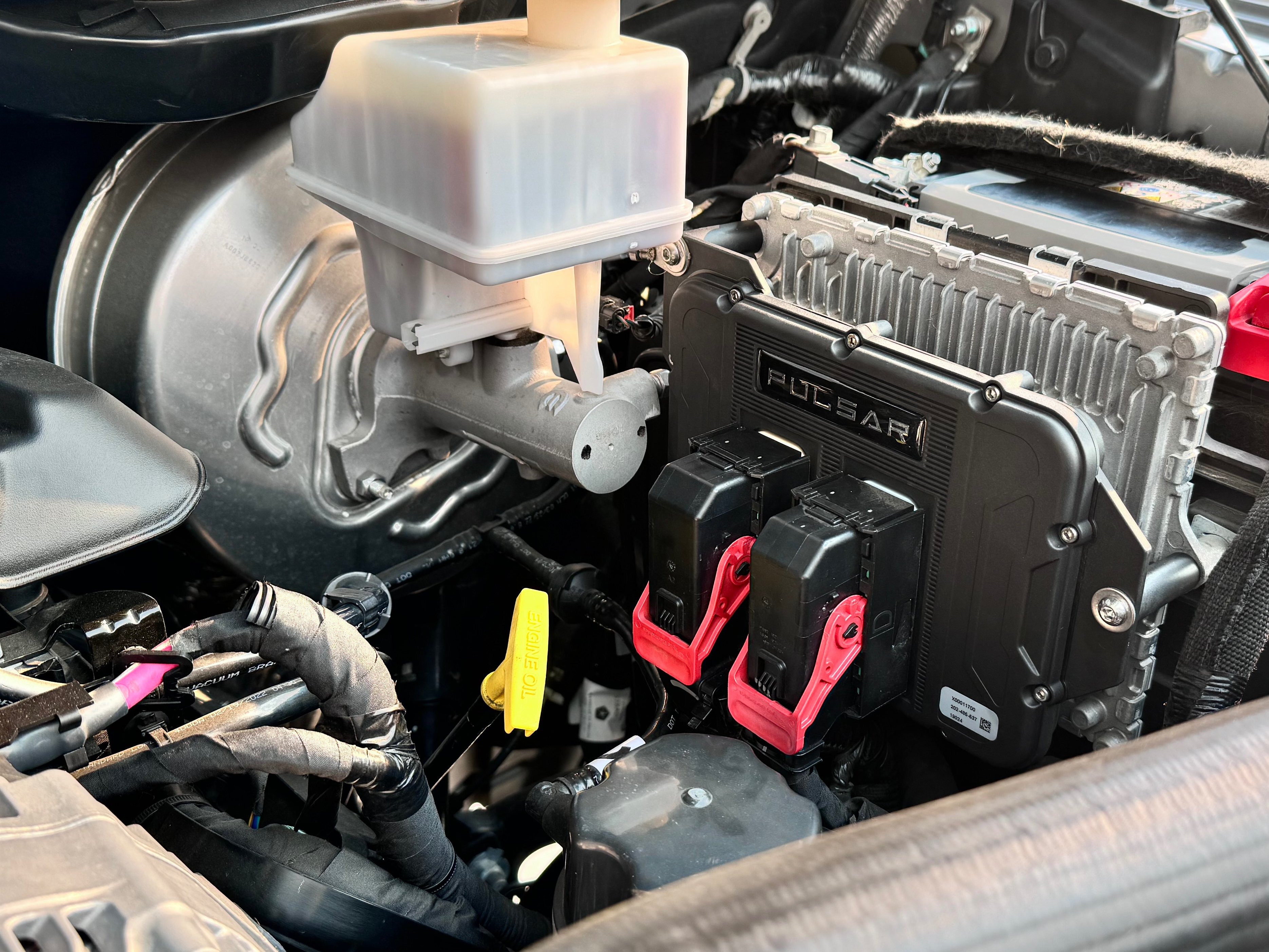
If quick installation is a priority, Edge has the advantage here:
- Edge Pulsar: Plugs into the engine control module connection. Most installs take 10-15 minutes with basic hand tools. No wiring, no splicing.
- Edge Evolution CTS3: Connects through the OBD-II port under the dash. Flash process takes about 15 minutes.
- Banks Derringer: Requires wiring into several engine sensor harnesses. Expect 30-60 minutes with the included instructions and basic tools. Not difficult, but definitely more involved than the Pulsar.
Once installed, the Edge CTS3's 5-inch touchscreen is the most user-friendly interface of the bunch — it's essentially a tablet mounted in your truck. The Banks iDash is smaller at 1.8 inches but packs a surprising amount of data into that compact OLED display. Power level changes on the Pulsar happen through your steering wheel buttons, which is a clever touch that keeps your hands where they belong while driving.
Warranty Implications
Your factory warranty is a real consideration when adding a tuner. Here's how each approach affects it:
- Inline tuners (Banks Derringer, Edge Pulsar): Because these devices don't rewrite the ECU calibration, they leave minimal detectable evidence when removed. Your ECU reads as stock. This doesn't guarantee warranty coverage, but it significantly reduces the chance a dealer will flag your truck as modified.
- Flash tuners (Edge Evolution CTS3): The CTS3 rewrites your ECU calibration, and that change is recorded in the ECU's flash count. Even if you return to the stock tune before a dealer visit, the calibration history can be checked. Many dealers will flag this and may deny powertrain warranty claims under the Magnuson-Moss Warranty Act.
If warranty protection is a top priority, inline tuners from either brand are the safer bet. Between the two inline options, the Banks Derringer and Edge Pulsar are comparable in terms of warranty risk — both leave no ECU calibration footprint when removed. For more on the tradeoffs involved, read our guide to the pros and cons of performance chips.
Price Comparison
Here's how the full product lines stack up on price:
Banks:
- PedalMonster (throttle controller): ~$299
- iDash SuperGauge (monitor): ~$339
- iDash DataMonster (expanded monitor): ~$489
- Derringer (inline tuner, standalone): ~$489
- Derringer + iDash bundle: ~$739
Edge:
- Insight CTS3 (monitor only): ~$450
- Pulsar (inline module): ~$688-$800
- Evolution CTS3 (flash tuner + monitor): ~$768
Banks offers more flexibility in how you spend your money. You can start with just the Derringer at $489 and add an iDash later, or buy a PedalMonster for $299 if you only want throttle response. Edge's pricing is higher per device, but the Evolution CTS3 packs tuning, monitoring, and diagnostics into one $768 unit — so you're getting more functionality per dollar if you want the all-in-one approach.
Which Tuner Is Right for Your Truck?
The best tuner depends entirely on what you drive, how you use it, and what matters most to you. Here are specific recommendations based on common scenarios.
Best for Diesel Towing — Banks Derringer
If you tow regularly with a Duramax, Cummins, or Power Stroke diesel, the Banks Derringer is the strongest choice. ActiveSafety engine protection means you can set it and forget it — the tuner manages power output automatically to prevent engine damage under sustained load. The lower DPF regen frequency is a practical bonus when you're making long tow hauls. Pair it with the iDash SuperGauge for real-time data on every parameter that matters during towing.
- Why: ActiveSafety protection, lower regen frequency, proven towing durability
- Ideal for: Duramax, Cummins, and Power Stroke tow rigs pulling heavy loads
- Budget: ~$489 standalone, ~$739 with iDash
Best for Maximum Diesel Power — Edge Pulsar
If you want the highest possible horsepower and torque from an inline module, the Edge Pulsar delivers more peak power than any other inline option. Up to 90 HP and 156 lb-ft on the L5P Duramax puts the Pulsar in a class of its own for raw output. The built-in throttle enhancer and steering wheel power-level switching are genuine convenience features you won't find on the Derringer.
- Why: Highest peak HP from an inline module, quick install, built-in throttle enhancer
- Ideal for: Performance-oriented diesel trucks where maximum power is the priority
- Budget: ~$688-$800
Best for Gas Trucks — Edge Evolution CTS3
This one isn't even a contest. Banks doesn't offer tuning calibrations for gasoline engines, so if you drive a gas-powered F-150, Silverado, Sierra, or RAM 1500, Edge is your only choice between these two brands. The Evolution CTS3 provides preloaded tunes optimized for gas engines, along with monitoring, diagnostics, and speedometer calibration in one device.
- Why: Only option of the two that tunes gas engines
- Ideal for: F-150 (including EcoBoost), Silverado 1500, Sierra 1500, RAM 1500 gas models
- Budget: ~$768
Best All-in-One Device — Edge Evolution CTS3
If you want one device that does everything — tuning, monitoring, data logging, and diagnostic code reading — the Edge Evolution CTS3 eliminates the need to buy multiple products. You get a 5-inch touchscreen with preloaded tunes and full monitoring capabilities in a single purchase. Banks requires two separate products (Derringer + iDash) to match the CTS3's combined functionality, and even then you won't get the DTC reading and clearing feature.
- Why: Tuning + monitoring + diagnostics in one unit
- Ideal for: Owners who want a single device solution without buying multiple components
- Budget: ~$768
Best for Warranty Protection — Banks Derringer
If keeping your factory warranty intact is non-negotiable, the Banks Derringer's inline design is the safest approach. It never touches your ECU calibration, leaves no flash count trace, and can be removed in minutes before a dealer visit. The Edge Pulsar is also inline and similarly low-risk, but Banks' longer track record with the inline approach and the Derringer's ActiveSafety system give it a slight edge for the warranty-conscious buyer.
- Why: Inline design with zero ECU footprint, easy removal
- Ideal for: Truck owners under factory powertrain warranty who want safe, undetectable power gains
- Budget: ~$489 standalone
No matter which direction you go, both Banks and Edge make reliable, well-engineered products backed by dedicated customer support teams. The right choice comes down to your engine type, how you use your truck, and whether you prioritize maximum power or maximum protection. Ready to explore your options? Browse all truck tuners to find the right fit for your year, make, and model — and if you need a hand choosing, our Sales Tech team is ready to help with real-world recommendations based on builds just like yours.
Related Content
Frequently Asked Questions About Banks vs. Edge Tuners
Truck owners frequently ask about the differences between Banks and Edge tuners before making a purchase decision. Here are the most common questions and straightforward answers.
How Much Horsepower Does an Edge Tuner Add?
Edge tuners typically add 15–90 horsepower depending on the product and engine. The Edge Evolution CTS3 adds roughly 15–25 HP on gas trucks, while the Edge Pulsar inline module can deliver up to 90 HP and 156 lb-ft of torque on diesel applications like the L5P Duramax. Results vary by engine, tune level, and supporting modifications.
How Much Horsepower Does a Banks Tuner Add?
Banks tuners deliver 25–61 horsepower on diesel trucks depending on the product and power level selected. The Banks Derringer on an L5P Duramax produces up to 61 HP and 112 lb-ft of torque at its highest setting. Banks prioritizes safe, sustained power with active safety monitoring rather than peak numbers alone.
Is Banks or Edge Better for Towing?
Banks generally has the edge for towing applications. The Derringer includes ActiveSafety technology that monitors exhaust gas temperatures, coolant temps, and other parameters in real time, automatically reducing power if thresholds are approached. Edge tuners offer a dedicated tow tune but lack the same level of integrated safety monitoring during heavy towing loads.
What Is the Difference Between a Monitor and a Programmer?
A monitor displays real-time engine data like boost pressure, exhaust gas temperatures, and transmission temperatures without modifying the engine's calibration. A programmer (or tuner) actually changes the ECU's fuel maps, timing, and shift points to increase performance. Some devices, like the Edge Evolution CTS3, combine both functions in one unit.
Do Banks Tuners Work on Gas Trucks?
Banks primarily focuses on diesel applications. Their Derringer, PedalMonster, and iDash products are designed for diesel engines like the Duramax, Cummins, and Power Stroke. Edge Products, by contrast, tunes both gas and diesel engines, making Edge the better option for gas-powered truck owners seeking a tuner with preloaded performance calibrations.
Are Edge Tuners Good?
Edge tuners are well-regarded for their feature-rich monitors, ease of installation, and broad vehicle compatibility across gas and diesel platforms. The Evolution CTS3 is one of the most popular all-in-one tuner-monitors on the market. However, some diesel owners report that Edge Pulsar units can trigger more frequent DPF regeneration cycles compared to Banks Derringer equivalents.
What Is the Best Programmer for a 6.6 Duramax?
For the 6.6L Duramax, the Banks Derringer with iDash and the Edge Pulsar with Insight CTS3 are the two leading options. The Derringer offers better safety monitoring and lower regen frequency, while the Pulsar delivers higher peak horsepower numbers and easier installation. Your choice depends on whether you prioritize raw power or engine protection.
Who Manufactures Edge Tuners?
Edge Products is manufactured by Holley Performance Products, which also owns MSD, Flowmaster, Accel, and other well-known aftermarket brands. Edge is headquartered in Ogden, Utah, and has been producing truck performance electronics since 1999. Banks Power is independently owned by founder Gale Banks and is based in Azusa, California.
Will a Tuner Void My Truck's Warranty?
Installing any aftermarket tuner can potentially affect your factory warranty under the Magnuson-Moss Warranty Act, but the dealer must prove the tuner caused the specific failure. Inline tuners like the Banks Derringer do not reflash the ECU and leave minimal electronic footprint, making warranty claims less risky. Flash-based tuners leave a more detectable trace in the ECU's calibration ID history.
What Is the Difference Between an Inline Tuner and a Flash Tuner?
An inline tuner intercepts and modifies sensor signals between the engine and ECU without overwriting factory software. A flash tuner rewrites the ECU's calibration files directly. Inline tuners like the Banks Derringer are easier to remove without a trace, while flash tuners like the Edge Evolution CTS3 offer more comprehensive calibration control including shift points, speed limiters, and tire size corrections.