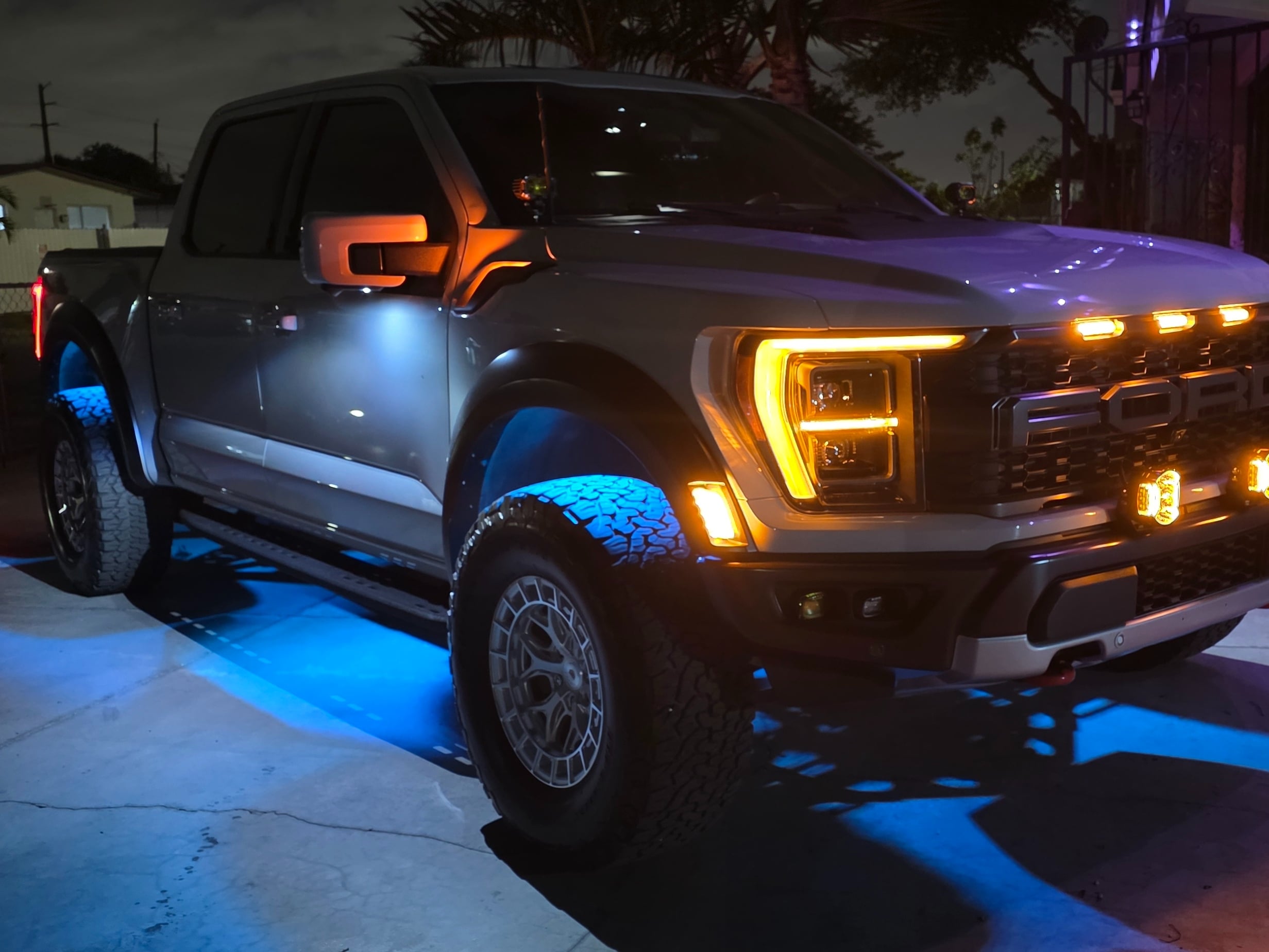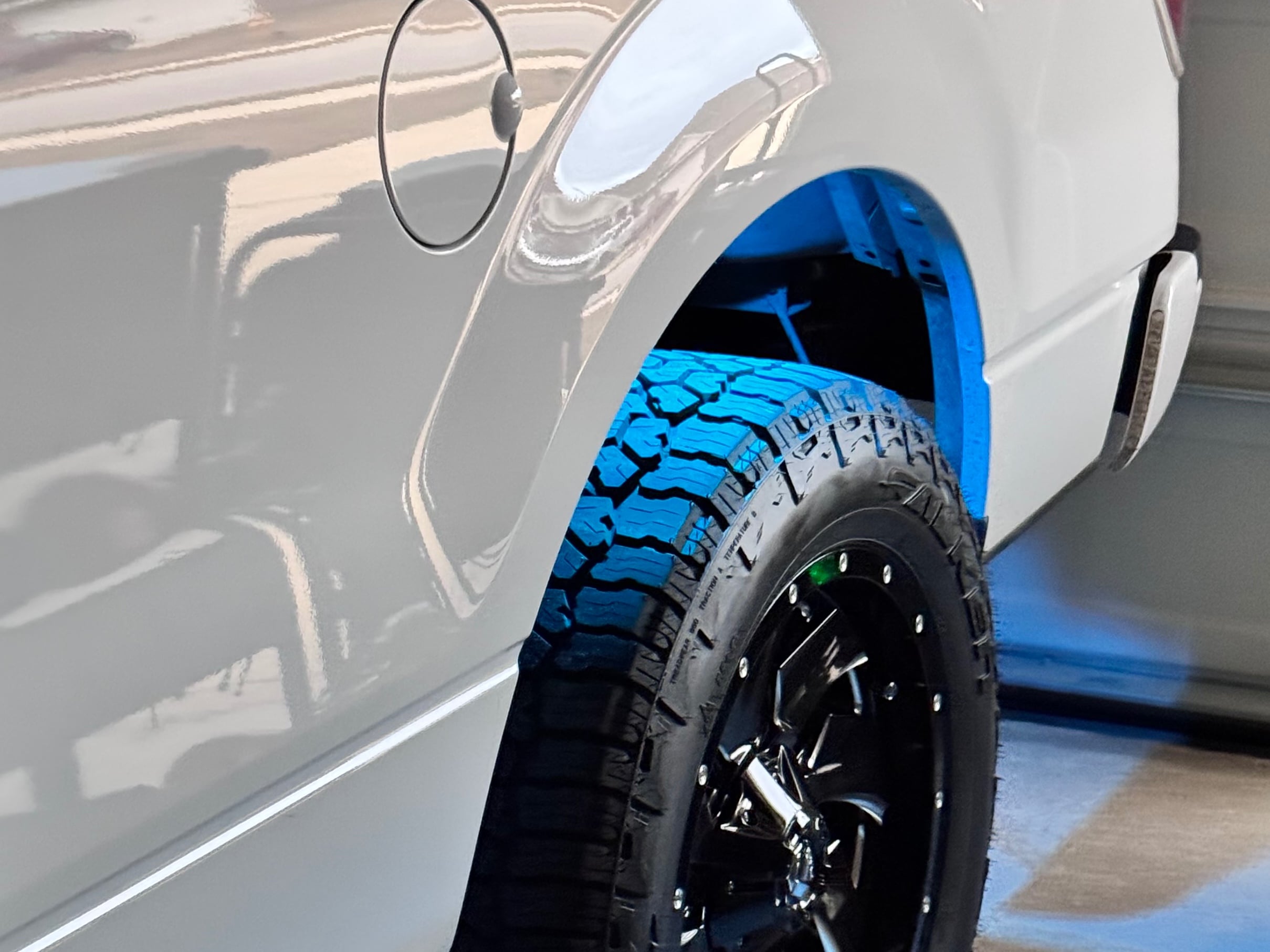
If you've noticed LED pods glowing under lifted trucks at shows, trail rides, or even in your neighborhood, you've seen rock lights in action. Originally built for off-road rigs that needed to spot obstacles beneath the chassis at night, rock lights for trucks have become one of the fastest-growing exterior lighting upgrades in the aftermarket. This guide walks you through what rock lights are, how to pick the right set for your truck, how to install them, and which brands are worth your money.
What Are Rock Lights?
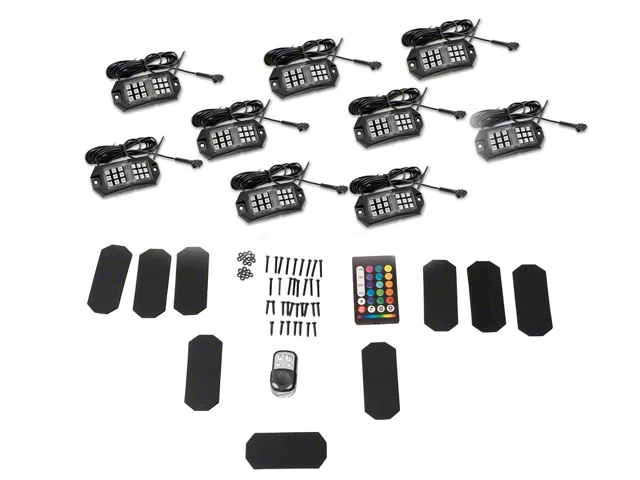
Rock lights are small, sealed LED pods that mount underneath a truck's frame, body, or suspension components to cast light on the ground below and around the vehicle. Originally developed for rock crawling rigs that needed to see obstacles beneath the chassis at night, rock lights for trucks have expanded into one of the most popular exterior lighting upgrades across every segment of the truck community.
You might also hear them called underglow lights, underbody lights, puddle lights, or courtesy lights, but the function is the same: illuminate the terrain and undercarriage area that your headlights and fog lights simply can't reach. Whether you're picking your line on a dark trail, setting up camp after sundown, or showing off your suspension work at a truck meet, rock lights fill the gap between what you can see from the cab and what's actually happening under the truck.
Modern rock light pods are typically about the size of a quarter to a hockey puck, sealed against water and dust, and run on 12V power drawn from the truck battery. They mount to frame rails, control arms, crossmembers, or wheel wells using bolts, screws, or magnets. Most kits include a wiring harness that connects all pods to a single controller and switch. If you've been looking into truck lighting upgrades, rock lights are one of the most straightforward additions you can make to change the way your truck looks and functions after dark.
Why Truck Owners Install Rock Lights
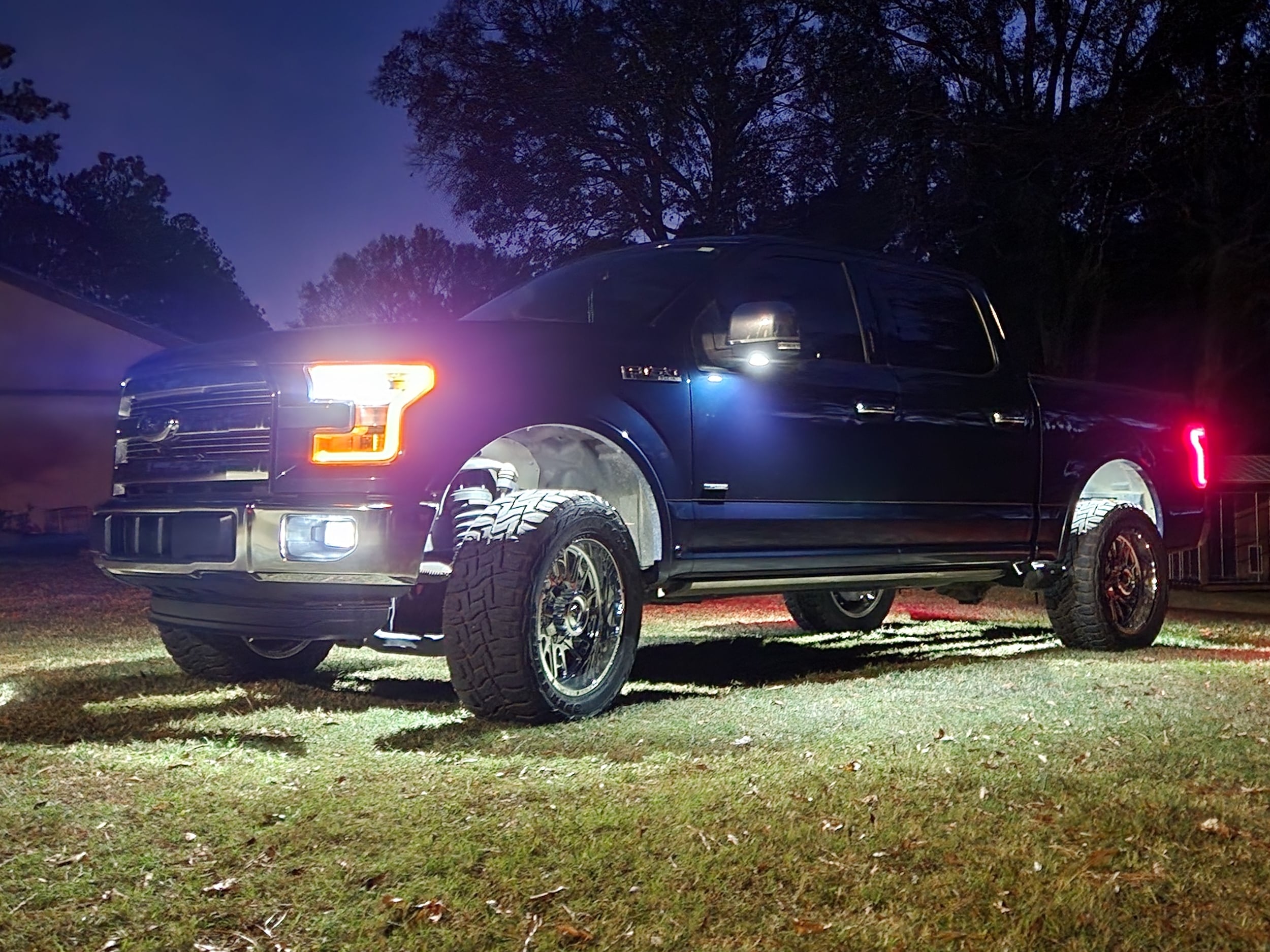
Truck owners install rock lights for a mix of practical visibility and personal style, and the balance between those two motivations depends entirely on how you use your truck. Here's why they've become a go-to upgrade across different use cases.
- Off-road visibility: This is the original purpose. When you're wheeling at night, your headlights point forward, not down. Rock lights illuminate the rocks, ruts, roots, and ledges directly under and beside the truck so you can pick better lines and avoid damage to skid plates, differentials, and lower control arms. For serious trail riders, this isn't cosmetic — it's functional safety lighting.
- Show truck aesthetics: RGB rock lights turn the undercarriage into a light show. At truck meets, car shows, and cruise nights, colored underglow highlights your suspension, wheels, brake calipers, and frame work. If you've invested in a lift, aftermarket wheels, or custom paint, rock lights draw the eye exactly where you want it.
- Camping and work lighting: Rock lights double as area lights. Set up at a campsite or remote job location, and you've got ambient illumination around the entire truck without needing to run a separate light bar or lantern. White rock lights are especially useful here because they throw clean, even light at ground level.
- Daily driver style: Even if you never leave pavement, rock lights add accent lighting that gives your truck a distinctive look while cruising. A subtle white or amber glow under the frame is understated but noticeable, especially on darker-colored trucks.
The versatility is what makes rock lights popular. A single kit covers trail riding, truck shows, campsite setup, and everyday driving. Pair them with other lighting upgrades and you can completely transform how your truck looks and performs at night.
Types of Rock Lights: RGB vs. Single Color
Rock lights split into two main categories: RGB multi-color and single-color. The right choice depends on whether you prioritize raw brightness and simplicity or color versatility and customization.
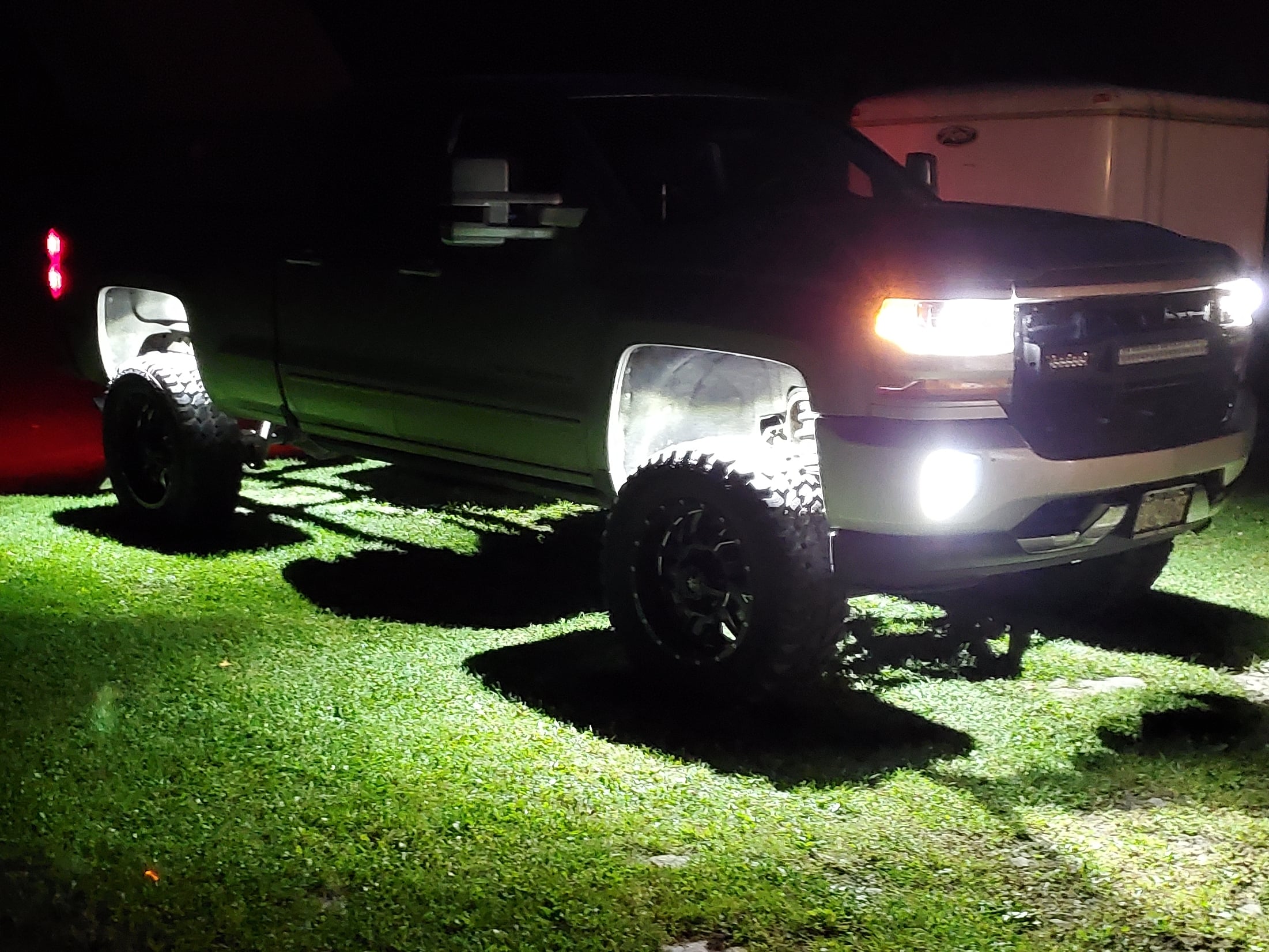
Single-color rock lights use dedicated LED chips tuned to one output — typically white, amber, or green. Because each chip is optimized for a single wavelength, these pods produce brighter, more consistent light per watt. There's no color mixing involved, so the output is pure and even. They're straightforward to wire (usually just an on/off switch) and tend to cost less per pod. If your primary use is off-road visibility or work lighting, single-color white or amber pods are the practical choice.
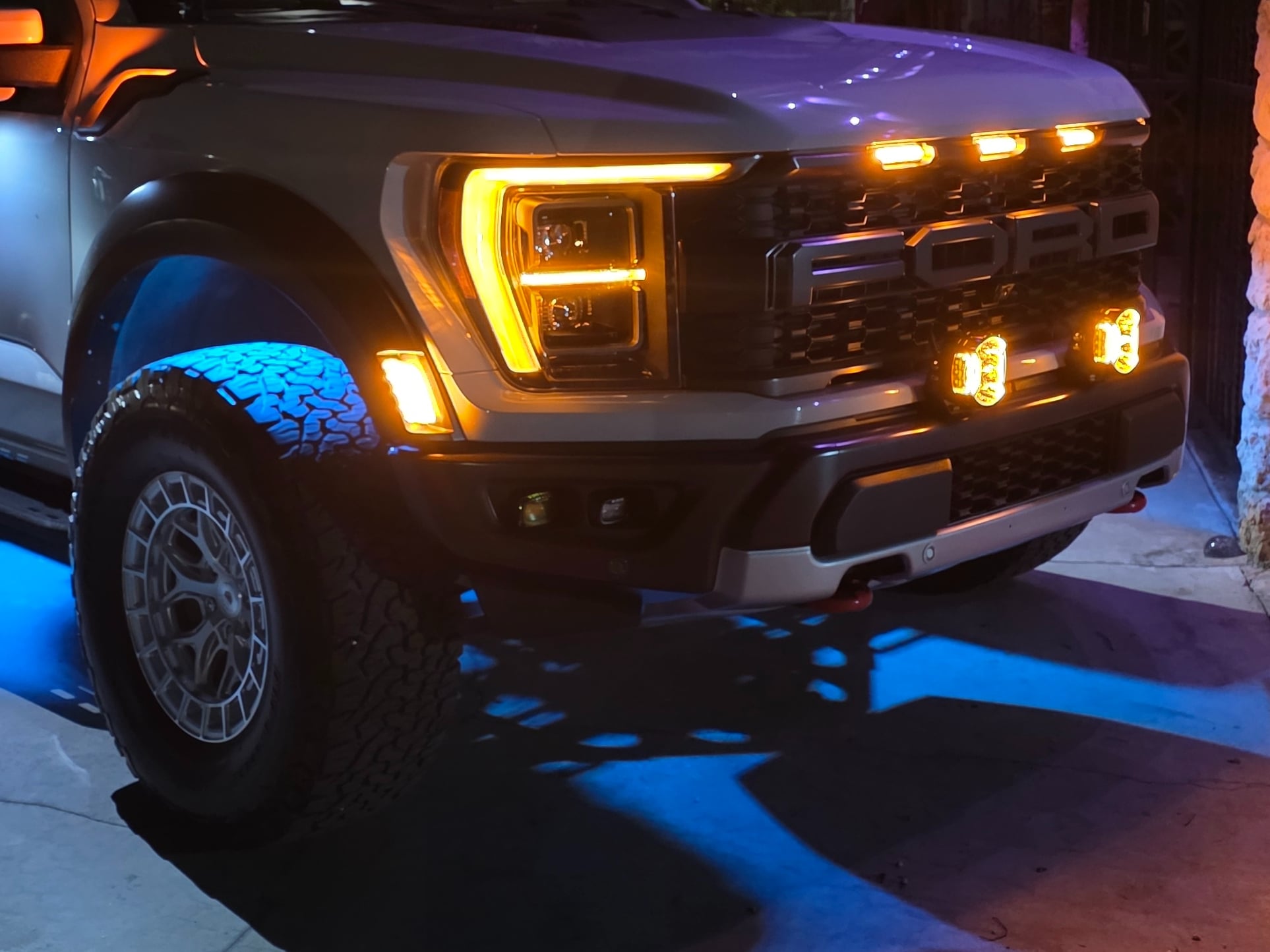
RGB and RGBW rock lights pack red, green, and blue LED dies into each chip, which lets them blend colors to produce millions of combinations. RGBW variants add a dedicated white die for cleaner white output. These kits come with a Bluetooth app, RF remote, or both, giving you control over color selection, brightness levels, strobing patterns, and music sync modes. The tradeoff: RGB pods are slightly less bright than single-color equivalents at any given color, and their white mode can carry a faint blue or purple tint (less of an issue with RGBW). They also cost more per kit because of the added controller hardware.
| Feature |
RGB / RGBW |
Single Color |
| Color Options |
16+ million combinations |
One fixed color (white, amber, green) |
| Brightness |
Good — slightly lower per watt than single-color |
Higher — optimized LED chips for max output |
| Controller |
Bluetooth app, RF remote, or wired |
Simple on/off switch |
| White Output Quality |
May have slight blue/purple tint (RGBW is better) |
Pure, consistent white |
| Price Range (8-Pod Kit) |
$80–$350+ |
$30–$200 |
| Ideal Use |
Show trucks, cruising, versatile builds |
Off-road function, work lighting, trail rigs |
If you want one kit that handles everything — trail visibility, truck meet lighting, and daily cruising — RGB or RGBW gives you the flexibility. If you want the brightest possible light under the truck and don't care about color changes, single-color pods are the stronger performer per dollar.
How to Choose Rock Lights for Your Truck
The key factors when shopping for rock lights are brightness, waterproofing, pod count, mounting style, and controller type. Getting these right means you'll end up with a kit that fits your truck, handles your conditions, and doesn't need replacing after one season.
- Brightness (lumens): Look for at least 300 lumens per pod if you're using rock lights for off-road visibility. Lower-output pods (100–200 lumens) work fine for ambient underglow and show lighting, but they won't do much to help you spot trail obstacles. More lumens also means the light is visible from farther away, which matters on lifted trucks with more ground clearance.
- Waterproof rating (IP): This is non-negotiable for any truck that sees dirt, mud, or rain. IP67 is the minimum — sealed against dust and capable of surviving temporary submersion. IP68 handles continuous submersion and is the standard for off-road use. IP69K adds resistance to high-pressure spray, which matters if you regularly power-wash the undercarriage.
- Number of pods: A 6-pod kit covers the basics (two at each axle area plus two midship), but 8 pods is the standard for even, full-perimeter coverage. If you're running a larger truck like a 2500/3500 or an extended cab with a long wheelbase, 10 to 12 pods fill the gaps better. More pods doesn't just look better — it eliminates dark spots that can hide obstacles off-road.
- Mounting type: Bolt-on mounts are the most permanent and secure, especially on trucks that see vibration and impacts off-road. Magnetic mounts are the easiest to install and reposition — great for stock trucks where you don't want to drill. Surface and flush mounts split the difference, sitting tight against flat frame surfaces.
- Controller type: Wired switches are simple and reliable. RF remotes add convenience without needing your phone. Bluetooth app controllers offer the most features — color selection, pattern programming, music sync — but depend on your phone staying connected. Some premium kits include both a remote and app control.
- Price tiers: Budget kits ($30–$80) get you basic single-color or simple RGB pods that work for casual use. Mid-range kits ($100–$200) step up build quality, waterproofing, and controller features. Premium kits ($250–$400+) deliver the highest brightness, tightest sealing, and most refined app experiences from established brands.
Don't overlook the wiring side. Make sure your kit includes a harness with enough length to route cleanly along the frame, and confirm that the controller is compatible with the number of pods you want to run. If you're planning to add other accessories down the line, check out wiring accessories and fog lights to plan your electrical layout ahead of time.
Top Rock Light Brands for Trucks
Several established lighting brands offer rock light kits, each with different strengths depending on your priorities. KC HiLiTES, Rigid Industries, and Baja Designs sit at the top of the price range, offering premium build quality and high brightness output for serious trail use. Vision X and Diode Dynamics bring strong off-road pedigree with advanced RGB options. Rough Country and Raxiom deliver solid performance at more accessible price points.
| Brand |
Known For |
Pod Count |
Price Range |
Ideal Use |
| KC HiLiTES |
Cyclone V2, premium build, bolt-on center mount |
6-pod kits |
$250–$400+ |
Serious off-road, trail rigs |
| Rigid Industries |
High brightness, UV-safe polycarbonate, USA-made |
4–6 pods |
$200–$350+ |
Off-road performance |
| Vision X |
Tantrum RGB series, plug-and-play harness |
4–8 pods |
$150–$300 |
RGB off-road builds |
| Baja Designs |
Compact rock/dome lights, high quality optics |
4–6 pods |
$200–$350+ |
Trail function, quality builds |
| Diode Dynamics |
Precision optics, automotive-grade materials |
4–8 pods |
$150–$300 |
Refined builds, daily/off-road |
| Rough Country |
Budget-friendly, flood beam, off-road oriented |
4–8 pods |
$50–$120 |
Budget off-road, first-time installs |
| Raxiom |
RGB multi-color sets, app controlled |
8-pod kits |
$100–$200 |
Show builds, versatile daily use |
You can find several of these brands in the AmericanTrucks catalog. Check out the Raxiom LED Rock Lights for an app-controlled RGB set, the Rough Country rock light kit for a budget-friendly flood beam option, the Vision X Tantrum LED Rock Light for off-road RGB, or the Baja Designs rock LED light for a compact, high-quality single-color pod.
How to Install Rock Lights on a Truck
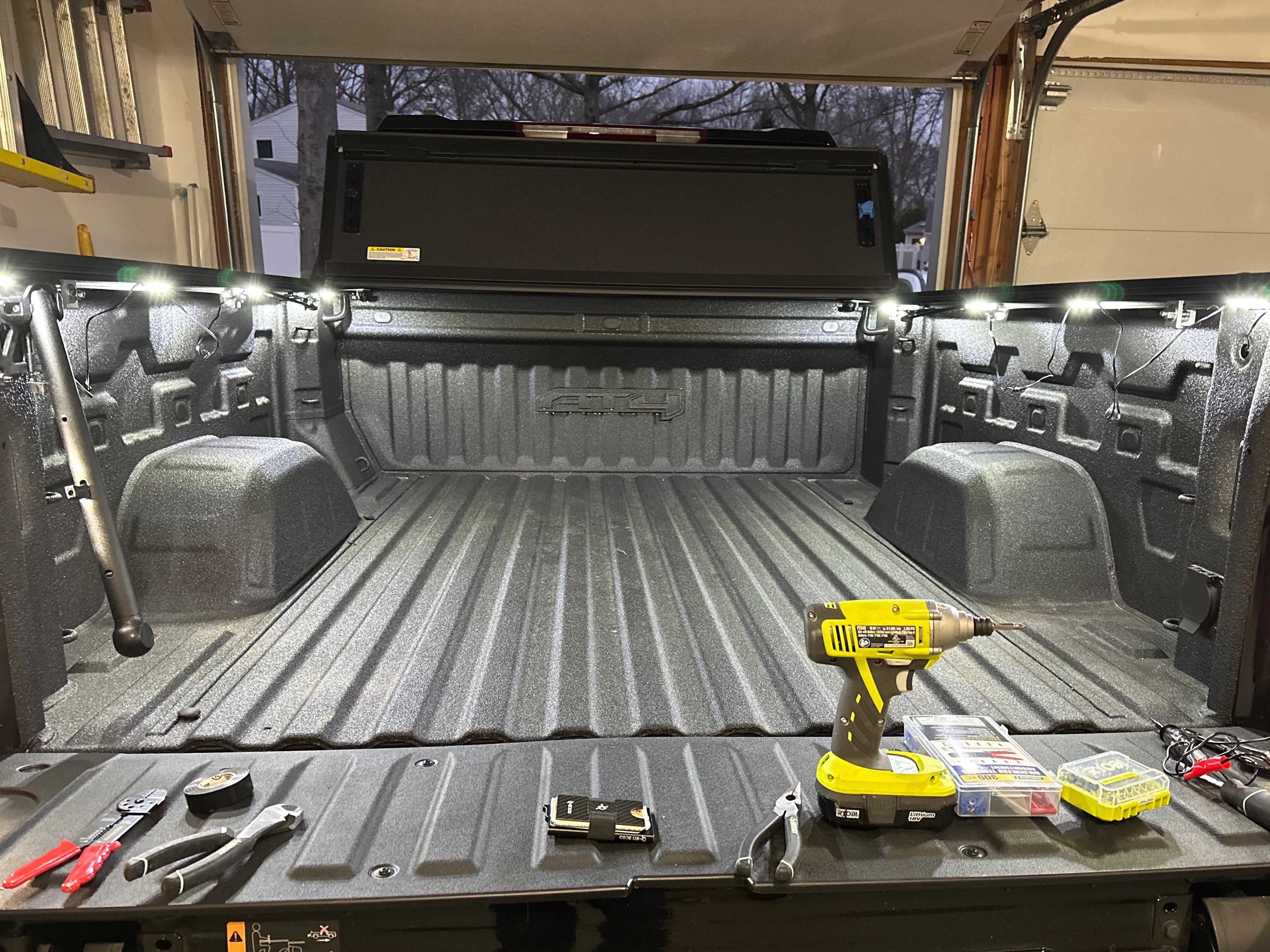
Installing rock lights is a moderate DIY project that most truck owners can handle in one to three hours with basic hand tools. No cutting or fabrication is required, and magnetic-mount kits skip drilling entirely.
Tools You'll Need
- Socket set and wrenches
- Wire strippers and crimpers
- Zip ties and wire loom
- Drill with bits (for bolt-on mounts only)
- Electrical tape or heat-shrink tubing
- Inline fuse holder (if not included in the kit)
Step-by-Step Overview
- Plan pod placement: Lay out where each pod will go before mounting anything. A standard 8-pod layout places two in front of the front wheels, two behind the front wheels, two in front of the rear wheels, and two behind the rear wheels. This gives even coverage around the entire undercarriage.
- Mount the pods: Secure each pod to the frame rail, control arm, crossmember, or wheel well using the included hardware. Bolt-on mounts get drilled into a flat surface on the frame. Magnetic mounts simply attach to any steel surface — no holes needed.
- Route the wiring harness: Run the harness along the frame, keeping it away from exhaust components, moving parts (like driveshafts and steering linkages), and sharp edges. Use zip ties every 8 to 12 inches to keep the wiring tight against the frame.
- Connect the controller or switch: Mount the controller inside the cab or in an accessible location. Route the control wire through a firewall grommet or existing wiring pass-through.
- Wire to the battery: Connect the harness power lead to the positive battery terminal through an inline fuse (typically 10–15 amps). Ground the harness to a clean, bare-metal point on the frame or a battery ground terminal.
- Test and adjust: Power on each pod and check for even illumination. Adjust the angle of any pods that are pointing too far inward or outward. Confirm that all colors and modes work on RGB kits.
Pro tip: If you're on a stock truck and don't want to commit to drilling, magnetic mounts let you try different pod positions before locking in your final layout. You can always switch to bolt-on mounts later if you find a placement you like.
If you're planning to add light bars, pods, or other off-road lighting at the same time, run all your wiring in one session to keep the harness routing clean and avoid doubling up on zip-tie work later.
Are Rock Lights Legal on Trucks?
Rock light legality depends on your state's vehicle lighting laws, and the rules vary widely. There is no single federal regulation covering underglow or underbody lighting, so you need to check your local vehicle code for specifics.
In general, most states allow rock lights for off-road use without restriction. On public roads, the situation is more nuanced:
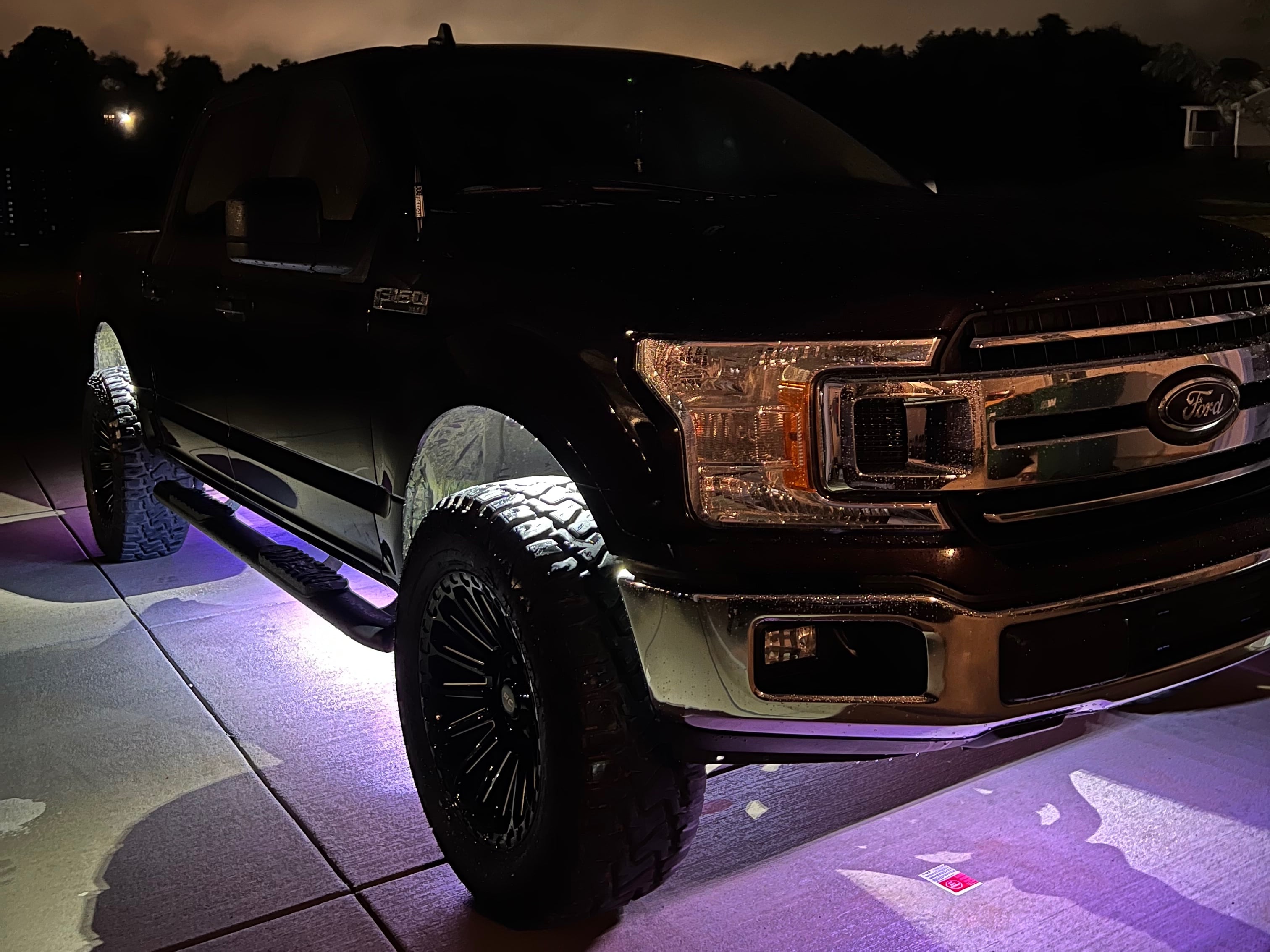
- White and amber are generally the safest colors for street driving because they don't mimic emergency or special-purpose vehicle lighting.
- Red and blue are prohibited in nearly every state because they replicate emergency vehicle signals. Using these colors on public roads can result in a traffic stop and a citation.
- Other colors (green, purple, etc.) fall into a gray area. Some states allow them, some restrict any colored light visible from outside the vehicle while driving.
- Flashing or strobing modes are illegal on public roads in most jurisdictions regardless of color.
The safest approach: use your rock lights freely off-road and at shows, set them to white or amber for any street driving, and turn off flashing modes before hitting public roads. If you run an RGB kit, most app controllers let you save presets — set up a "street legal" preset in white so you can switch to it quickly.
Rock Lights for Lifted Trucks vs. Stock Trucks
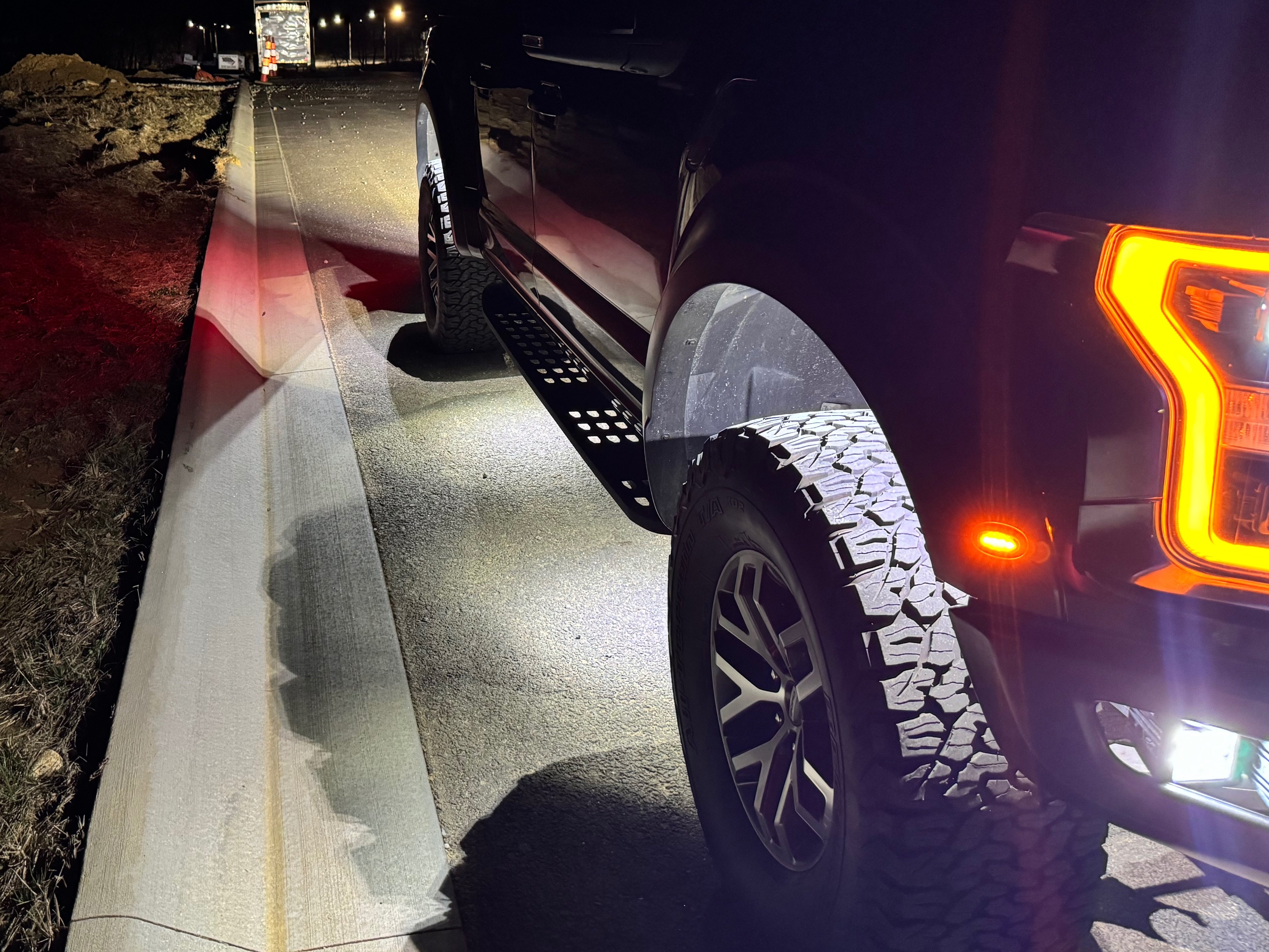
Rock lights work on both lifted and stock-height trucks — the same pods and kits fit F-150s, RAM 1500s, Silverados, Sierras, and their heavy-duty counterparts regardless of ride height. The difference is how dramatic the effect looks and how much room you have to work during installation.
Lifted trucks showcase rock lights more effectively because the increased ground clearance lets the light spread farther before hitting the pavement or trail surface. The underglow effect is more visible from a distance, and the added space under the frame gives you more mounting options and easier access during installation. If you've invested in lift kits, leveling kits, or larger tires, rock lights draw attention to that work in a way that few other accessories can.
Stock trucks still benefit from rock lights, even with less ground clearance. The pods are compact enough — most are under two inches in diameter — to fit in wheel wells, on control arms, and along frame rails without clearance issues. The light output is concentrated closer to the ground, which actually creates a tighter, more focused illumination pattern. For off-road function, this means the light lands exactly where you need it: right beneath the truck where obstacles hide.
Magnetic mounts are a particularly good match for stock trucks. They attach in seconds without drilling, and you can reposition them to find the angles that work with your specific ride height. If you decide to lift the truck later, the same pods work at the new height — you may just want to adjust the angles slightly to account for the additional clearance.
The bottom line: don't wait for a lift to install rock lights. They look good and function well on any truck height, and the install is actually easier on stock trucks because you don't need jack stands or a lift to reach the mounting points.
Related Content
Looking for more ways to upgrade your truck's lighting and capability? Check out these related guides:
Ready to light up your truck's undercarriage? We carry a full selection of rock lights, wiring kits, and LED pods in our truck lights catalog. Whether you're building a trail rig, a show truck, or just want your daily driver to stand out, you'll find kits from Raxiom, Rough Country, Vision X, Baja Designs, and more — all with free shipping on orders over $149.
Frequently Asked Questions About Rock Lights for Trucks
Rock lights are one of the most popular lighting upgrades for trucks, but buyers often have questions about legality, installation, and performance before making a purchase.
Is It Illegal to Have Rock Lights on Your Truck?
Rock light legality varies by state. Most states allow rock lights for off-road use, but many restrict the use of colored underglow lighting on public roads. White and amber are generally the safest colors for street driving, while red and blue are prohibited in nearly every state because they mimic emergency vehicles. Always check your local vehicle code before driving with rock lights activated on public roads.
Why Do People Put Rock Lights on Trucks?
Rock lights serve both functional and aesthetic purposes. Off-roaders use them to illuminate the ground beneath the truck, helping spot rocks, ruts, and obstacles during nighttime trail riding. Show truck owners install RGB rock lights to highlight suspension components, custom wheels, and lifted frames at events. They also double as campsite area lights and loading zone illumination for truck beds.
Which Rock Lights Should You Choose for Your Truck?
The right rock lights depend on your budget and intended use. For serious off-roading, KC HiLiTES Cyclone V2 and Rigid Industries rock lights deliver high brightness and durability. For color-changing show setups, Raxiom and Vision X RGB kits offer app-controlled options with millions of color combinations. Budget-friendly options from Rough Country provide solid performance with kits starting around $30.
Do Rock Lights Drain the Truck Battery?
Rock lights are low-draw accessories — most LED pods pull well under 10 watts each, so a full 8-pod kit puts a minimal load on the electrical system. Running them with the engine off for extended periods can eventually affect the battery, but with the engine running, the alternator easily handles the draw. Check your specific kit's spec sheet for exact wattage figures.
How Many Rock Lights Do I Need for My Truck?
Most truck owners install 6 to 8 rock light pods for balanced coverage. Place two pods in front of the front wheels, two behind the front wheels, and two in front of the rear wheels for a standard 6-pod setup. Adding two more behind the rear wheels creates a full 8-pod kit that illuminates the entire undercarriage evenly. Larger trucks and heavy-duty models may benefit from 10 or 12 pods.
How Do You Install Rock Lights on a Truck?
Most rock light kits include mounting hardware, a wiring harness, and a switch or controller. Installation involves mounting each pod to the truck frame or suspension components using bolts, screws, or magnetic mounts, then routing the wiring harness along the frame to a central controller. The controller connects to the battery with an inline fuse. Basic kits take 1 to 2 hours to install with hand tools; RGB kits with app controllers may take slightly longer.
What Is the Difference Between RGB and Single-Color Rock Lights?
Single-color rock lights use dedicated LED chips that produce one consistent color—typically white, amber, or green—and deliver brighter output per watt. RGB rock lights contain red, green, and blue LED dies in each chip, allowing you to create millions of color combinations through an app or remote controller. The tradeoff is that RGB lights are slightly less bright than single-color equivalents and their white output may have a slight blue or purple tint.
Can You Install Rock Lights on a Stock Truck Without a Lift?
Yes, rock lights work on stock-height trucks. The pods are compact enough to mount to the frame, control arms, or inside the wheel wells of any truck regardless of ride height. However, lifted trucks showcase rock lights more dramatically because the increased ground clearance makes the illumination more visible. Magnetic mounts are especially convenient on stock trucks since they require no drilling and can be repositioned easily.