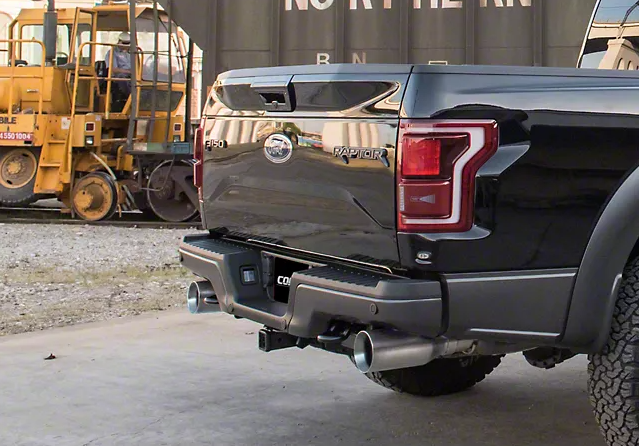
What Are Exhaust Tips and What Do They Do?
Exhaust tips are the visible extensions that attach to the end of your truck's tailpipe, finishing off the exhaust system with a clean, styled look. They slide over or clamp onto the existing pipe and are one of the easiest bolt-on upgrades you can make. Whether you're covering a rusty factory pipe or adding some extra presence under your bumper, exhaust tips let you change your truck's rear-end appearance in minutes.
The primary purpose of an exhaust tip is cosmetic. They don't alter your exhaust system's internal flow path, so they won't add horsepower on their own. However, certain tip styles can subtly shift your truck's exhaust note. A larger-diameter tip may produce a slightly deeper tone, while a turndown tip bounces sound off the pavement for a louder effect. For a real performance and sound overhaul, you'd pair tips with a full cat-back or axle-back system — but as a standalone upgrade, tips deliver maximum style for minimal effort. Visit our exhaust tips tech center for deeper dives on specific fitments and styles.
Do exhaust tips change sound? Yes — exhaust tips can subtly alter your truck's exhaust note. Larger-diameter tips tend to deepen the tone slightly, turndown tips reflect sound off the road for a louder effect, and resonated tips use a built-in chamber to smooth out rasp and create a deeper rumble. The change is modest compared to replacing your muffler or full exhaust, but it's noticeable, especially from outside the truck.
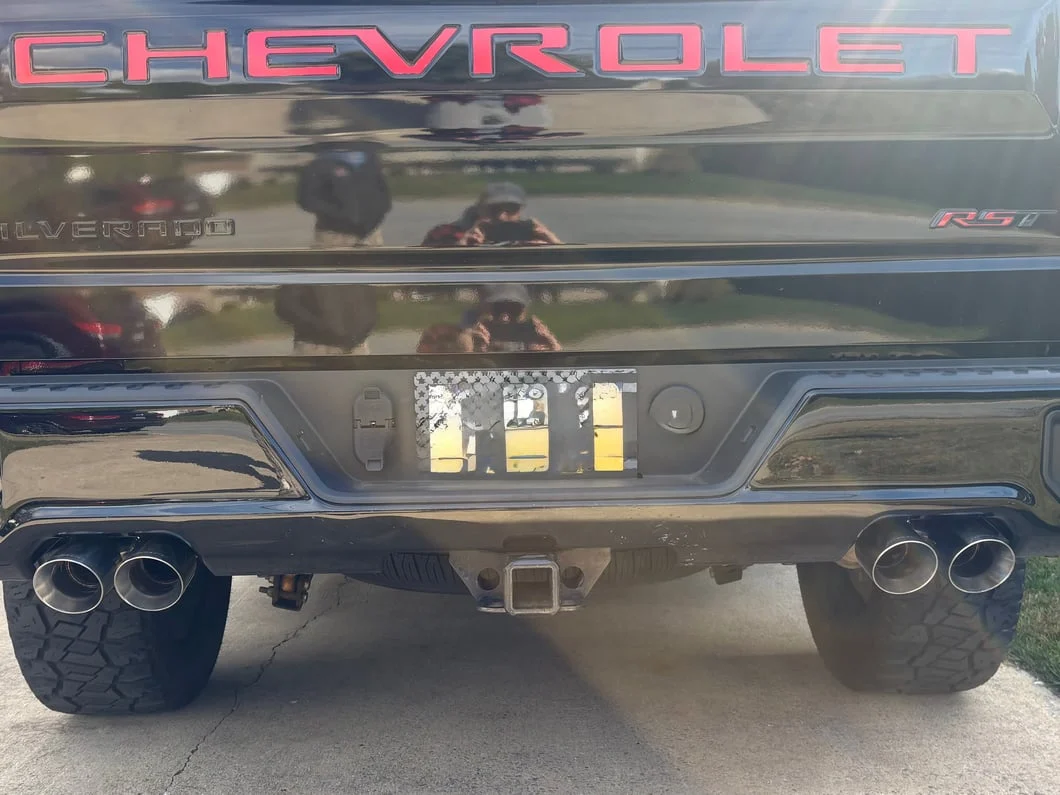
Exhaust Tip Styles Compared
Exhaust tips come in a wide range of styles, and each one changes the look — and sometimes the sound — of your truck's exhaust in a different way. Below is a breakdown of the most popular types of exhaust tips for trucks, what sets them apart, and which builds they suit best.
Straight-Cut Tips
A straight-cut exhaust tip has a flat, perpendicular opening at the end of the tube. This is the most traditional style, and it gives your truck's exhaust a clean, no-nonsense look. The wide-open face maximizes the visible interior of the tip, which is great if you're running a polished or mirror-finish tip and want to show it off.
Best for: Truck owners who want a classic, understated exhaust look that pairs well with both stock and lifted trucks. Straight-cut tips work with virtually any bumper shape and are available in the widest range of diameters.
Angle-Cut Tips
Angle-cut exhaust tips have an outlet that's sliced at an angle, typically between 15 and 30 degrees. This creates a sharp, aggressive profile that blends naturally with muscular truck body lines. Because the angled opening faces slightly downward, they also help direct exhaust gases away from the bumper.
Best for: Lifted trucks, 4x4 builds, and aggressive-styled rigs. The angular silhouette complements aftermarket bumpers and off-road setups particularly well. Angle-cut tips are a favorite among the 4x4 crowd because they match the truck's rugged stance.
Rolled-Edge Tips
Rolled-edge exhaust tips feature a smooth, inward-curving lip around the outlet opening. This beefy, rounded edge adds visual depth and makes the tip appear larger and more substantial than a straight-cut design of the same diameter. The curved profile also creates a shadow line inside the tip that gives it a premium, finished look.
Best for: Daily drivers and show trucks where a clean, polished appearance matters. Rolled-edge tips pair well with chrome bumpers and polished trim because their curved profile echoes the smooth lines of factory chrome accents.
Single-Wall vs. Dual-Wall Tips
The difference between single-wall and dual-wall exhaust tips comes down to construction and visual presence. A single-wall tip uses one layer of metal tubing — it's lighter, more affordable, and available in virtually every style. A dual-wall tip features two concentric layers of metal, creating a thicker, more substantial rear profile that looks heavier and more premium from behind the truck.
Single-Wall: One layer of metal. Lighter weight, lower price, and available in the widest variety of styles and finishes. A solid choice when you want a clean look without overspending.
Dual-Wall: Two concentric metal layers. Thicker appearance, better heat insulation, and a more high-end visual presence. Ideal when you want your tips to look as substantial as possible.
Functionally, both perform the same — the difference is visual weight and perceived quality. If you're going for a premium build, dual-wall tips add that extra layer of refinement. For a budget-friendly refresh, single-wall tips get the job done.
Turndown (Dump-Out) Tips
Turndown tips, also called dump-out tips, angle the exhaust outlet downward toward the road. This design directs exhaust gases beneath the truck rather than straight out the back, which means you see more of the tip's chrome or finish when looking at it from the side.
What exhaust tip is the loudest? Turndown tips are generally the loudest style because their downward-angled outlet bounces sound waves off the pavement and back toward the cab. This creates a noticeably louder and more aggressive exhaust note compared to rear-exit tips. Pair a turndown tip with an aftermarket cat-back system, and the volume increase becomes even more pronounced.
Best for: Performance enthusiasts who want a louder exhaust note and a more aggressive under-truck look. Turndown tips are also popular on tow rigs because the downward exit keeps exhaust gases away from trailers.
Intercooled Tips
Intercooled exhaust tips have a distinctive design: a secondary inner tube surrounded by turbine-like fins inside the outer shell. This layered, industrial look gives the tip a high-performance, race-inspired appearance that stands out from standard styles. Despite the name, intercooled tips don't actually cool your exhaust or add horsepower — the fins are purely aesthetic.
Best for: Truck owners who want a unique, motorsport-inspired look. Intercooled tips are a conversation piece and work especially well on performance-oriented builds where every visible detail should say "high performance."
Resonated Tips
Resonated exhaust tips contain a small internal resonator chamber that alters the exhaust note as gases pass through. Unlike a standard tip that's just an open tube, a resonated tip smooths out high-pitched frequencies and rasp, producing a deeper, more refined tone. This makes them one of the few tip styles that deliver a genuinely noticeable sound change on their own.
What's the best sounding exhaust tip? Resonated tips deliver the best overall sound improvement because their internal chamber eliminates harsh, tinny frequencies while deepening the exhaust note. You get a smoother, more authoritative rumble without the volume spike of a turndown tip or the cost of a full exhaust system swap.
Best for: Truck owners who want a deeper, cleaner exhaust tone without adding volume or replacing their muffler. Resonated tips are ideal for daily drivers who want improved sound quality during normal driving.
Carbon-Fiber Tips
Carbon-fiber exhaust tips use a carbon-fiber outer sleeve wrapped around a stainless steel or aluminum inner tube. The woven carbon-fiber pattern gives these tips a lightweight, motorsport look that's hard to replicate with metal finishes alone. They're lighter than all-metal tips and resist heat discoloration well, though they sit at a higher price point.
Best for: Performance builds and modern sport trucks where a high-tech, weight-conscious aesthetic is part of the overall theme. Carbon-fiber tips pair well with other carbon-fiber accessories like mirror caps, spoilers, or hood vents.
Exhaust Tip Styles at a Glance
|
Style
|
Appearance
|
Sound Impact
|
Best For
|
|
Straight-Cut
|
Clean, open face
|
Minimal — slight deepening
|
Classic builds, universal fitment
|
|
Angle-Cut
|
Sharp, aggressive profile
|
Minimal
|
Lifted trucks, 4x4 builds
|
|
Rolled-Edge
|
Beefy, rounded lip
|
Minimal
|
Show trucks, daily drivers
|
|
Single-Wall
|
Slim, lightweight
|
None
|
Budget-friendly upgrades
|
|
Dual-Wall
|
Thick, premium profile
|
None
|
High-end, polished builds
|
|
Turndown
|
Downward-angled exit
|
Loudest — reflects off road
|
Performance, tow rigs
|
|
Intercooled
|
Finned, race-inspired
|
Minimal
|
Motorsport-themed builds
|
|
Resonated
|
Standard exterior, internal chamber
|
Noticeable — deeper, smoother
|
Refined sound without added volume
|
|
Carbon-Fiber
|
Woven carbon-fiber sleeve
|
Minimal
|
Sport trucks, lightweight builds
|
Exhaust Tip Materials: Stainless Steel vs. Chrome vs. Black
![]()
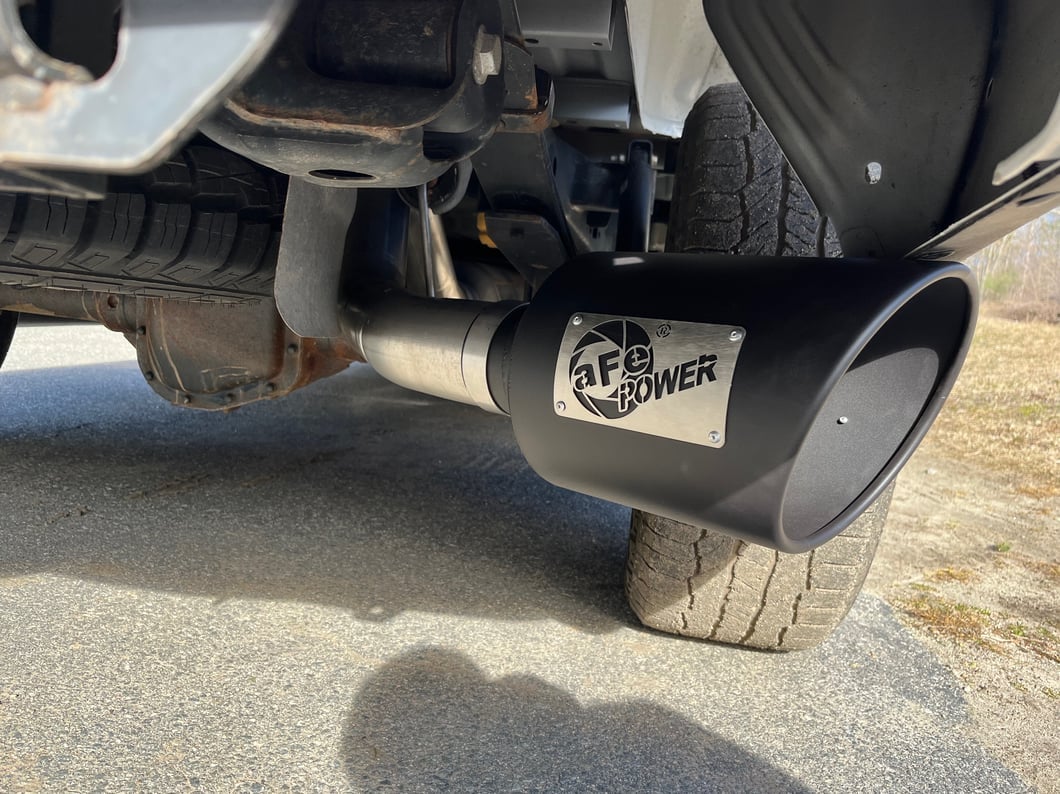
The material your exhaust tip is made from affects how it looks, how long it lasts, and how well it handles road salt, heat, and weather. Here's how the most common exhaust tip materials compare.
What is the best material for exhaust tips? T304 stainless steel is the best all-around material because it resists corrosion, holds its finish in harsh weather, and withstands high exhaust temperatures without discoloring. It costs more upfront but outlasts chrome-plated and coated alternatives, making it the best long-term value for trucks exposed to road salt, rain, and daily driving.
- T304 Stainless Steel: The premium choice. T304 is a high-chromium, high-nickel alloy that resists rust, pitting, and heat discoloration. It polishes to a bright mirror finish and holds up for years with minimal maintenance. This is the go-to for truck owners in northern climates or anyone who doesn't want to replace their tips every couple of seasons.
- T409 Stainless Steel: A budget-friendly stainless option. T409 has less nickel than T304, so it's more affordable but slightly more susceptible to surface rust over time, especially in salt-belt regions. It still outlasts chrome plating in most conditions.
- Chrome-Plated: Chrome tips deliver the brightest, most reflective shine right out of the box. However, chrome plating can pit, flake, or peel over time — especially when exposed to road salt, extreme heat, or harsh chemicals. They look fantastic when new but require more upkeep to stay that way.
- Black Powder Coat: Black exhaust tips have become increasingly popular for their modern, stealth appearance. Powder coating resists corrosion well and delivers a uniform matte or satin black finish. The coating can fade or discolor under extreme, sustained heat, but for most daily-driven trucks, it holds up well.
- Carbon Fiber: Carbon-fiber-sleeved tips are the lightest and most visually distinctive option. They resist heat discoloration better than metal finishes but come at a premium price. Best suited for performance builds where every detail counts.
For a deeper look at exhaust brands and what they offer, check out our guide to top exhaust brands.

Material Comparison Table
|
Material
|
Durability
|
Appearance
|
Corrosion Resistance
|
Price Range
|
|
T304 Stainless Steel
|
Excellent
|
Bright polished or brushed
|
Excellent
|
$$–$$$
|
|
T409 Stainless Steel
|
Good
|
Satin or polished
|
Good
|
$–$$
|
|
Chrome-Plated
|
Moderate
|
Mirror-bright shine
|
Moderate — can pit/peel
|
$–$$
|
|
Black Powder Coat
|
Good
|
Matte or satin black
|
Good
|
$$
|
|
Carbon Fiber
|
Good
|
Woven carbon-fiber weave
|
Excellent
|
$$$
|
How Exhaust Tips Affect Sound
![]() One of the most common questions truck owners ask is whether swapping exhaust tips will change how their truck sounds. The short answer: yes, but the effect is subtle compared to replacing your muffler or upgrading to a full cat-back system.
One of the most common questions truck owners ask is whether swapping exhaust tips will change how their truck sounds. The short answer: yes, but the effect is subtle compared to replacing your muffler or upgrading to a full cat-back system.
What exhaust tips change the sound? Tip diameter, shape, and internal design all influence your truck's exhaust note. Larger-diameter tips allow exhaust gases to expand more freely at the exit point, which can produce a slightly deeper tone. Turndown tips redirect sound waves off the road surface, creating a louder, more aggressive effect that you'll hear both inside and outside the cab. Resonated tips go a step further by using an internal chamber to filter out high-pitched rasp, delivering a smoother, deeper rumble.
Here's how the main styles stack up for sound impact:
- Turndown: Loudest. Sound bounces off the pavement and back toward the cab. Great for raw volume.
- Resonated: Deepest, smoothest. Internal resonator eliminates rasp without adding volume. Best overall tone improvement.
- Straight-Cut (large diameter): Slight deepening. More noticeable on trucks that already have an aftermarket exhaust.
- Angle-Cut / Rolled-Edge: Minimal sound change. These are primarily cosmetic choices.
- Dual-Wall / Single-Wall: No measurable sound difference. The extra layer is visual only.
Do exhaust tips affect performance? Exhaust tips alone do not add horsepower or torque because they attach to the end of your existing tailpipe without changing exhaust flow dynamics upstream. They're a cosmetic upgrade. For actual performance gains — increased horsepower, better throttle response, and a more aggressive exhaust note — you'll want a full cat-back or axle-back exhaust system that replaces restrictive factory piping and mufflers. Check out our Magnaflow vs. Flowmaster sound comparison if you're considering a full system upgrade, or browse our guide to the best truck exhaust systems for towing if pulling a trailer is part of your routine.
Exhaust Tip Shapes: Round, Oval, Square, and Rectangular
![]() Beyond style and material, exhaust tips also come in different shapes — and the right shape depends on your truck's bumper design and the look you're going for.
Beyond style and material, exhaust tips also come in different shapes — and the right shape depends on your truck's bumper design and the look you're going for.
- Round: The most common and versatile shape. Round tips fit standard bumper cutouts on virtually every truck and are available in the widest range of sizes, from compact 2.5-inch outlets to massive 6-inch diesel tips. If you're unsure, round is the safe bet.
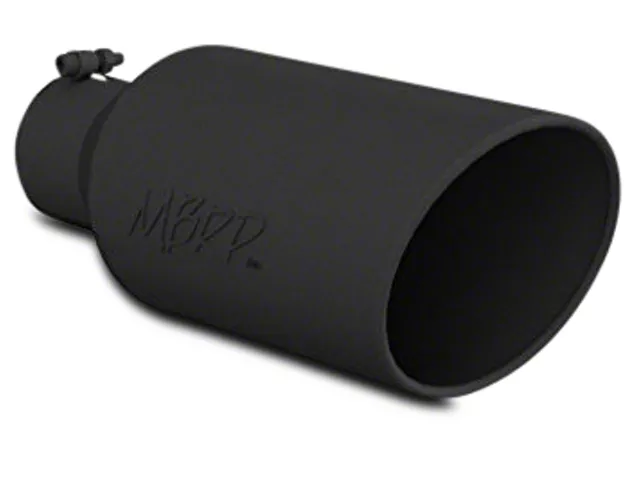
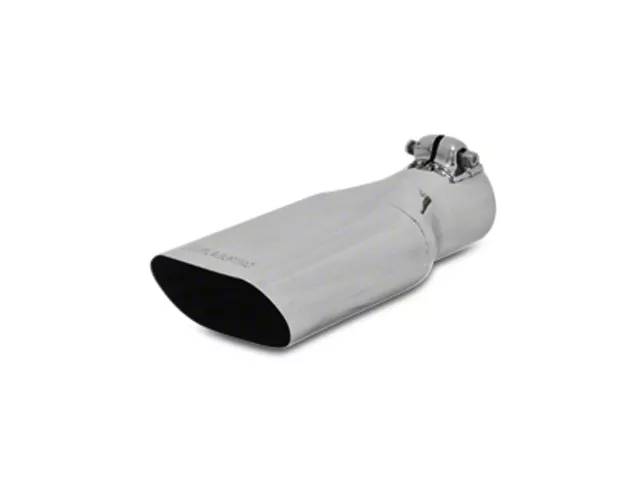
- Oval: Oval tips sit wider and lower than round tips, which gives them a sportier, lower-profile appearance. They work especially well on trucks with wide, horizontal bumper openings and pair nicely with modern body lines.
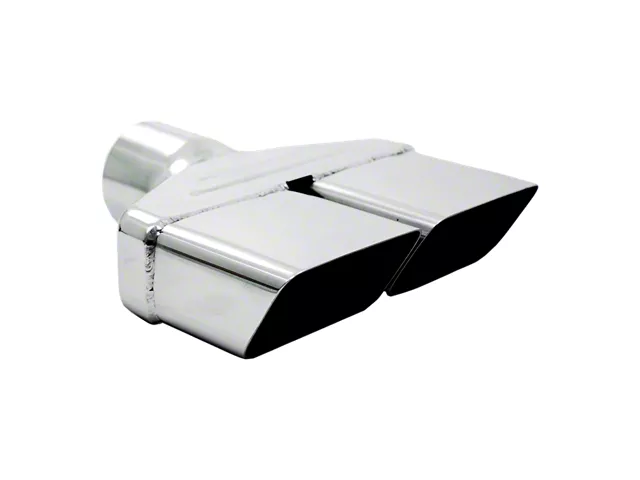
- Square: Square tips deliver a bold, angular look that stands out from the crowd. They're popular on newer truck designs and diesel builds where a modern, industrial aesthetic is part of the overall theme.
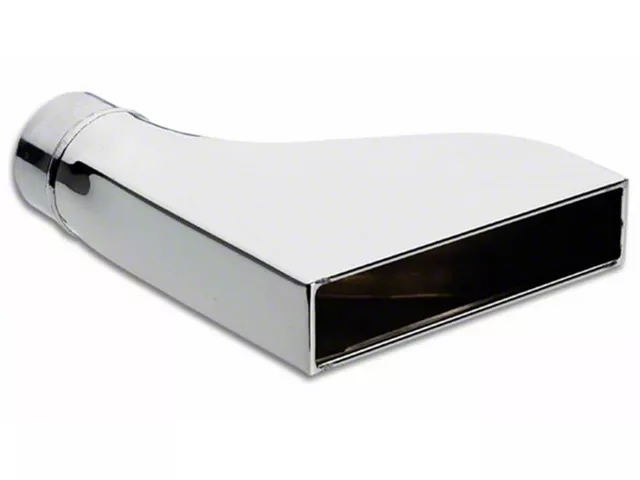
- Rectangular: Similar to square but wider than they are tall. Rectangular tips fill wide bumper cutouts cleanly and are often found on high-trim trucks and performance packages. They're a strong match for trucks with wide, flat bumper exits.
When shopping for a specific shape, always measure your bumper cutout first to make sure the tip's outlet dimensions fit without interference. Browse our full selection of truck exhaust tips to see every shape and size we carry.
How to Choose the Right Exhaust Tip for Your Truck
![]() With so many styles, materials, and shapes to choose from, narrowing down the right exhaust tip comes down to a few practical decisions. Here's how to pick the right exhaust tip for your truck.
With so many styles, materials, and shapes to choose from, narrowing down the right exhaust tip comes down to a few practical decisions. Here's how to pick the right exhaust tip for your truck.
How to pick the right exhaust tip? Start by measuring your truck's tailpipe outer diameter (OD) to determine the correct inlet size — this is the measurement that ensures the tip slides over or clamps onto your existing pipe. Then choose a style that matches your truck's look, a material that handles your climate, and an outlet size that fits your bumper cutout without interference.

Step 1: Measure Your Tailpipe
The inlet diameter of the exhaust tip needs to match your truck's tailpipe outer diameter. Most truck tailpipes fall between 2.5 inches and 5 inches OD, depending on the make, model, and whether you've already installed an aftermarket exhaust. Use a tape measure or caliper on the outside of your tailpipe to get an accurate reading. Our guide on how to measure your exhaust pipe walks you through the process step by step.
Step 2: Check Your Bumper Clearance
Before choosing an outlet size, look at how much space you have inside your bumper cutout. A 6-inch tip looks aggressive, but if your bumper opening is only 4 inches wide, it won't fit. Measure the height and width of your bumper opening, then compare it to the tip's outlet dimensions and overall length.
Step 3: Match the Finish to Your Truck
Chrome tips complement chrome bumpers, door handles, and grille trim. Black tips pair naturally with blacked-out builds, dark wheels, and smoked lighting. Polished stainless works with almost everything. Think about the overall look you're building and choose a finish that ties into it.
Step 4: Consider Your Sound Goals
If you want a louder note, look at turndown tips. If you want a deeper, smoother tone, go with resonated. If sound isn't a priority, any straight-cut, angle-cut, or rolled-edge tip will look great without changing your exhaust note.
Step 5: Shop by Your Truck
We carry exhaust tips fitted specifically for the most popular trucks on the road. Browse tips by vehicle to find the right fitment for your build:
Once you've got your tip picked out, installation is straightforward — most tips clamp or weld on in under 30 minutes. Check out our guide on how to install exhaust tips for a quick walkthrough.
Whether you're swapping out a rusty factory tip or finishing off a full exhaust build, the right exhaust tip ties your truck's look together. Explore our complete collection of truck exhaust tips to find the style, material, and fitment that matches your build.
Related Articles
![]() Magnaflow vs. Flowmaster: Which Exhaust System Sounds the Best
Magnaflow vs. Flowmaster: Which Exhaust System Sounds the Best
The Best Truck Exhaust Systems for Serious Towing
How to Install Exhaust Tips in 4 Steps
Top 10 Favorite Exhaust Brands
Frequently Asked Questions About Exhaust Tips
Truck owners commonly have questions about how exhaust tips affect sound, appearance, and performance. Here are the most frequently asked questions about exhaust tip types and selection.
Do Exhaust Tips Change the Sound of Your Truck?
Yes, exhaust tips can subtly alter your truck's exhaust note. Larger-diameter tips tend to produce a deeper, more resonant tone, while turndown tips bounce sound off the pavement for a louder effect. Resonated tips include a built-in chamber that specifically reduces rasp and creates a smoother, deeper sound without replacing your entire exhaust system.
What Exhaust Tip Is the Loudest?
Turndown exhaust tips are generally the loudest style because their downward-angled outlet directs sound waves off the road surface and back toward the cab. Larger-diameter tips and straight-cut designs also amplify volume slightly compared to rolled or angle-cut tips. For the most noticeable sound change, pair a turndown tip with an aftermarket cat-back exhaust system.
What Is the Best Sounding Exhaust Tip?
Resonated exhaust tips deliver the best overall sound improvement because they contain an internal resonator that eliminates high-pitched rasp while deepening the exhaust note. For a classic aggressive tone without a resonator, dual-wall rolled-edge tips provide a fuller, more authoritative sound. The best choice depends on whether you prefer a refined rumble or a raw, louder note.
How Do You Pick the Right Exhaust Tip?
Start by measuring your truck's tailpipe outer diameter to determine the correct inlet size. Then choose a tip style that complements your truck's body lines — angle-cut tips suit aggressive builds, while rolled-edge tips offer a cleaner look. Consider the outlet size relative to your bumper cutout, choose a finish that matches your truck's trim, and verify the tip's overall length clears your bumper.
What Is the Difference Between Single-Wall and Dual-Wall Exhaust Tips?
Single-wall exhaust tips use one layer of metal tubing and are lighter, more affordable, and available in virtually every style. Dual-wall tips feature two concentric layers that create a thicker, more substantial appearance and slightly better heat insulation. Functionally, both perform the same — the difference is purely visual weight and perceived quality from behind the truck.
What Is the Best Material for Exhaust Tips?
T304 stainless steel is the best all-around material for exhaust tips because it resists corrosion, maintains its finish in harsh weather, and withstands high exhaust temperatures without discoloring. Chrome-plated tips offer brilliant shine but can pit or peel over time. Black powder-coated tips provide a modern stealth look and resist corrosion well, though the coating can fade with extreme heat exposure.
Do Exhaust Tips Affect Performance or Horsepower?
Exhaust tips alone do not add horsepower or improve performance because they attach to the end of your existing tailpipe without changing exhaust flow dynamics. They are a cosmetic upgrade only. To gain actual performance benefits like increased horsepower and torque, you need a full cat-back or axle-back exhaust system that replaces restrictive factory piping and mufflers.
What Exhaust Tip Shape Is Best for Trucks?
Round exhaust tips are the most popular shape for trucks because they fit standard round bumper cutouts and suit virtually every truck style. Oval tips offer a wider, lower-profile look that works well on trucks with wide bumper openings. Square and rectangular tips provide a bold, modern appearance that pairs especially well with newer truck designs and diesel builds.