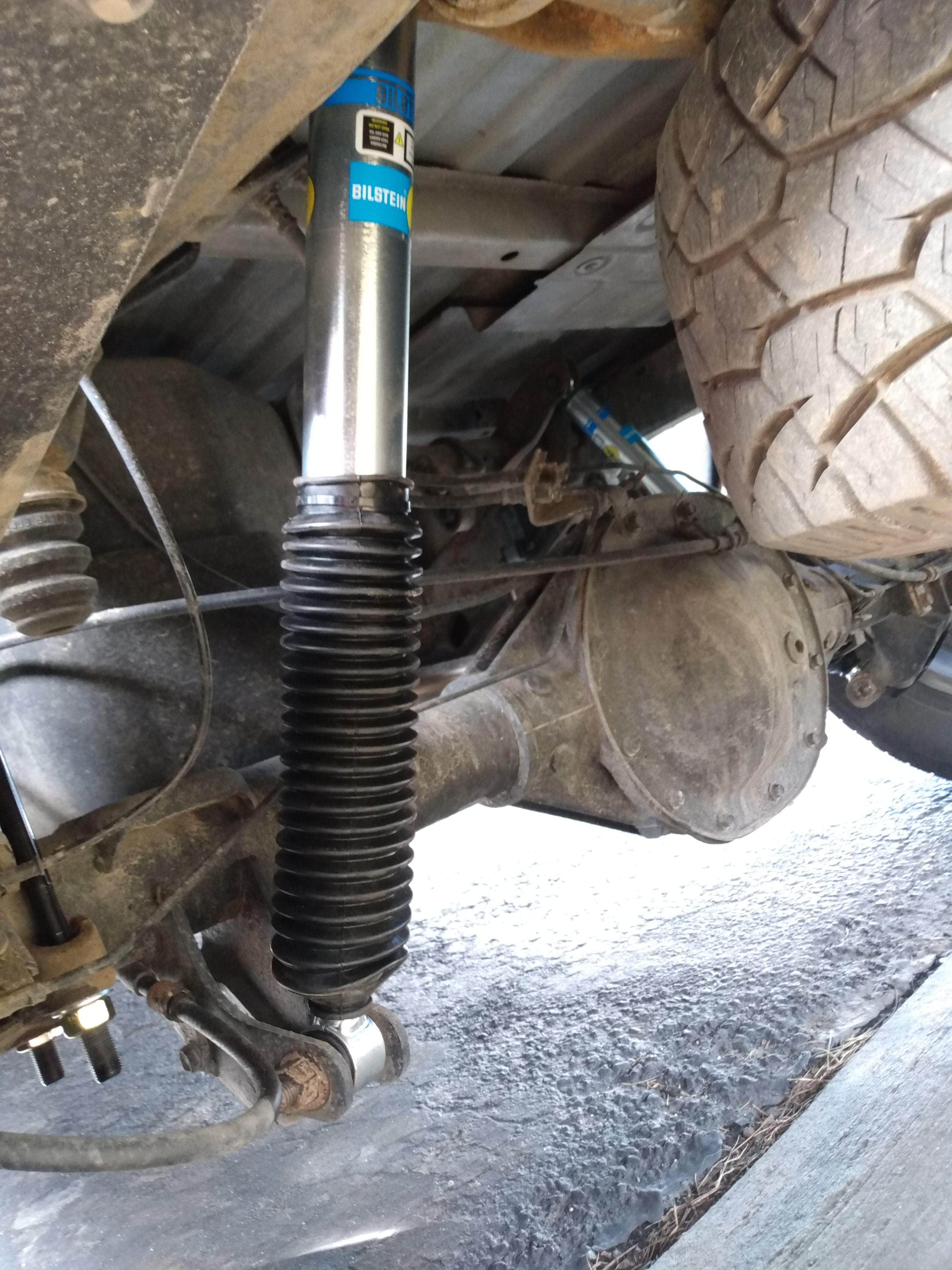
Your truck's shocks and suspension do more than smooth out bumps. They control body roll during turns, keep your tires planted under braking, and determine how confident your truck feels whether you're merging onto the highway or crawling over a rocky trail. When those factory shocks wear out — or when you're chasing better performance — the brand you choose matters.
This guide breaks down the five best aftermarket truck shock and suspension brands: Rancho, KYB, Skyjacker, Bilstein, and Fox. You'll learn what sets each brand apart, which shock types fit your driving style, and how to pick the right setup for daily driving, off-roading, towing, or a lifted build.
How Truck Suspension Works
![]()
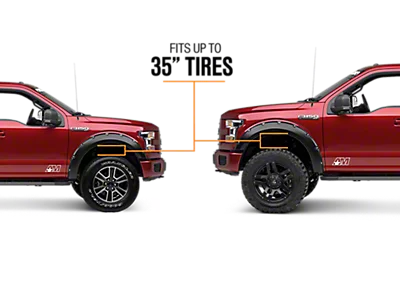
Your truck's suspension system absorbs road impact by using springs and shock absorbers to limit friction between the tires and the road surface. This keeps vibrations and jolts from transferring into the cab, while helping the tires maintain consistent contact with the ground for safe handling and braking.
Your suspension is a network of components working together: springs (coil or leaf), shock absorbers, control arms, sway bars, and bushings. The springs support the truck's weight and absorb large impacts. The shocks — technically called dampers — control how fast those springs compress and rebound. Without functioning shocks, your truck would bounce uncontrollably after every bump.
Think of it this way: springs handle the big hits, and shocks fine-tune how your truck settles afterward. That's why worn shocks affect everything from braking distance to tire wear to how stable your truck feels while towing. Whether you're running a stock setup or an aftermarket lift kit, the quality of your shocks determines your ride quality and control.
Types of Truck Shocks Explained
![]() Before you pick a brand, you need to understand the four main types of shock absorbers available for trucks. Each design handles heat, pressure, and damping differently, and the right type depends on how you drive.
Before you pick a brand, you need to understand the four main types of shock absorbers available for trucks. Each design handles heat, pressure, and damping differently, and the right type depends on how you drive.
The main difference between monotube and twin-tube shocks is their internal design. Twin-tube shocks use two nested cylinders and are affordable and comfortable for daily driving. Monotube shocks use a single cylinder with a floating piston that separates oil from gas, providing better heat dissipation and more consistent performance during hard off-road use. 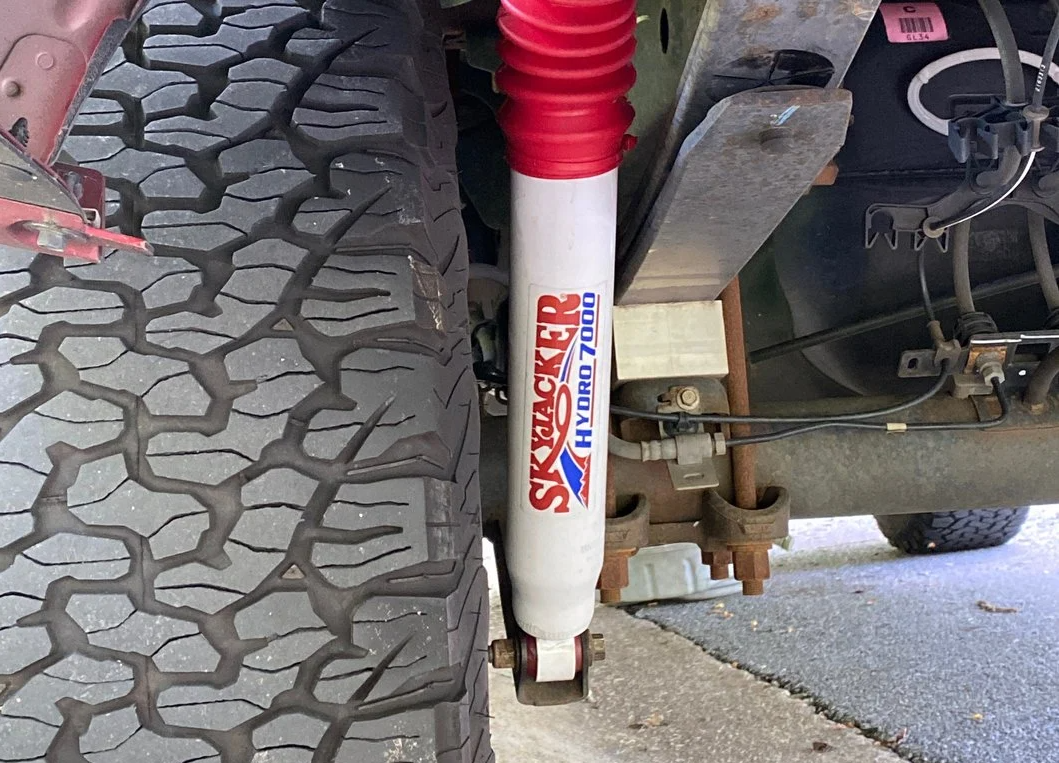
Twin-Tube (Hydraulic) Shocks
Twin-tube shocks are the most common type and the design used in most factory suspension setups. They feature two nested cylinders: an inner tube where the piston moves through hydraulic fluid, and an outer tube that acts as a reservoir. These shocks are filled with oil only — no pressurized gas.
- Best For: Daily driving, highway commuting, light-duty use
- Ride Quality: Smooth and comfortable at normal speeds
- Price Range: Budget-friendly, typically the most affordable option
- Tradeoff: Can experience "shock fade" during sustained hard use because the oil can aerate (form bubbles) under extreme heat, reducing damping performance
Gas-Charged (Nitrogen) Shocks
Gas-charged shocks share the twin-tube design but add pressurized nitrogen gas to the outer chamber. That gas pressure keeps the hydraulic fluid from aerating under stress, which means more consistent damping when you're pushing hard on the trail or carrying heavy loads.
- Best For: Off-road driving, moderate trail use, trucks with heavier payloads
- Ride Quality: Slightly firmer than hydraulic shocks due to internal gas pressure
- Price Range: Moderately priced, a step up from basic hydraulic shocks
- Tradeoff: The added stiffness can feel harsh on smooth pavement if you're only doing highway miles
Monotube Shocks
Monotube shocks use a single-cylinder design with a free-floating piston that separates the hydraulic oil from a high-pressure nitrogen gas charge. This design allows better heat dissipation because the entire body of the shock acts as a cooling surface, and the separated gas charge eliminates aeration completely.
- Best For: Performance driving, aggressive off-roading, towing, and hauling
- Ride Quality: Precise, responsive damping with excellent fade resistance
- Price Range: Mid-to-premium pricing
- Tradeoff: Higher cost and a firmer baseline ride compared to twin-tube designs
Adjustable Shocks
Adjustable shocks let you dial in your damping to match how you're using your truck on any given day. Some offer a simple knob with preset positions, while others provide multiple levels of compression and rebound tuning. This makes them the most versatile option if your truck pulls double duty — commuting during the week and hitting trails on weekends.
- Best For: Versatile truck owners who switch between driving conditions
- Ride Quality: Fully customizable, from soft cruising to firm off-road
- Price Range: Premium, especially for remote-reservoir and coilover designs
- Tradeoff: Higher price and potentially more complex installation
Shock Type Comparison Table
|
Shock Type
|
Best For
|
Price Range
|
Pros
|
Cons
|
|
Twin-Tube (Hydraulic)
|
Daily driving, commuting
|
$
|
Smooth ride, affordable, easy to replace
|
Fades under sustained hard use
|
|
Gas-Charged (Nitrogen)
|
Off-road, moderate hauling
|
$$
|
Consistent damping, resists aeration
|
Slightly firmer on pavement
|
|
Monotube
|
Performance, towing, heavy use
|
$$-$$$
|
Best heat dissipation, precise control
|
Higher cost, firmer ride
|
|
Adjustable
|
Multi-use trucks
|
$$$-$$$$
|
Fully tunable, maximum versatility
|
Expensive, more complex setup
|
The 5 Best Truck Shock and Suspension Brands
![]() With hundreds of aftermarket shocks on the market, these five brands consistently stand out for trucks. Each one has carved out a niche — whether that's budget off-road builds, OE-quality daily drivers, or race-derived off-road performance.
With hundreds of aftermarket shocks on the market, these five brands consistently stand out for trucks. Each one has carved out a niche — whether that's budget off-road builds, OE-quality daily drivers, or race-derived off-road performance.
Rancho
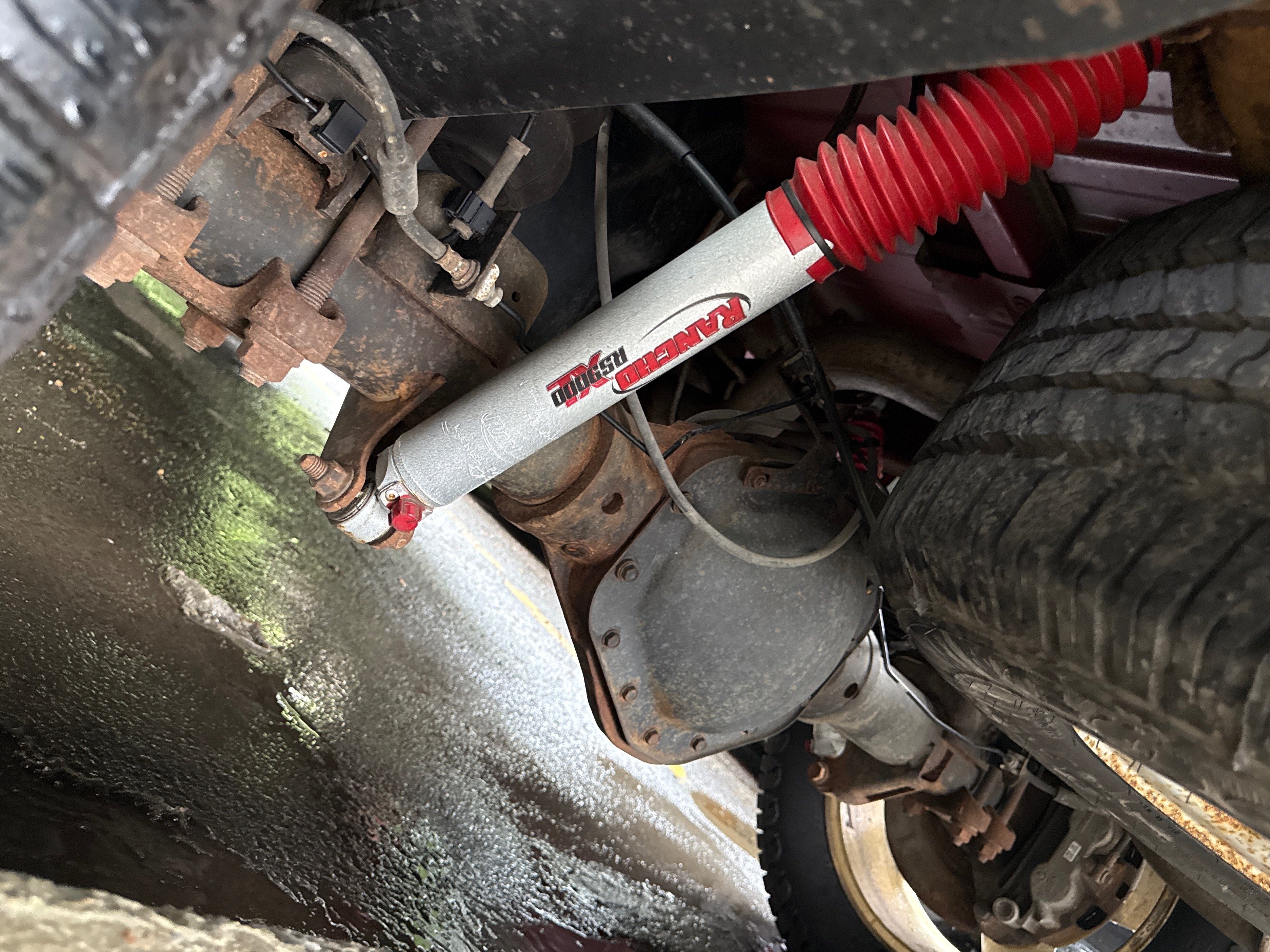
Rancho is one of the most trusted names in truck suspension, with over 50 years of experience building shocks and lift kits for off-road use. Their RS9000XL adjustable shocks offer nine levels of damping adjustment, making them one of the most versatile options for truck owners who drive on and off the road.
For more than 50 years, Rancho has been the go-to brand for off-road enthusiasts who need suspension parts built to handle rocky trails, muddy passes, and everything in between. Their engineers have spent decades testing in real off-road conditions, and that experience shows in their product lineup.
What makes Rancho stand out is their range. They build everything from affordable replacement shocks to fully adjustable performance dampers, plus a complete line of lift kits, coil springs, leaf springs, and steering stabilizers.
- Best For: Off-road adventurers, versatile daily drivers, trucks that see both pavement and trail
- Shock Type: Twin-tube and monotube options
- Key Products: RS5000: An all-around twin-tube shock that delivers reliable ride quality for daily driving and light off-road use
- RS9000XL: Nine-position adjustable shock with compression and rebound tuning — one of the most versatile truck shocks available
- RS7000MT: Monotube design for drivers who want better fade resistance and heat management
- Steering Stabilizer: Tames steering wander on trucks and SUVs running oversized tires
- Price Range: Budget to mid-range, with premium options in the adjustable line
KYB
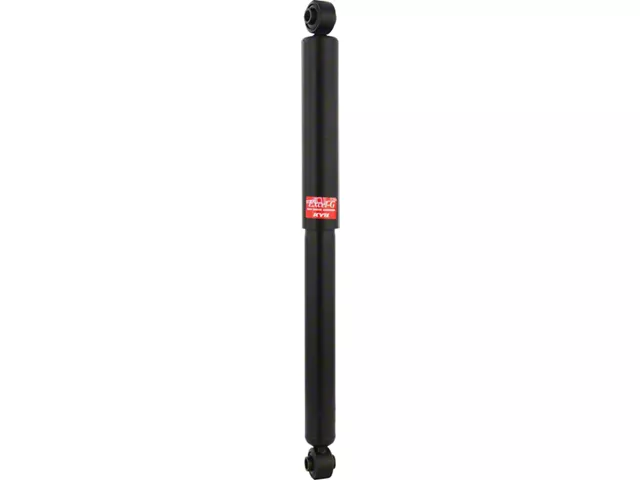
KYB is one of the world's largest manufacturers of OE shocks and struts, and their aftermarket Excel-G twin-tube shocks are designed to restore a truck's original ride quality and handling. For daily driving trucks that need a reliable, comfortable replacement, KYB is a top choice. KYB is a global OE supplier, meaning they make the original shocks and struts that come factory-installed on many trucks and SUVs. That OE expertise carries over to their aftermarket line, which focuses on restoring — and in some cases improving — your truck's factory ride characteristics. If your goal is a smooth, comfortable daily driver rather than a trail-ready build, KYB delivers exactly that. Their shocks are engineered for consistent ride control, predictable handling, and long service life on paved roads.
- Best For: OE-quality replacement, daily driving comfort, commuter trucks
- Shock Type: Twin-tube and monotube options
- Key Products: Excel-G (GR-2): Twin-tube gas shock that restores factory ride control and handling — KYB's most popular aftermarket shock
- Gas-a-Just: Monotube shock with improved responsiveness for drivers who want a performance step up from OE
- MonoMax: Heavy-duty monotube shock built for trucks that tow, haul, or carry consistently heavy loads
- Price Range: Budget to mid-range
Skyjacker
Skyjacker has spent over 25 years building heavy-duty suspension components for off-road trucks, and their shock lineup includes both hydraulic (Hydro 7000) and nitrogen-charged (Nitro 8000) options. Skyjacker shocks feature heavy-duty steel twin-tube bodies and extra-thick piston rods, making them more resistant to trail abuse than stock units.
Skyjacker built their reputation on extreme off-road durability. For more than 25 years, they've been producing suspension kits, shocks, and lift components for truck owners who push their rigs farther down the unknown road. Their catalog of Skyjacker parts covers everything from bolt-on shocks to full lift kits.
What sets Skyjacker shocks apart from OEM units is their construction: heavy-duty steel twin-tube bodies, extra-thick piston rods, and bonded iron pistons at the tips. That rugged build means less flex under abuse and longer life on the trail. 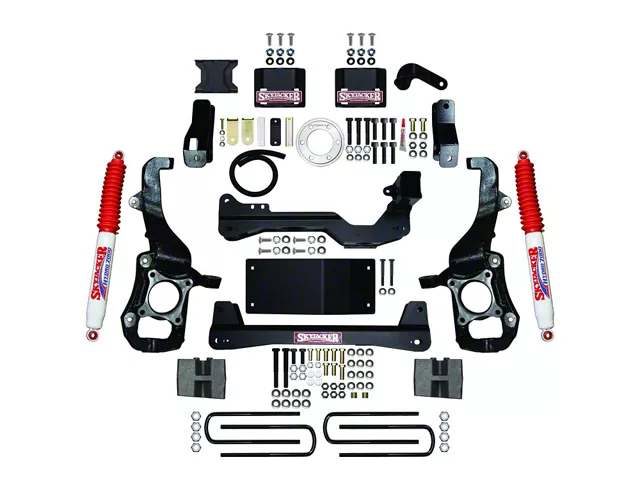
- Best For: Off-road builds, lifted trucks, budget-friendly trail setups
- Shock Type: Twin-tube (hydraulic and gas-charged)
- Key Products: Hydro 7000: Oil-filled twin-tube shock for daily drivers and light off-road use
- Nitro 8000: Nitrogen-charged twin-tube shock for aggressive trail riding
- Lift Kits: Complete suspension lift kits matched to Skyjacker shocks
- Price Range: Budget to mid-range
Skyjacker Hydro vs. Nitro Shocks
The difference between Skyjacker Hydro and Nitro shocks comes down to internal pressure. Hydro 7000 shocks use only hydraulic fluid for a smooth daily-driving ride, while Nitro 8000 shocks add pressurized nitrogen gas to prevent oil aeration during extreme off-road use — delivering more consistent damping on the trail at the cost of a stiffer highway ride.
Skyjacker gives you a clear choice between two shock styles, each designed for a specific use case:
- Hydro 7000 Shocks: Filled with hydraulic fluid only, these shocks deliver a smooth, comfortable ride on the highway. They dampen road vibrations effectively, reduce body roll in corners, and work well as a daily driver upgrade. Hydro shocks are more affordable and a solid alternative to generic "heavy duty" replacements, especially for tow vehicles that stay primarily on pavement.
- Nitro 8000 Shocks: Nearly identical in construction to the Hydro 7000 but topped off with pressurized nitrogen gas. That gas charge keeps the hydraulic fluid from aerating during sustained hard use, so damping performance stays consistent when you're pushing through rough terrain. The tradeoff is a stiffer ride on smooth roads. If your truck regularly hits the trail, Nitro is the way to go.
The short version: Choose Hydro for daily driving with occasional light trail use. Choose Nitro for regular off-road riding where consistent damping matters most.
Bilstein
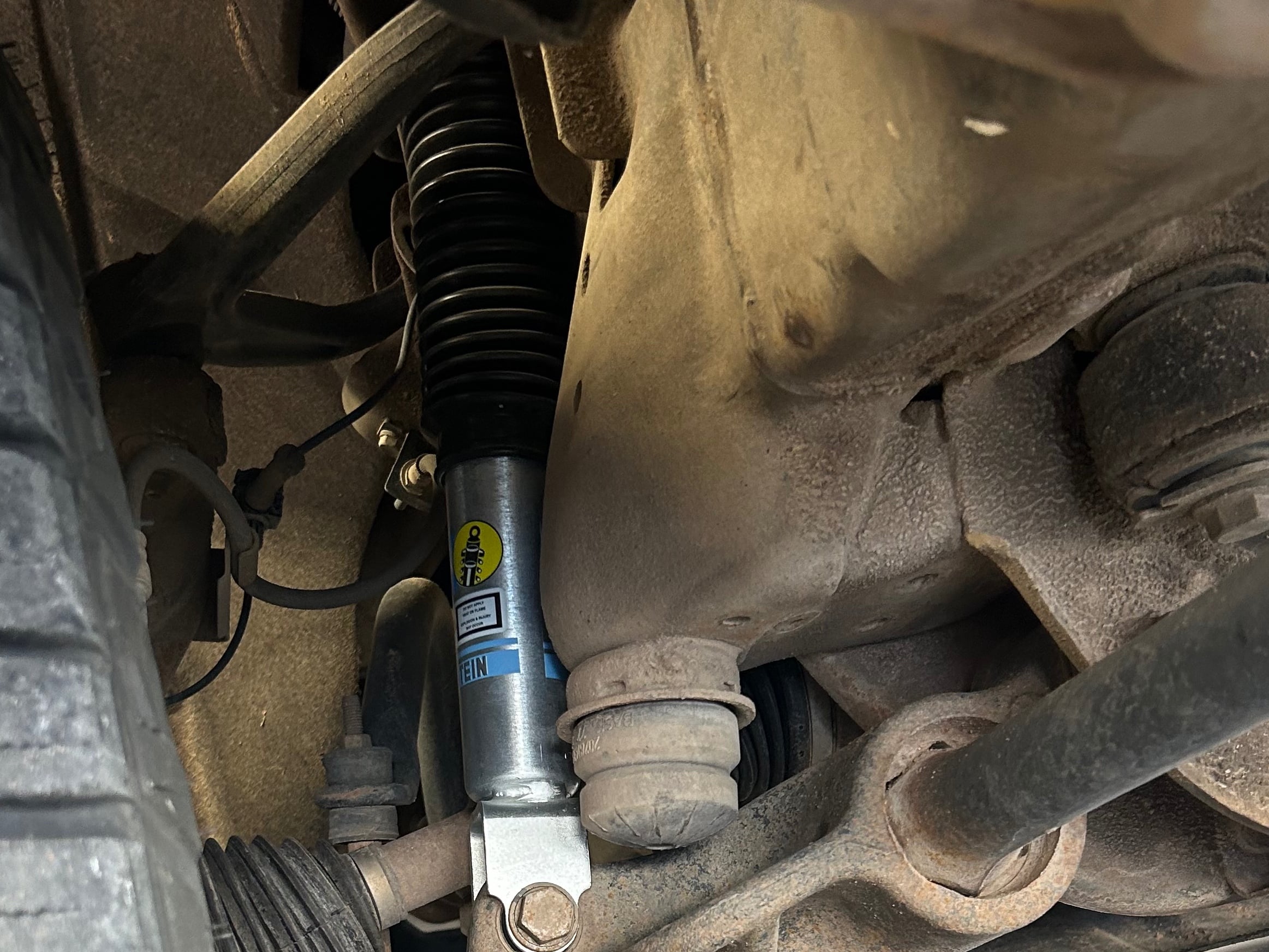
Bilstein shocks use a patented monotube gas-pressure design that provides superior heat dissipation and fade resistance compared to twin-tube shocks. Their B8 5100 series is one of the most popular aftermarket truck shocks, offering ride-height adjustability for lifted and leveled trucks while maintaining a comfortable on-road ride.
Bilstein is the premium choice for truck owners who want monotube performance without sacrificing ride comfort. Their patented gas-pressure monotube technology has been proven in motorsports for decades, and they've adapted that engineering for the truck aftermarket with outstanding results.
The standout feature of Bilstein's truck lineup is their ride-height adjustability. The B8 5100 series lets you raise your truck's front end by up to 2.5 inches with integrated spring spacers — essentially giving you a leveling kit and a premium shock in one package.
- Best For: Premium ride quality, towing and hauling, leveled and lifted trucks
- Shock Type: Monotube (gas-pressure)
- Key Products: B8 5100: Ride-height adjustable monotube shock — a top choice for leveled trucks that tow, with up to 2.5 inches of front-end adjustability
- B6 4600: Direct-fit monotube replacement for trucks at stock height, offering a noticeable upgrade over OE dampers
- Price Range: Mid-range to premium
Fox
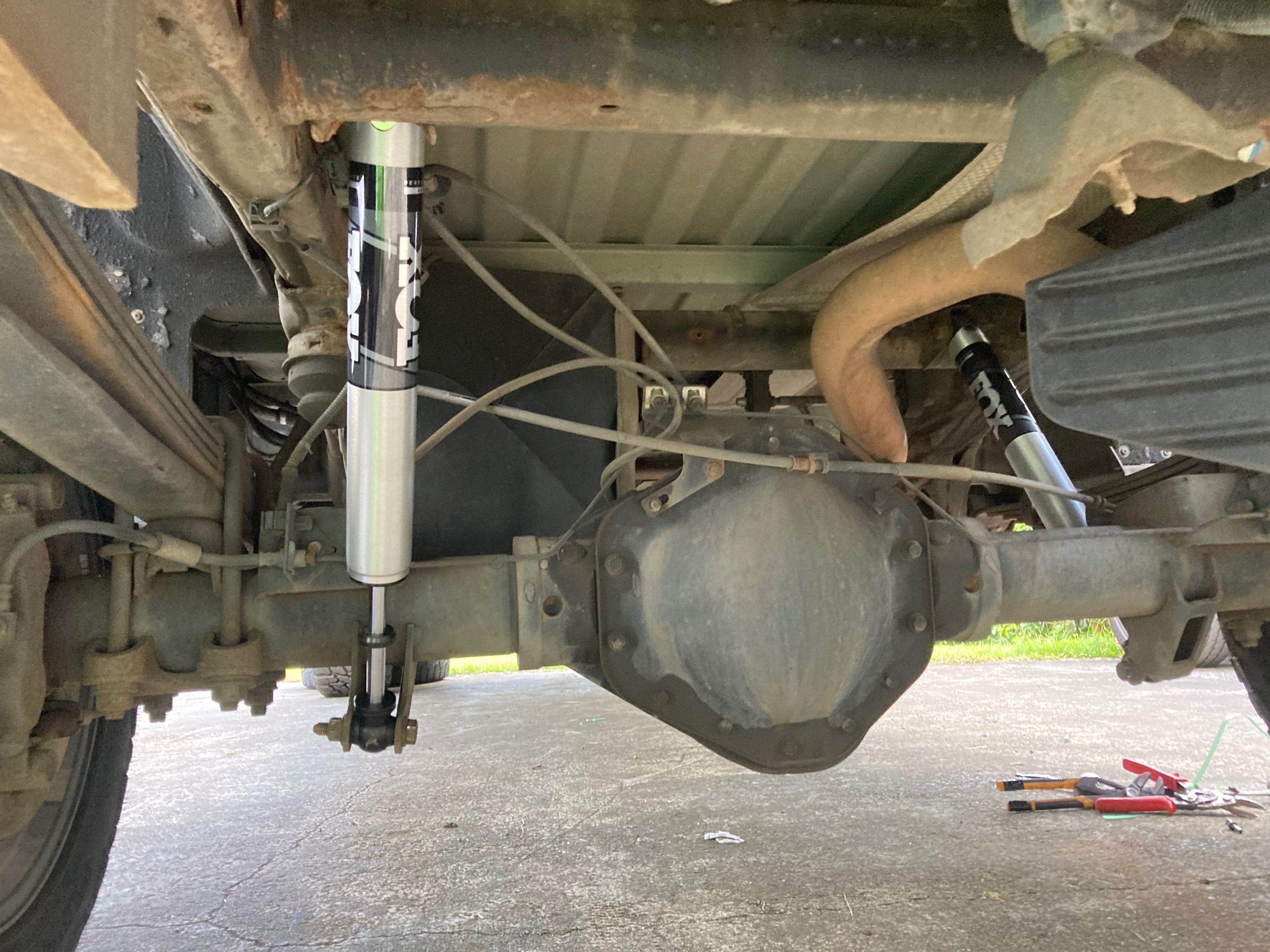
Fox shocks are engineered for high-performance off-road use and are the choice of professional desert racing teams and OE-equipped off-road truck packages. Their 2.0 Performance Series IFP (Internal Floating Piston) shocks deliver race-proven damping technology at a more accessible price point than their full-race reservoir shocks.
Fox is the brand you turn to when off-road performance is the top priority. Born in the world of desert racing and high-speed off-road competition, Fox builds shocks that handle the most punishing terrain on the planet. Their technology trickles down from race vehicles into their truck aftermarket line, and several truck manufacturers now offer Fox shocks as a factory option on their off-road trim packages.
Fox's Internal Floating Piston (IFP) technology is their signature feature. Like other monotube designs, it separates oil from gas to prevent aeration, but Fox's precision engineering and tight tolerances deliver damping consistency that's a step above most competitors — especially at high speeds and over repeated impacts.
- Best For: High-performance off-road, desert-style riding, racing, premium builds
- Shock Type: Monotube (IFP), coilover, and reservoir options
- Key Products: 2.0 Performance Series IFP: Monotube shock with Internal Floating Piston — the entry point into Fox's lineup and a serious upgrade for any truck
- 2.5 Factory Series: Larger-body shock with optional external reservoir for maximum heat capacity and sustained high-speed off-road performance
- Price Range: Premium to high-end
Brand Comparison Table
|
Brand
|
Shock Type
|
Best For
|
Price Range
|
Top Product
|
|
Rancho
|
Twin-tube, Monotube
|
Off-road, versatile daily driving
|
$-$$
|
RS9000XL Adjustable
|
|
KYB
|
Twin-tube, Monotube
|
OE replacement, daily driving comfort
|
$-$$
|
Excel-G Twin-Tube
|
|
Skyjacker
|
Twin-tube (Hydro & Nitro)
|
Off-road builds, lifted trucks
|
$-$$
|
Nitro 8000
|
|
Bilstein
|
Monotube
|
Towing, hauling, leveled/lifted trucks
|
$$-$$$
|
B8 5100 Ride-Height Adjustable
|
|
Fox
|
Monotube (IFP), Coilover
|
High-performance off-road, racing
|
$$$-$$$$
|
2.0 Performance Series IFP
|
How to Choose the Right Shocks for Your Truck
![]() The "best" shock doesn't exist in a vacuum — it depends entirely on how you use your truck. Here's how to match the right brand and type to your driving style.
The "best" shock doesn't exist in a vacuum — it depends entirely on how you use your truck. Here's how to match the right brand and type to your driving style.
The best shocks for daily driving trucks are twin-tube gas shocks like the KYB Excel-G or Rancho RS5000, which provide a smooth, comfortable ride at an affordable price. For trucks that tow regularly, monotube shocks like the Bilstein B8 5100 or KYB MonoMax offer better fade resistance under sustained heavy loads.
For Daily Driving and Commuting
If your truck spends most of its time on paved roads, you want shocks that prioritize comfort, quiet operation, and longevity. Twin-tube designs are your best bet here.
- Top Picks: KYB Excel-G, Rancho RS5000
- Why: Smooth ride, affordable replacement cost, proven OE-level durability
- Skip: Premium off-road shocks — you'll pay extra for performance you won't use, and the stiffer ride will be noticeable on the highway
For Off-Road and Trail Riding
Off-road driving demands shocks that handle repeated impacts without fading. Gas-charged or monotube designs are essential here because they resist aeration and maintain consistent damping over rough terrain.
- Top Picks: Skyjacker Nitro 8000, Fox 2.0 Performance Series, Rancho RS9000XL
- Why: Gas pressure prevents fade, heavy-duty construction handles abuse, monotube designs shed heat faster
- Budget Option: Skyjacker Nitro 8000 delivers solid trail performance at a fraction of Fox's price
For Towing and Hauling
When your truck is carrying or pulling heavy loads, your shocks work overtime to control body roll, sway, and rear-end sag. Monotube shocks handle the extra heat and stress better than twin-tube designs. You can also explore suspension components built specifically for towing.
- Top Picks: Bilstein B8 5100, KYB MonoMax
- Why: Monotube designs resist fade under sustained load, and both shocks are engineered for heavy-duty applications
- Bonus: The Bilstein B8 5100's ride-height adjustability helps level your truck's stance when the bed is loaded
For Lifted Trucks
Running a lift kit changes your suspension geometry, and stock-length shocks won't work. You need shocks specifically designed for your lift height. Learn more about choosing between lift kits vs. leveling kits before you start your build.
- Top Picks: Skyjacker (matched to their lift kits), Fox 2.5 Factory Series, Bilstein B8 5100
- Why: Skyjacker sells complete lift kits with matched shocks, eliminating fitment guesswork. Fox and Bilstein offer extended-travel shocks for a wide range of lift heights.
- Pro Tip: Always confirm that your shock's extended and compressed lengths are compatible with your specific lift height. Running the wrong length can damage the shock or limit your suspension travel.
Signs Your Truck Needs New Shocks
![]() Even the best shocks wear out over time. Most manufacturers recommend replacing truck shocks every 50,000 to 100,000 miles, but hard use — off-roading, towing, rough roads — can shorten that interval significantly. Here are the warning signs to watch for.
Even the best shocks wear out over time. Most manufacturers recommend replacing truck shocks every 50,000 to 100,000 miles, but hard use — off-roading, towing, rough roads — can shorten that interval significantly. Here are the warning signs to watch for.
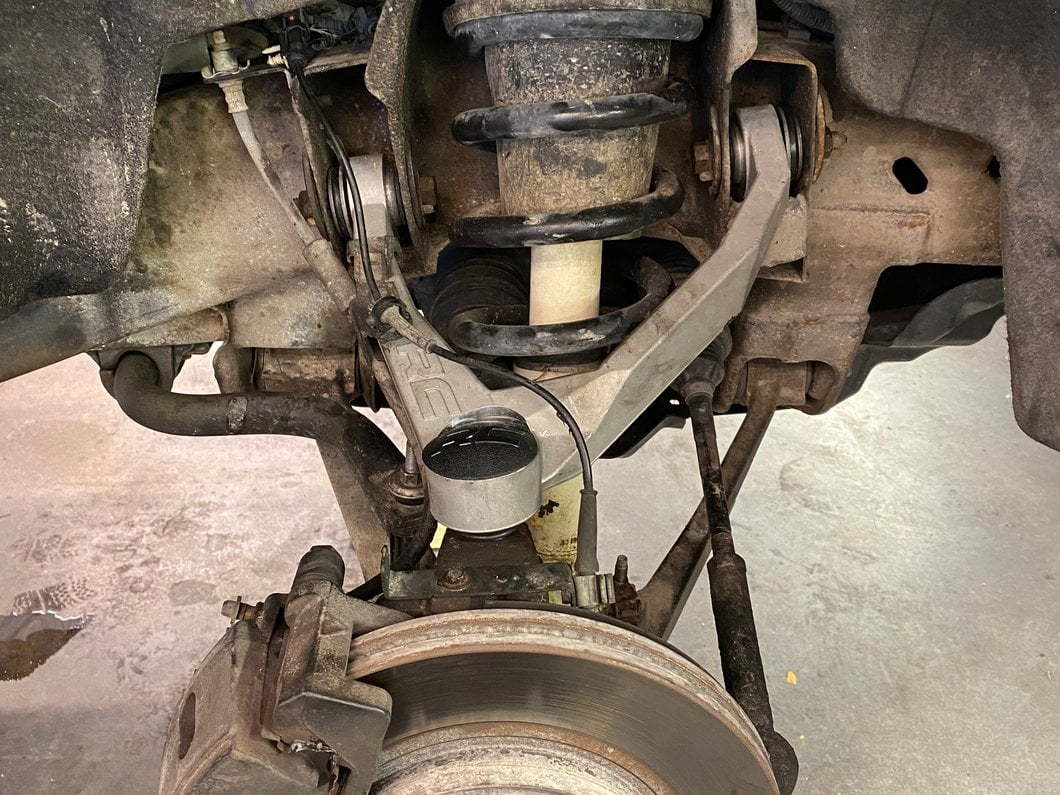
- A Very Bumpy Ride: This is the most obvious sign. If every pothole and road seam sends a jolt through the cab that you didn't used to feel, your shocks have lost their damping ability. The ride gets progressively worse as the internal valving wears out.
- Uneven or Excessive Tire Wear: Failing shocks can't keep your tires pressed evenly against the road. You'll notice cupping, scalloping, or uneven tread wear patterns — especially on the front tires. This doesn't just cost you in replacement tires; it compromises your grip and braking distance.
- A Shaky Steering Wheel: If your steering wheel vibrates or shakes while driving — especially at highway speeds — your shocks may not be controlling front-end movement properly. This can also indicate a need for a new steering stabilizer.
- Strange Noises: Knocking, rattling, or clunking sounds when you hit bumps are a red flag. Worn shocks can allow excessive movement in the suspension, causing metal-to-metal contact.
- Visible Leaks: Check around your shocks for signs of hydraulic fluid. If you see oily residue or liquid pooling near your wheels, the shock's internal seals have failed and it's time for a replacement.
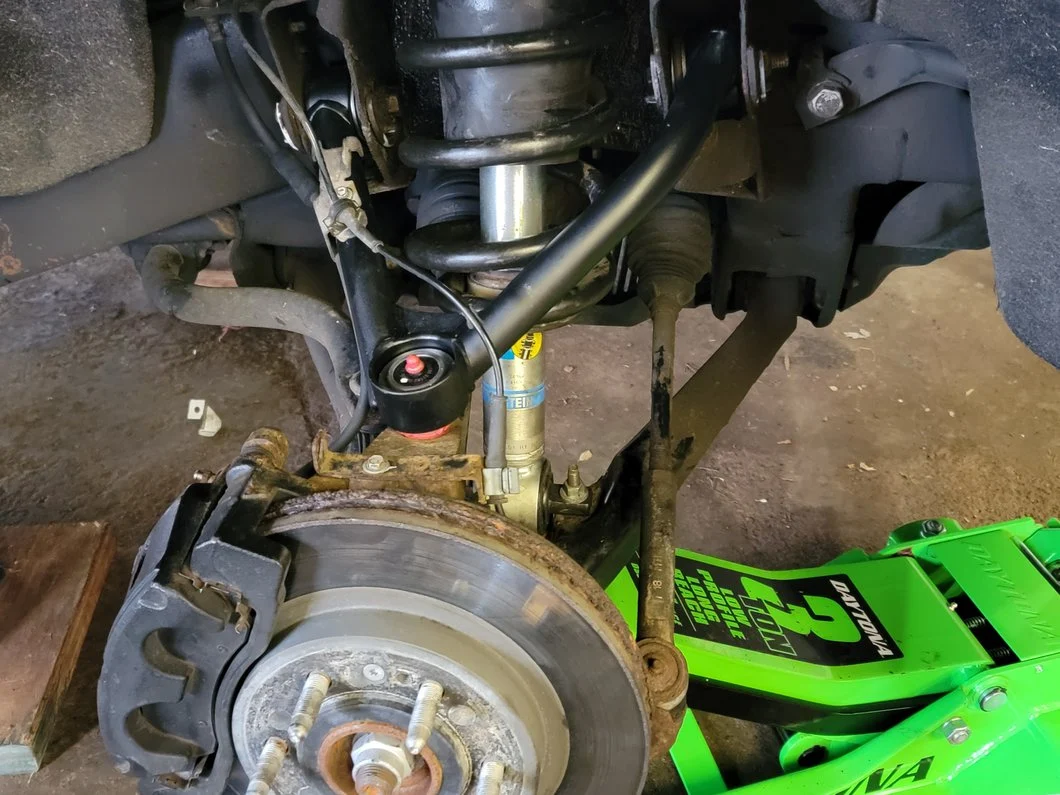
- Your Truck is Drifting or Pulling: A truck that doesn't want to drive straight — or that leans excessively during turns — often has worn shocks or other failing suspension components. This is a safety concern, especially at highway speeds or when towing. If you're noticing any of these symptoms, don't wait. Driving on worn shocks accelerates wear on your tires, ball joints, and other suspension parts. Check out our suspension FAQ for more information on diagnosing and fixing common suspension issues.
Whether you're restoring your truck's factory ride with a set of KYB Excel-G shocks, building a trail-ready machine with Skyjacker lift kits, or upgrading to Bilstein monotubes for towing confidence, the right suspension setup makes every mile better. We carry a full lineup of shock absorbers and suspension parts from all five brands covered in this guide — ready to ship and backed by our expert team. Browse our truck suspension catalog to find the right fit for your truck and your driving style.
Frequently Asked Questions About Truck Shocks and Suspension
Choosing the right shocks and suspension setup raises a lot of questions, especially when you're comparing brands and shock types for the first time. Here are the most common questions truck owners ask.
What Are the Best Shocks for Daily Driving a Truck?
KYB Excel-G and Rancho RS5000 shocks are the top picks for daily driving trucks. Both use twin-tube designs that deliver a smooth, comfortable ride on highways and city streets. KYB Excel-G shocks restore OE-level handling, while Rancho RS5000 shocks add slightly more off-road capability without sacrificing pavement comfort.
What Is the Difference Between Monotube and Twin-Tube Shocks?
Twin-tube shocks use two nested cylinders filled with hydraulic fluid and are affordable and comfortable for everyday driving. Monotube shocks use a single cylinder with a floating piston that separates oil from pressurized nitrogen gas, providing better heat dissipation and more consistent damping during hard off-road use or heavy towing.
Are Bilstein Shocks Worth It for Trucks?
Bilstein shocks are worth the premium for truck owners who tow, haul, or run a lifted setup. Their monotube design with digressive valving delivers fade-free damping under heavy loads. The Bilstein B8 5100 also offers ride-height adjustability, making it one of the most versatile aftermarket shocks available for trucks.
How Often Should Truck Shocks Be Replaced?
Most truck shocks should be inspected around 50,000 miles and replaced between 50,000 and 100,000 miles depending on driving conditions. Trucks used for off-roading, towing, or hauling heavy loads may need replacement sooner. Look for signs like excessive bouncing, uneven tire wear, or fluid leaks near the shock body.
Are Fox Shocks Better Than Rancho?
Fox shocks outperform Rancho in high-speed off-road applications thanks to their IFP (Internal Floating Piston) monotube design and race-proven engineering. However, Rancho shocks like the RS9000XL offer nine-position adjustability at a lower price point, making them more practical for truck owners who split time between pavement and trails.
What Is the Difference Between Skyjacker Hydro and Nitro Shocks?
Skyjacker Hydro 7000 shocks are oil-filled twin-tube designs built for comfortable daily driving and light trail use. Skyjacker Nitro 8000 shocks add pressurized nitrogen gas that prevents oil aeration during hard off-road use, delivering more consistent damping under extreme conditions but with a slightly firmer ride on pavement.
Can You Replace Truck Shocks Yourself?
Yes, replacing shocks is one of the more straightforward suspension jobs you can do at home. Most bolt-on shocks require basic hand tools and a floor jack. The job typically takes one to two hours for a pair. Always replace shocks in pairs (both fronts or both rears) to maintain balanced handling and ride quality.
What Does a Truck's Suspension Actually Do?
Your truck's suspension absorbs road impact using springs and shock absorbers, limiting how much vibration and force transfers into the cab and tires. It keeps your tires in firm, balanced contact with the road for safe handling, braking, and cornering — especially important for trucks that drive on unfinished terrain or carry heavy loads.
Do I Need New Shocks After Installing a Lift Kit?
Yes, most lift kits require longer shocks matched to the new ride height. Running stock-length shocks on a lifted truck can cause bottoming out, reduced suspension travel, and premature wear. Many lift kits include matched shocks, or you can pair a lift with brand-specific shocks like Skyjacker Hydro 7000 or Fox 2.0 Performance Series.