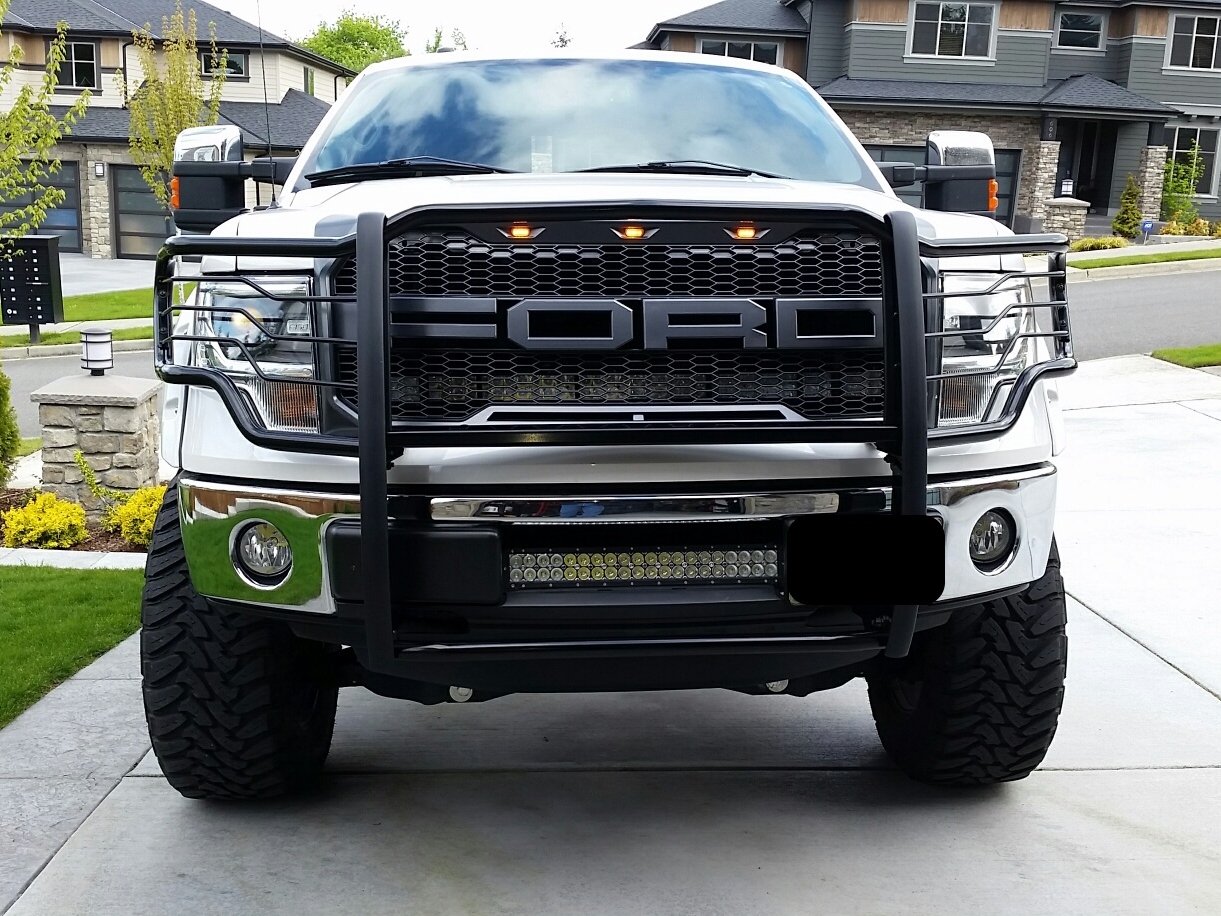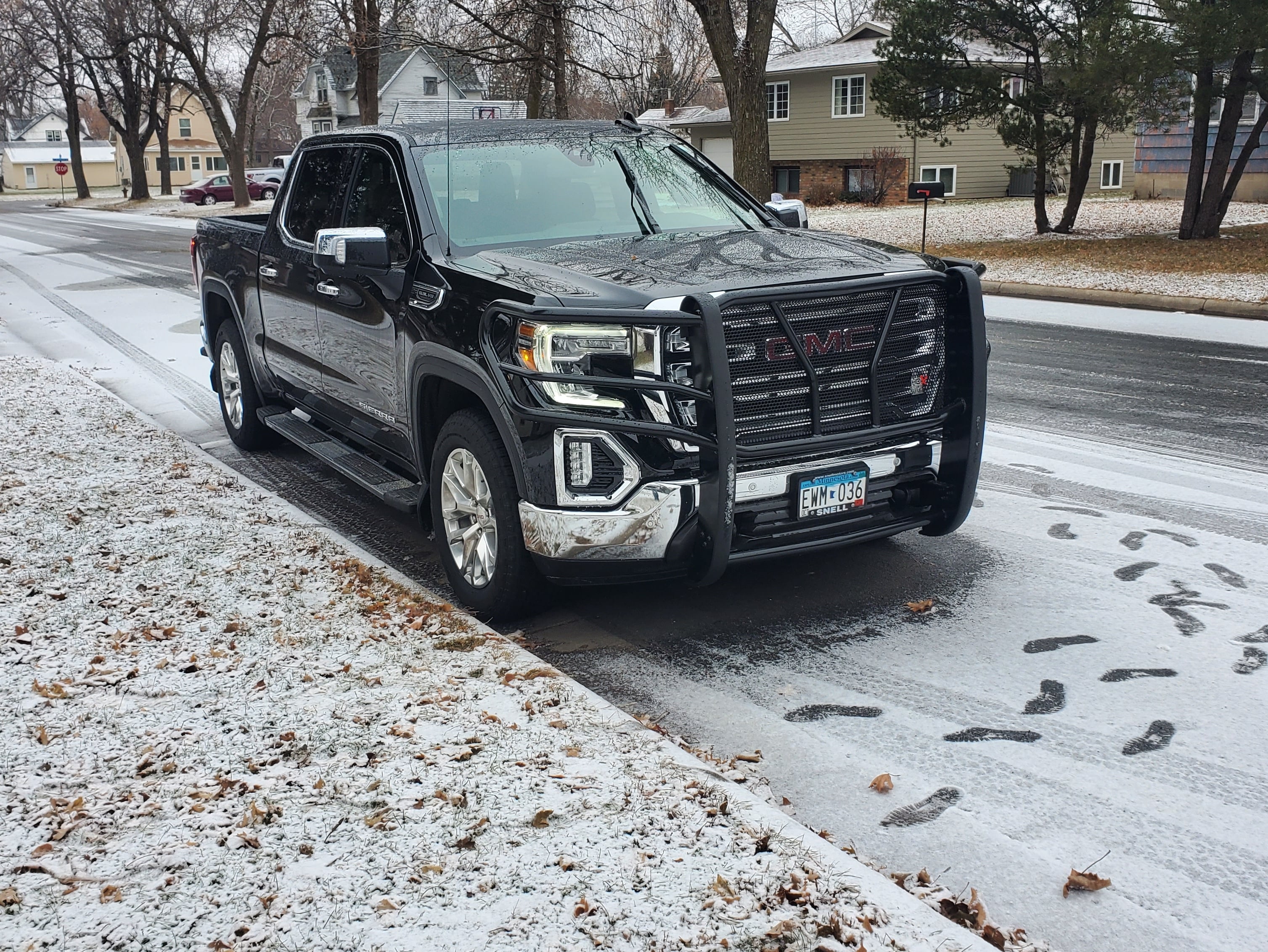
If you've been eyeing a brush guard or bull bar for your truck, you're not alone — front-end protection is one of the most popular exterior upgrades for pickups that see real use. But with bull bars, brush guards, and grille guards all claiming to protect your front end, it's easy to get confused about which one actually fits your needs and your truck. In this guide, we'll break down the differences between all three guard types, compare the top brands we carry at AmericanTrucks, walk you through installation, and cover light-bar integration so you can make a confident buying decision
What Are Brush Guards, Bull Bars, and Grille Guards?
![]() A bull bar is a center-mounted A-frame guard that protects the bumper and lower grille, a brush guard adds side wings to shield your headlights as well, and a grille guard is a full-width H-frame cage that covers everything from frame rail to frame rail. All three bolt onto your truck's front end to absorb impacts, but they differ in how much real estate they protect and how much they weigh.
A bull bar is a center-mounted A-frame guard that protects the bumper and lower grille, a brush guard adds side wings to shield your headlights as well, and a grille guard is a full-width H-frame cage that covers everything from frame rail to frame rail. All three bolt onto your truck's front end to absorb impacts, but they differ in how much real estate they protect and how much they weigh.
Let's break each one down so you know exactly what you're shopping for.
Bull Bars
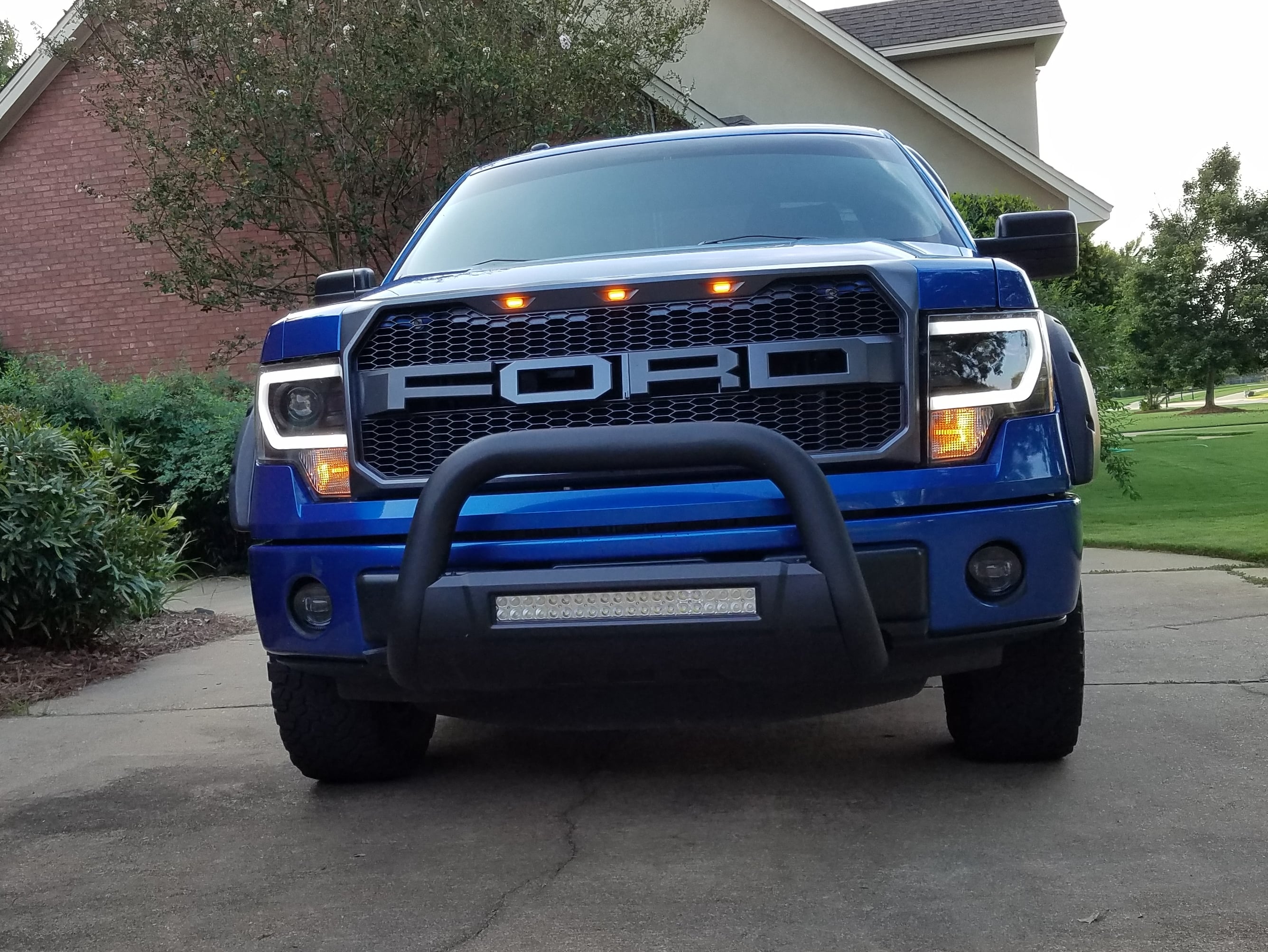
A bull bar — sometimes called a nudge bar — is the most compact option. It uses an A-frame design that centers on your bumper and covers the lower grille area. Most bull bars include a skid plate underneath and pre-drilled tabs on the crossbar for mounting a light bar or pod lights. Because they only protect the center section, bull bars are lighter than full-coverage guards (typically 30 to 60 pounds) and tend to cost less. They're a popular choice if you want some front-end defense and a clean, aggressive look without adding a lot of bulk.
Brush Guards
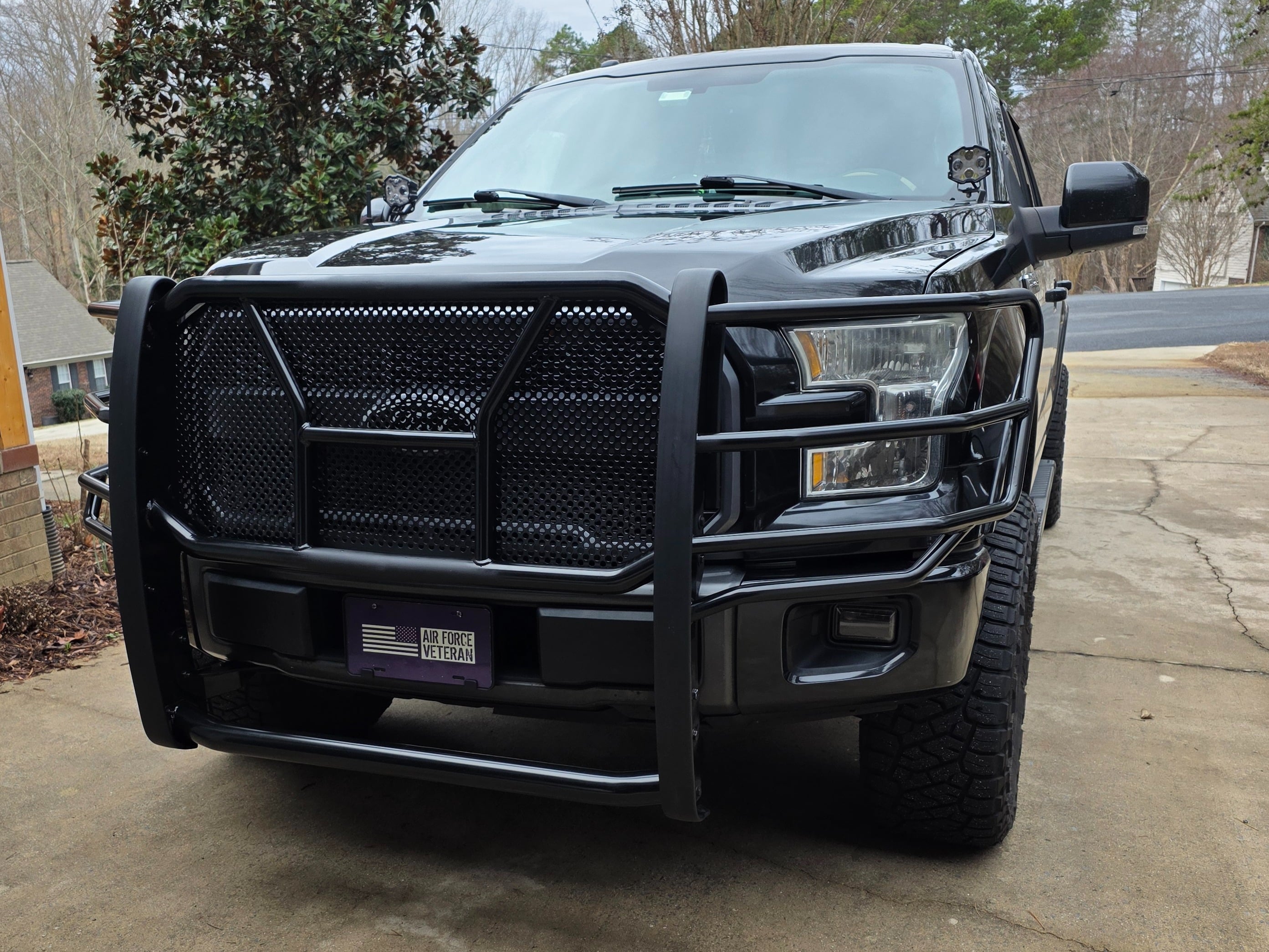
A brush guard steps up from a bull bar by extending side wings outward to cover your headlights and the wider grille area. The frame is usually tubular steel, and the design wraps around the front end to deflect branches, brush, and road debris away from your lights. Brush guards sit in the middle of the protection spectrum — more coverage than a bull bar, less bulk than a full grille guard. Expect weights in the 40-to-80-pound range depending on the material and design.
Grille Guards
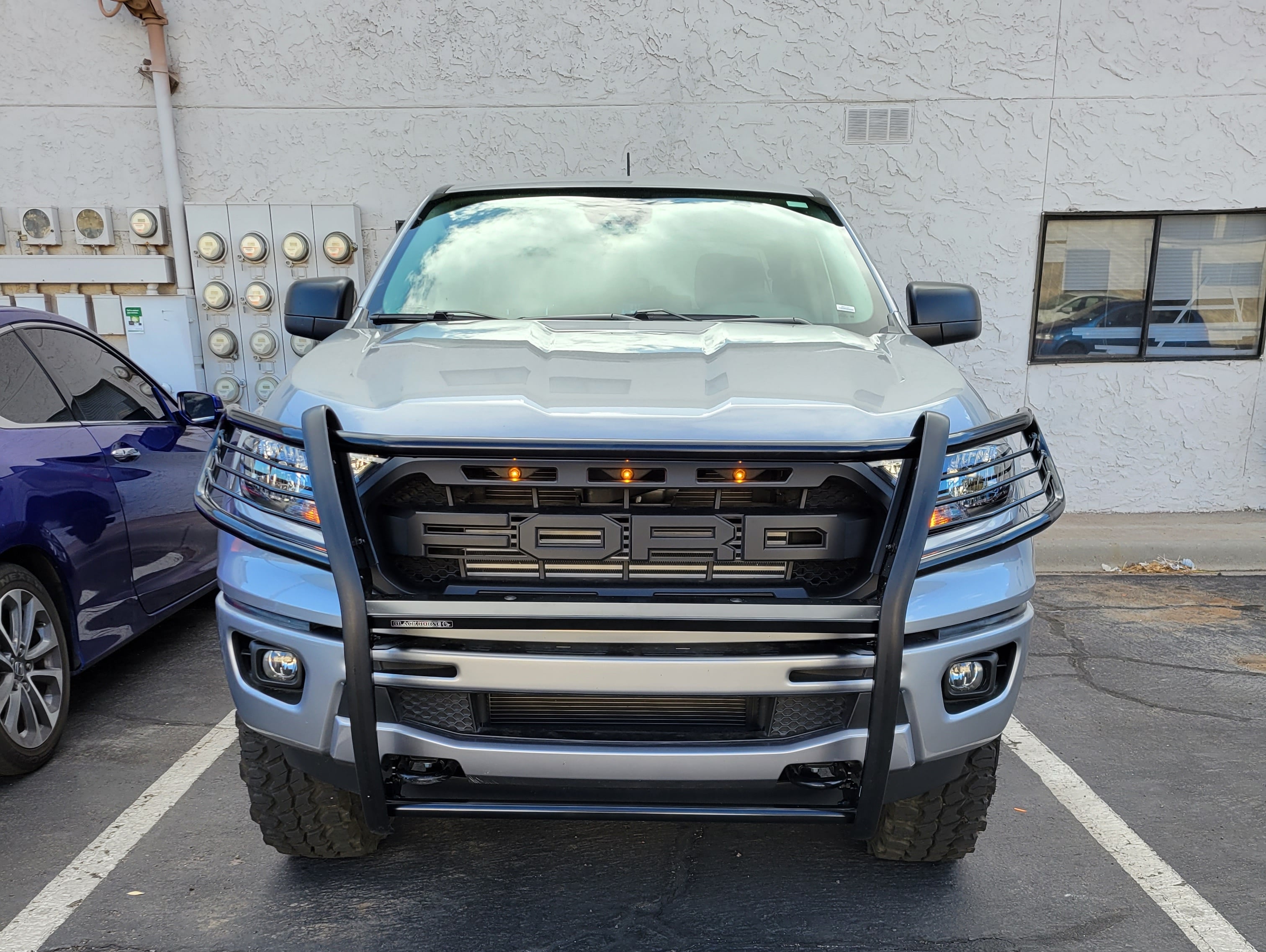
A grille guard is the heaviest-duty option. It uses a full H-frame construction that spans the entire width of your truck's front end, from one frame rail to the other. Vertical uprights, horizontal crossbars, and mesh or punch-plate inserts work together to shield your grille, headlights, turn signals, and often your fog lights too. Grille guards can weigh 80 pounds or more and typically mount directly to the frame for maximum rigidity. If you're running trails, driving through heavy brush, or operating in areas with frequent wildlife crossings, a grille guard delivers the most protection money can buy.
Quick Comparison
|
Feature
|
Bull Bar
|
Brush Guard
|
Grille Guard
|
|
Design
|
A-frame, center mount
|
Tubular with side wings
|
Full H-frame, frame-to-frame
|
|
Coverage
|
Lower grille and bumper
|
Grille and headlights
|
Full front end including signals
|
|
Typical Weight
|
30–60 lbs
|
40–80 lbs
|
80–120+ lbs
|
|
Price Range
|
$150–$500
|
$200–$600
|
$400–$900+
|
|
Protection Level
|
Moderate (center only)
|
Good (center + headlights)
|
Maximum (full width)
|
|
Best For
|
Daily drivers, light bar mount
|
Mixed use, rural driving
|
Off-road, ranch, wildlife areas
|
Why You Need Front-End Protection on Your Truck
![]() A quality brush guard or bull bar can absorb and deflect a deer strike at highway speeds, potentially saving your grille, headlights, radiator, and hood from thousands of dollars in damage. While no guard makes a truck invincible, a heavy-gauge steel or aluminum frame between your front end and the impact dramatically reduces repair costs and downtime.
A quality brush guard or bull bar can absorb and deflect a deer strike at highway speeds, potentially saving your grille, headlights, radiator, and hood from thousands of dollars in damage. While no guard makes a truck invincible, a heavy-gauge steel or aluminum frame between your front end and the impact dramatically reduces repair costs and downtime.
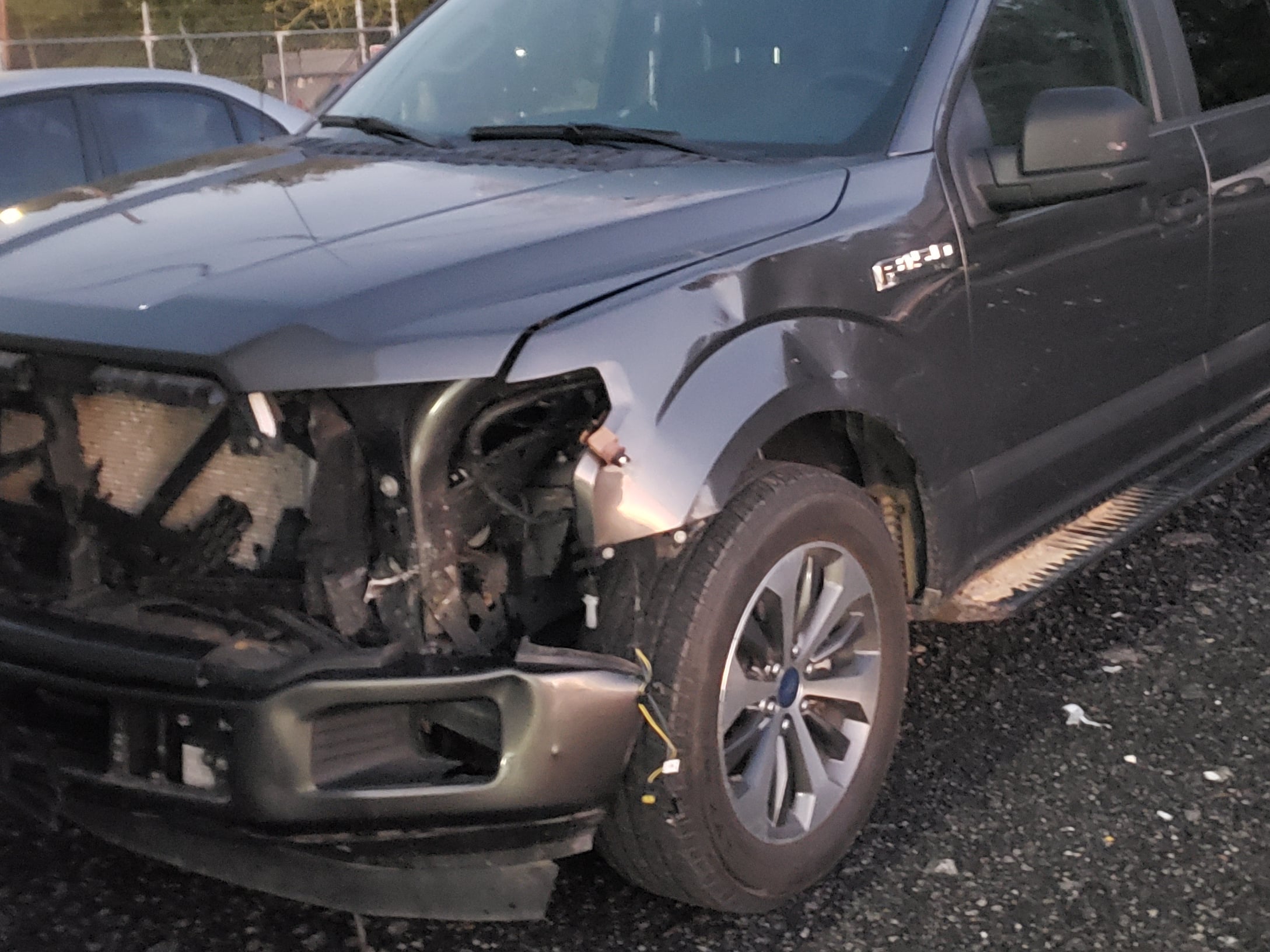
Beyond wildlife collisions, front-end protection pulls its weight in several everyday and off-road scenarios:
- Trail and brush protection: Overgrown two-tracks, low-hanging branches, and tight tree lines will scratch and dent an unprotected grille and hood. A brush guard or grille guard takes those hits instead.
- Road debris defense: Rocks kicked up by the truck ahead of you, highway debris, and even minor parking-lot bumps are absorbed by the guard rather than your factory bumper cover.
- Winch and accessory mounting: Many grille guards and heavy-duty brush guards include a winch mounting plate or crossbar, giving you a recovery-ready front end without swapping your entire bumper. Bull bars, meanwhile, offer a convenient crossbar for light bars and pod lights.
- Resale and appearance: A well-maintained guard adds a purposeful, rugged look that appeals to the next buyer. It also signals that the truck was cared for and set up for real use.
One note on safety: modern brush guards and bull bars designed for late-model trucks are engineered to work with your vehicle's airbag and crash-sensor systems. If you're running a current-year F-150, Silverado, Ram, or Sierra, a vehicle-specific guard from a reputable manufacturer won't interfere with your safety systems. On much older trucks without those sensors, this isn't a concern at all.
Top Brush Guard and Bull Bar Brands Compared
When it comes to choosing the best bull bar brand for your truck, the answer depends on your budget, the look you're after, and how hard you plan to use the guard. We carry several top-tier brands at AmericanTrucks, and each one brings something a little different to the table. Here's how they stack up.
Westin
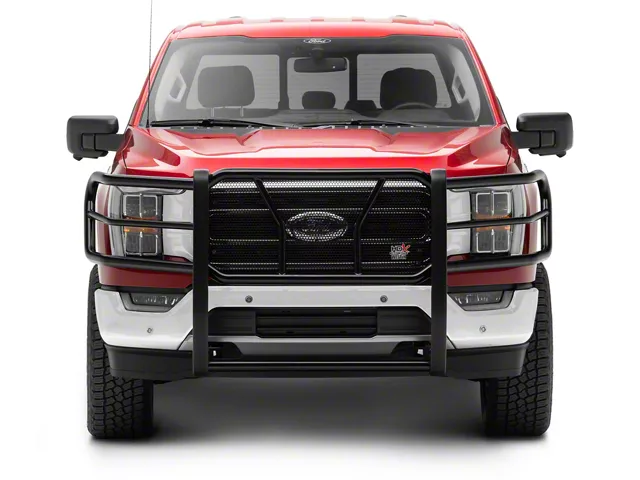
Westin is the go-to for truck owners who want polished fit and finish alongside serious protection. Their HDX series uses heavy-wall steel tubing with a textured black powder-coat finish and integrated light tabs. The Sportsman series takes a lighter, more streamlined approach with a polished stainless or black finish. Westin guards are known for precise vehicle-specific fitment and clean mounting hardware — you won't see sloppy gaps or crooked brackets.
Go Rhino
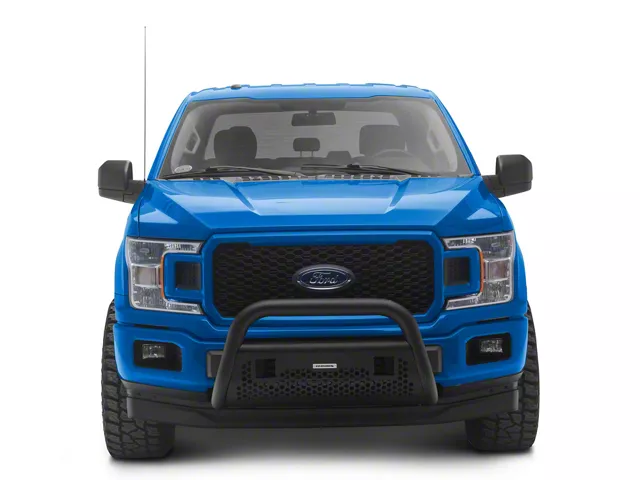
Go Rhino builds for the heavy-duty crowd. Their RC2 LR bull bar features a two-inch diameter steel tube with a textured black finish and built-in light mounting tabs for up to a 20-inch light bar. The Charger series is a full grille guard with a robust frame and optional brush-guard side wings. If you want a guard that can take real punishment on the trail or the ranch, Go Rhino is a strong pick.
Steelcraft
Steelcraft hits a sweet spot between quality and affordability. Their bull bars and grille guards come in polished stainless or black powder-coat finishes, and most models feature a clean, no-nonsense tubular design. If you're looking for dependable front-end protection without stretching your budget, Steelcraft consistently delivers.
Barricade
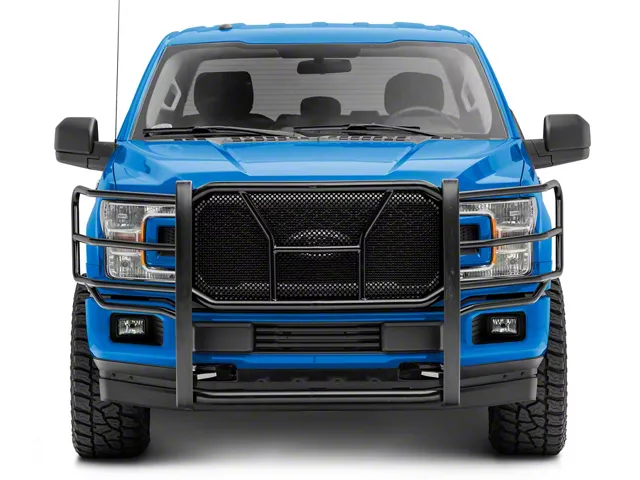
Barricade is our house brand, and it's built specifically for truck owners who want HD protection at a great price. The Barricade Extreme Heavy Duty Brush Guard uses thick-wall steel construction with a durable black finish, and the Barricade Modular Extreme HD Brush Guard lets you add or remove side wings depending on how much coverage you need. Barricade guards are vehicle-specific and come with everything you need for a clean bolt-on install.
Black Horse Off Road
Black Horse Off Road has built its reputation on classic tubular designs in polished chrome and gloss black finishes. Their bull bars and grille guards deliver a traditional look that pairs well with lifted trucks and towing setups. If you're going for a bright, chrome-forward appearance, Black Horse is one of the strongest options in the catalog.
Brand Comparison
|
Brand
|
Price Range
|
Materials
|
Key Features
|
Best For
|
|
Westin
|
$300–$900+
|
Steel, stainless steel
|
HDX & Sportsman lines, precise fitment, integrated light tabs
|
Premium fit and finish
|
|
Go Rhino
|
$350–$800
|
Heavy-wall steel
|
RC2 LR, Charger series, built-in 20" light bar tabs
|
Heavy-duty off-road and ranch use
|
|
Steelcraft
|
$200–$500
|
Steel, stainless steel
|
Clean tubular design, polished and black finishes
|
Budget-friendly quality
|
|
Barricade
|
$150–$450
|
Heavy-wall steel
|
Extreme HD, modular side wings, vehicle-specific fit
|
Value with HD protection
|
|
Black Horse Off Road
|
$200–$600
|
Steel, stainless steel
|
Chrome and black options, classic tubular style
|
Traditional chrome look
|
Want to see what's available for your specific truck? Browse our full selection of brush guards and grille guards and filter by your year, make, and model for a guaranteed fit.
How to Choose the Right Guard for Your Truck
![]() Picking the right guard comes down to four decisions: fitment, material, finish, and how much coverage you actually need. Let's walk through each one.
Picking the right guard comes down to four decisions: fitment, material, finish, and how much coverage you actually need. Let's walk through each one.
Start with Fitment
This is the single most important step. Brush guards, bull bars, and grille guards are designed to match specific year, make, and model combinations. A guard built for a 2021-2024 F-150 won't bolt onto a 2019 Silverado — the bumper contours, frame mounts, and sensor cutouts are all different. Always enter your vehicle details before browsing so you only see parts that actually fit. We carry vehicle-specific guards for the F-150, Silverado, Ram 1500, Sierra, Colorado, Tahoe, and many more.
Choose Your Material
- Steel: The most impact-resistant option. Mild steel guards are heavy and extremely durable, making them the top choice for off-road use, ranch work, and areas with large wildlife. The tradeoff is weight — a full steel grille guard can add 80 to 120 pounds to your front end.
- Aluminum: Significantly lighter than steel, corrosion-resistant without any coating, and strong enough for daily-driver protection. Aluminum guards won't take the same hit as a steel unit on the trail, but they won't rust in salt-belt climates either.
- Stainless steel: Combines good impact strength with natural corrosion resistance and a bright, polished finish. Stainless guards sit between mild steel and aluminum in both weight and price — a solid middle ground if you want durability and appearance in one package.
Pick a Finish
- Black powder coat: The most popular finish. Powder coating resists chips, scratches, and UV fading better than spray paint, and it pairs well with black grilles, bumpers, and trim.
- Polished stainless / chrome: Delivers a bright, mirror-like appearance that stands out. Requires occasional polishing to maintain its shine, but it won't corrode the way chrome-plated mild steel can.
- Textured black: A matte or semi-gloss finish that hides trail rash and fingerprints. Common on heavy-duty and off-road-focused guards from brands like Westin and Go Rhino.
Decide on Coverage
Match the guard type to how you use your truck:
- Daily driver / light protection: A bull bar gives you a clean look, a light-bar mount, and enough protection for parking lots and minor road debris.
- Rural and mixed-use driving: A brush guard covers your headlights and grille — ideal if you regularly drive back roads, gravel routes, or areas with wildlife.
- Off-road, ranch, or work truck: A full grille guard delivers frame-to-frame coverage and can handle the hardest impacts. Pair it with a winch plate if you need recovery capability.
If you're still narrowing it down, check out our truck bumpers category for off-road bumper replacements that offer even more protection, or browse truck exterior accessories for related upgrades.
How to Install a Brush Guard on Your Truck
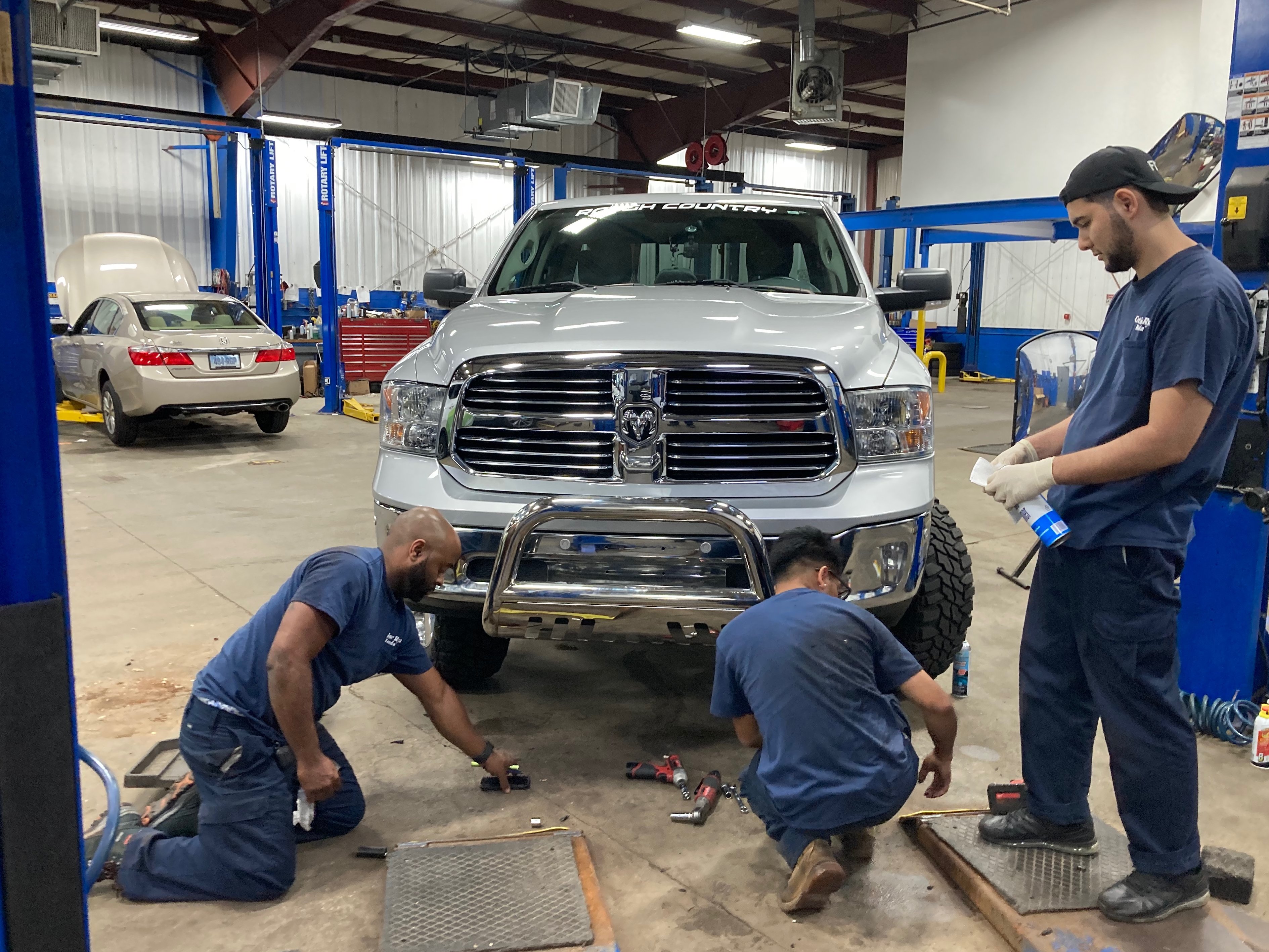
![]() Most bolt-on brush guards and bull bars install in one to two hours with common hand tools and a helper. You won't need a welder or a lift — a level driveway, a socket set, and an extra pair of hands will get the job done. Here's the step-by-step process.
Most bolt-on brush guards and bull bars install in one to two hours with common hand tools and a helper. You won't need a welder or a lift — a level driveway, a socket set, and an extra pair of hands will get the job done. Here's the step-by-step process.
Tools You'll Need
- Socket and ratchet set (metric and SAE)
- Drill with metal and plastic drill bits
- Die grinder or rotary tool with a cut-off wheel
- Grease pencil or marker
- Torque wrench
- Masking tape (to protect painted surfaces)
- A helper — these guards are heavy and awkward to hold alone
Step-by-Step Installation
- Attach the lower brackets to the guard. Lay your brush guard face-down on a padded surface and bolt the lower mounting brackets to the guard frame using the supplied hardware. Hand-tighten everything at this stage — you'll need the play to adjust alignment later. Check that the brackets match your truck's frame mounting points by referencing the included instructions.
- Lift the guard into position. This is a two-person step. Have your helper grab one side while you take the other, then carefully lift the guard up to the front of the truck. Center it on the bumper so the gaps on each side are even. Rest it against the bumper to hold it in place while you work.
- Mark the bumper cover for trimming. With the guard held in position, use a grease pencil to trace along the outside edges of the lower brackets where they meet the bumper cover or fascia. These marks show you exactly where to trim the plastic so the brackets can pass through and sit squarely on the frame behind the bumper.
- Trim the bumper cover. Remove the guard, then carefully cut along your marked lines using a die grinder with a cut-off wheel. Take your time and cut conservatively — you can always remove more material, but you can't put it back. Once you've made the initial cuts, test-fit the guard again and continue trimming until the lower bracket mounts sit flush against the frame rails.
- Drill the mounting holes and install the lower hardware. With the guard in place and the brackets seated on the frame, mark the bolt-hole locations through the bracket holes. Set the guard aside, drill out the holes, then slide the guard back into position. Place a washer on each bolt, insert them through the brackets and frame holes, add washers and nuts on the back side, and hand-tighten. Don't torque these down yet.
- Install the upper mounting brackets. Slide the upper bracket tabs through the grille opening. One end connects to the top of the brush guard frame, and the other rests against the radiator core support. Align everything carefully, mark and drill the upper bolt holes, then install the hardware. Hand-tighten all upper bolts so the guard can still shift slightly for final alignment.
- Final alignment and torque. Step back and eyeball the guard from the front, both sides, and above. Adjust the position until it's centered and level, then torque all bolts to the manufacturer's specified values using a torque wrench. Go around the entire guard one more time after torquing to confirm nothing shifted. Give the guard a firm shake to make sure everything feels solid.
Tips for a clean install:
- Apply masking tape around any area you plan to cut or drill to protect the paint and plastic from scratches.
- Check your guard's instructions for specific torque specs — over-tightening can crack powder coat or strip threads.
- If your truck has front parking sensors or cameras, make sure the guard doesn't block them. Most vehicle-specific guards are designed around these features, but it's always worth confirming.
Looking for guards already matched to your truck? Browse F-150 brush guards or Sierra grille guards for bolt-on options designed around your exact front end.
Adding a Light Bar to Your Bull Bar or Brush Guard
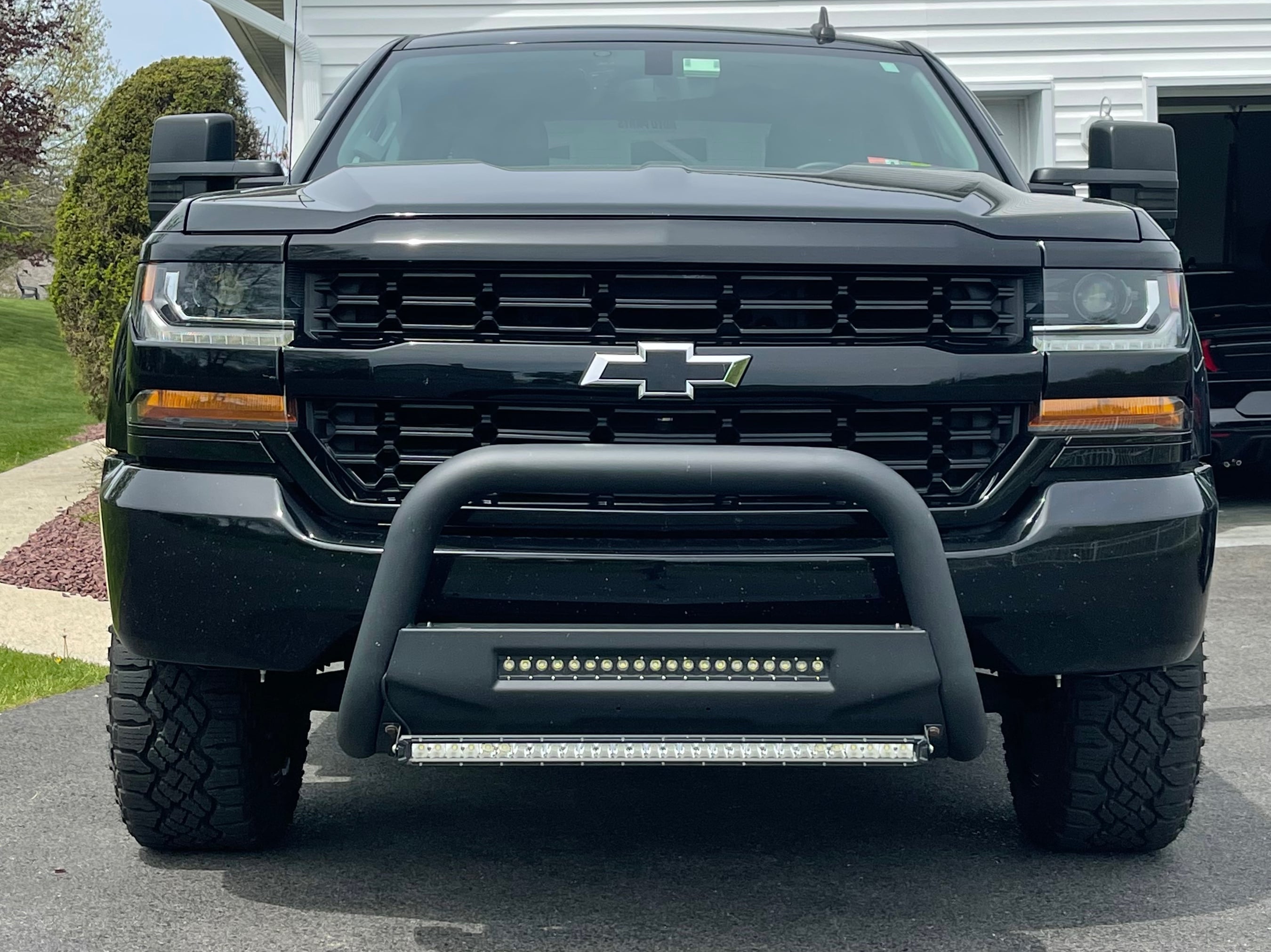
![]() One of the biggest practical advantages of a bull bar or grille guard is the built-in mounting platform for auxiliary lights. Most bull bars from brands like Westin, Go Rhino, and Barricade include pre-drilled tabs or a crossbar designed to accept a light bar or pair of pod lights — no drilling into your bumper or hood required.
One of the biggest practical advantages of a bull bar or grille guard is the built-in mounting platform for auxiliary lights. Most bull bars from brands like Westin, Go Rhino, and Barricade include pre-drilled tabs or a crossbar designed to accept a light bar or pair of pod lights — no drilling into your bumper or hood required.
Mounting Options
- Crossbar-mount light bars: The most common setup. The horizontal crossbar on a bull bar typically accepts a 20-inch LED light bar using U-clamps or bolt-on brackets. Some grille guards have wider crossbars that accommodate 30-inch bars.
- Tab-mount pod lights: Many guards include small pre-drilled tabs on either side of the crossbar for mounting individual LED pod lights (3-inch or 4-inch cubes). Pod lights are great for adding flood or spot patterns without the wider profile of a full bar.
- Custom brackets: If your guard doesn't include light tabs, aftermarket universal mounting clamps are available in sizes from 1.5 inches to 3 inches to fit most tubular frames.
Wiring Basics
Wiring an LED light bar is a straightforward job that requires a few basic components:
- Wiring harness with relay: Most LED light bars and pod lights come with a plug-and-play harness that includes a 30/40-amp relay, an inline fuse, and a dash-mounted toggle switch. The relay lets you run high-current lights without overloading your cab wiring.
- Power source: Connect the relay's power lead directly to the positive battery terminal with an inline fuse, and ground the harness to a clean chassis point.
- Routing: Run your wiring from the light bar along the inside of the frame rail and through an existing firewall grommet into the cab for the switch. Use zip ties to keep the harness tight against the frame and away from exhaust components.
Legal Considerations
LED light bars and auxiliary lights are generally legal for off-road use, but most states restrict their use on public roads. Some states require covers over auxiliary lights when driving on the highway, and others ban forward-facing colored lights entirely. Check your local regulations before wiring up — a light bar with a dash switch makes it easy to keep things legal by switching off when you hit the pavement.
Brush Guard and Bull Bar Pros and Cons
![]() The disadvantages of a brush guard or bull bar are real but manageable, and for most truck owners, the protection benefits far outweigh the tradeoffs. Here's an honest breakdown.
The disadvantages of a brush guard or bull bar are real but manageable, and for most truck owners, the protection benefits far outweigh the tradeoffs. Here's an honest breakdown.
Pros
- Impact protection: A steel or aluminum guard absorbs hits from wildlife, road debris, and trail obstacles that would otherwise damage your grille, headlights, radiator, and hood.
- Accessory mounting: Crossbars and light tabs give you a ready-made platform for LED light bars, pod lights, and in some cases a winch.
- Rugged appearance: A well-fitted guard adds a purposeful, trail-ready look that enhances your truck's stance.
- Resale value: Quality aftermarket protection accessories can make your truck more attractive to the next buyer, especially in rural and off-road markets.
- Easy installation: Most bolt-on kits install in one to two hours with no welding, making them one of the more accessible exterior upgrades you can do.
Cons
- Added weight: A full grille guard can add 80 to 120 pounds to your front end. This can affect ride quality slightly and puts a small amount of extra load on your front suspension. Bull bars are lighter at 30 to 60 pounds.
- Minor fuel economy impact: The added frontal area creates a small amount of extra aerodynamic drag. For most daily drivers, the difference is negligible — typically less than half a mile per gallon.
- Airbag considerations on older models: On some older vehicles that weren't designed with aftermarket guards in mind, a poorly engineered guard could theoretically interfere with crash sensors. Modern vehicle-specific guards from reputable brands are designed to avoid this issue entirely.
- Bumper trimming on some models: Depending on your truck and the guard you choose, installation may require trimming a small section of the plastic bumper fascia. This is standard practice and covered in the included instructions.
- Legal restrictions in some areas: A handful of jurisdictions have regulations on aftermarket front-end accessories, particularly in urban areas or certain countries. Check your local laws if you're unsure.
Related Content
![]() Looking for more ways to protect and upgrade your truck's exterior? Check out these related guides and categories:
Looking for more ways to protect and upgrade your truck's exterior? Check out these related guides and categories:
Find the Right Guard for Your Truck
![]() Whether you're after a center-mount bull bar for a clean daily-driver look or a full grille guard built for ranch roads and trail work, we've got you covered. Browse our complete selection of truck brush guards and grille guards, enter your year, make, and model, and find the perfect fit for your truck. Every guard we carry is backed by our Sales Tech team — real truck enthusiasts who can help you choose the right setup for how you actually use your truck.
Whether you're after a center-mount bull bar for a clean daily-driver look or a full grille guard built for ranch roads and trail work, we've got you covered. Browse our complete selection of truck brush guards and grille guards, enter your year, make, and model, and find the perfect fit for your truck. Every guard we carry is backed by our Sales Tech team — real truck enthusiasts who can help you choose the right setup for how you actually use your truck.
Frequently Asked Questions About Truck Brush Guards and Bull Bars
These are the most common questions truck owners ask when shopping for front-end protection — here are straight answers to help you decide.
What Is the Difference Between a Bull Bar and a Brush Guard?
A bull bar uses an A-shaped frame that covers only the center portion of your truck's bumper and grille, while a brush guard (also called a grille guard) features an H-shaped frame with side wings that wrap around your headlights for full-width front-end coverage. Bull bars are lighter and more affordable; brush guards provide more comprehensive protection.
Will a Brush Guard Stop a Deer?
A heavy-duty brush guard or grille guard can absorb and deflect the impact of a deer strike at moderate speeds, protecting your grille, headlights, and radiator from serious damage. However, no guard can guarantee complete protection at highway speeds — they reduce damage rather than eliminate it entirely. Steel construction provides the best impact resistance for animal strikes.
What Are the Disadvantages of a Brush Guard?
Brush guards add 40–80 pounds to your truck's front end, which can slightly reduce fuel economy and affect ride quality. They may also interfere with front parking sensors or adaptive cruise control on newer trucks. Full-width grille guards can be harder to install solo due to their size and weight, and some regions restrict front-end accessories for pedestrian safety reasons.
What Are the Disadvantages of Using a Bull Bar?
Bull bars cover only the center of your bumper, leaving your headlights and outer grille exposed to damage. They offer less overall protection than a full grille guard, and budget models made from thin-gauge steel may bend on significant impact. Some bull bars can also trigger airbag deployment issues on older vehicles if they transfer impact forces directly to the frame.
What Is the Difference Between a Grille Guard and a Brush Guard?
In most cases, "grille guard" and "brush guard" refer to the same type of accessory — a full-width protective frame that covers your truck's grille and headlights. Some manufacturers use "brush guard" for lighter tubular designs and "grille guard" for heavier-duty models, but the terms are largely interchangeable in the aftermarket truck accessories market.
Are Bull Bars Illegal?
Bull bars and brush guards are legal in most U.S. states for personal vehicles driven on public roads. However, some states and municipalities restrict front-end accessories that protrude beyond the vehicle's factory bumper line, particularly in urban areas with pedestrian safety regulations. Always check your local laws before installing a front-end guard.
How Much Does It Cost to Install a Bull Bar?
Most bull bars and brush guards are designed for bolt-on installation that you can handle at home with basic hand tools in one to two hours. If you prefer professional installation, expect to pay $100–$200 in labor at a local shop. The guards themselves range from $150–$500 for bull bars and $400–$1,200 for full grille guards, depending on brand and material.
Can You Mount a Winch on a Brush Guard?
Some heavy-duty brush guards and grille guards include integrated winch mounting plates that accept standard winches up to 12,000 pounds. However, most standard brush guards are not rated for winch loads — you'll need a model specifically designed with a winch mount, like the Westin Sportsman Winch Mount series. Always verify the guard's weight and load rating before mounting a winch